
Nvidia Patent Brings Score Distillation Sampling to AI Audio Generation
Nvidia is adapting one of the most effective tricks from AI image generation, score-distillation sampling, and pointing it at audio. The goal: generate realistic, prompt-driven sound by repeatedly guessing and correcting noise.
How Nvidia's noise-and-refine loop creates audio from text
Imagine you're sculpting a clay figure, but instead of adding clay, you start with a rough guess and keep shaving away the parts that don't belong. That's roughly the idea behind Nvidia's patent for AI audio generation.
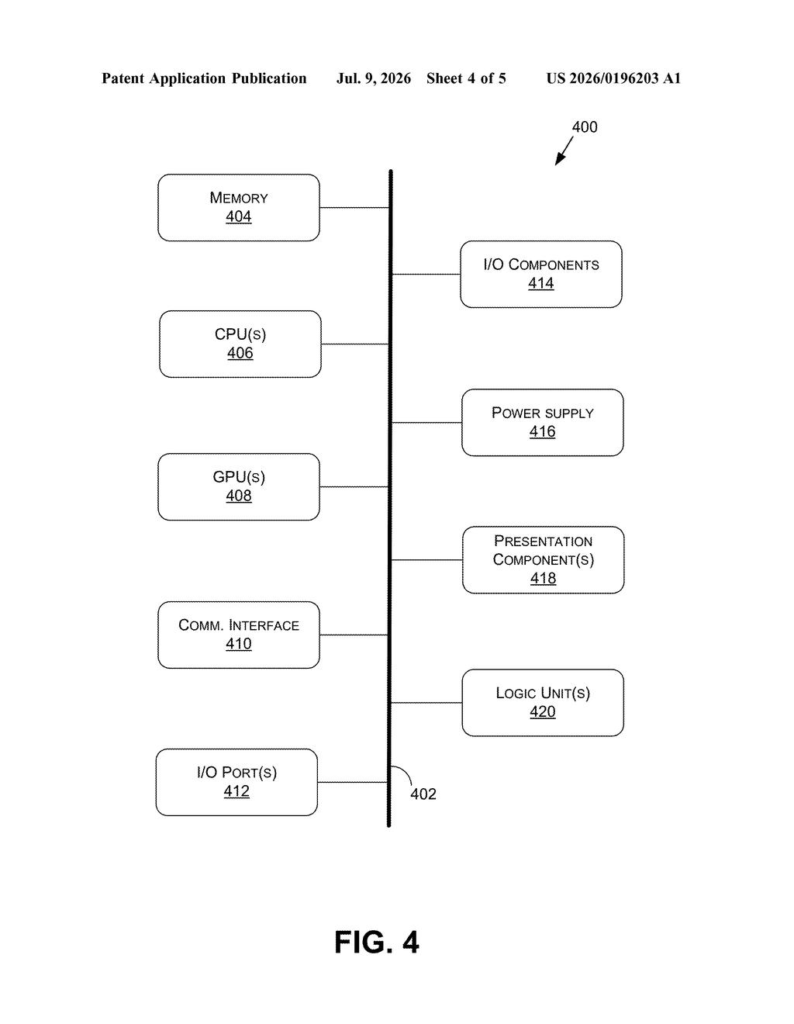
The system starts with a rough audio clip, intentionally muddies it with noise, then asks an AI model to predict exactly what noise was added. By comparing what the AI predicted versus what was actually added, the system knows which direction to push the audio to make it sound more like what you described in a text prompt.
This loop repeats, nudging the audio closer to your description each time. You type something like "forest ambience with distant rain" and the system iteratively refines a clip until it matches. The technique, called score-distillation sampling, was already popular for generating 3D objects and images, and Nvidia is now applying the same logic to sound.
Inside Nvidia's diffusion-based audio update cycle
The patent describes a pipeline built around a technique called score-distillation sampling (SDS), which was originally developed to generate 3D shapes and images by distilling knowledge from a pre-trained diffusion model (an AI trained to remove noise step by step).
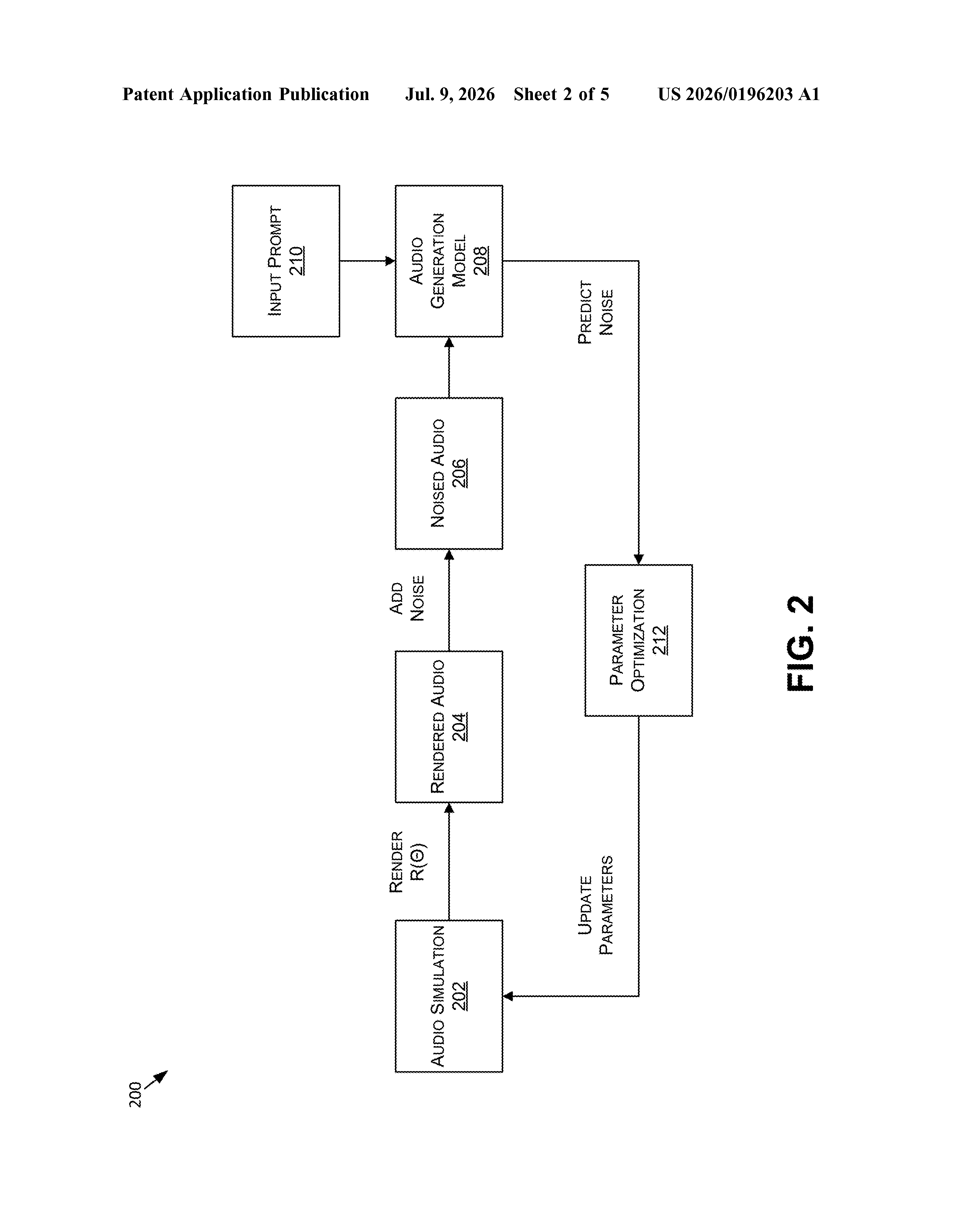
Here's how the loop works:
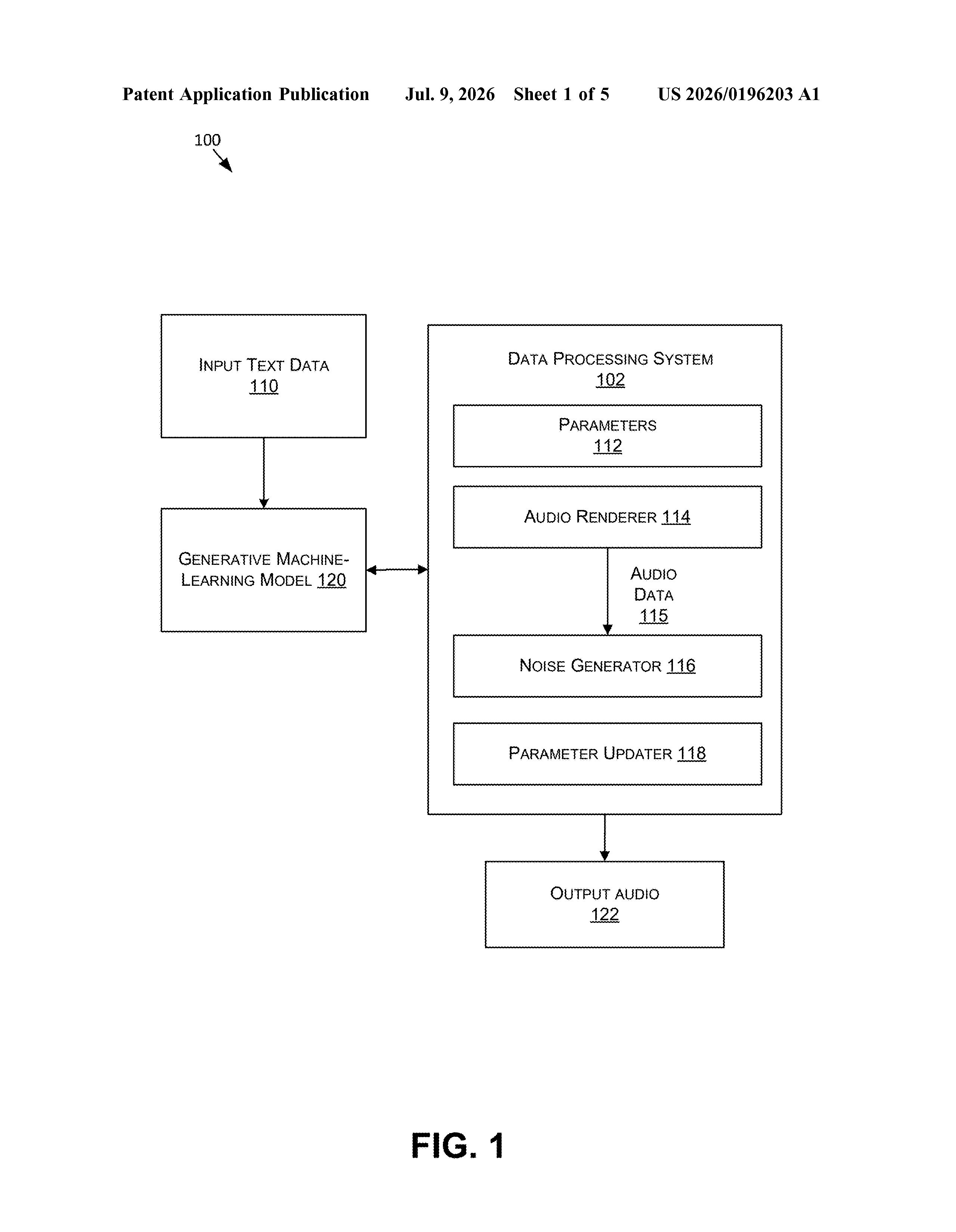
- The system generates an initial audio sample from a starting set of parameters (think of these as knobs that control what the audio sounds like).
- It deliberately adds a controlled amount of random noise to that sample, creating a degraded version.
- A diffusion model (the core AI engine) looks at the noisy audio and a text prompt, then predicts what noise was added.
- The system compares predicted noise to actual noise, then uses the difference to update the parameters so the next audio sample is closer to what the prompt describes.
The key insight is that the diffusion model is never directly generating the final audio. Instead, it acts as a critic, and its feedback steers an external audio representation toward the target. This lets Nvidia apply a pre-trained audio AI to optimize audio formats that the model wasn't originally designed to produce directly.
What this means for AI-generated game audio and film sound
Score-distillation sampling became famous for letting researchers generate 3D scenes and images without training entirely new models from scratch. Applying it to audio means you could potentially generate spatial audio, procedural game sound effects, or film score elements by guiding any differentiable audio representation with a text prompt, without needing a massive audio-specific training run.
For Nvidia, whose Omniverse and game-development platforms already lean on AI for visual content, an audio equivalent fits naturally. Developers building interactive environments could eventually type a description and get a usable sound clip instead of hunting through a library. That's a real workflow change for game studios, VR developers, and anyone compositing synthetic media at scale.
This is a methodologically interesting port of a well-proven image technique to a domain where it hasn't been dominant. It's not a finished product and the patent is at a fairly abstract level, but Nvidia has the compute infrastructure and the existing relationships with game studios to make this genuinely useful if the audio quality holds up in practice.
Get our take in your Top Stories
Liked this breakdown? Add Patentlyze as a preferred source on Google, and our plain-English take shows up more often in your Top Stories the next time Nvidia patent news breaks.
There are more where this came from
We read every patent application Big Tech publishes and send you the ones worth knowing. Plain English, free, every week.
The drawings
5 drawing sheets from US 2026/0196203 A1 · click any drawing to enlarge
Want this weekly breakdown for a company we don't cover? Patentlyze Pro →