
Nvidia Patents an AI That Reads Games to Track What's Happening Inside Them
Game-streaming services need to know whether you're in a menu, a cutscene, or a firefight -- but figuring that out today requires engineers to hard-code those labels by hand. Nvidia is filing a patent that hands that job to an AI.
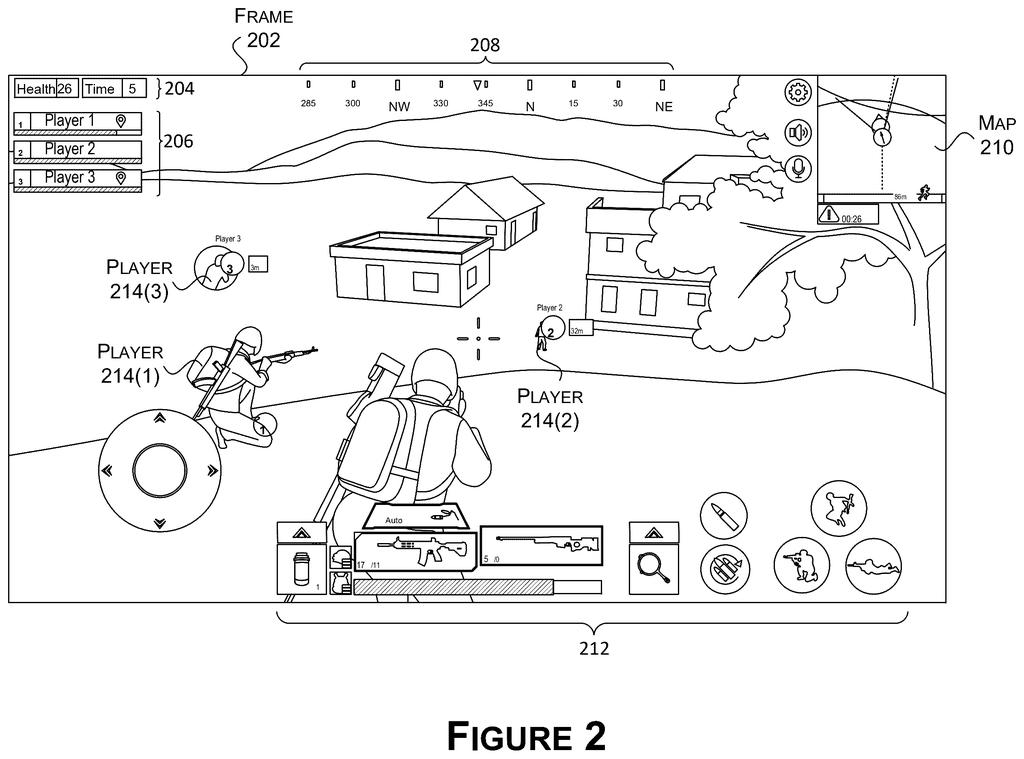
How Nvidia wants AI to understand a game's state
Right now, when a company streams an app or game to your device over the internet, someone on the engineering team has to manually label all the important "states" the app can be in -- things like "main menu," "loading screen," or "in-game combat." Tracking those states matters because the streaming system can then adjust things like video quality or input handling depending on what's happening.
Nvidia's patent describes a way to automate that whole labeling process using AI. Instead of a person writing the labels, a language model -- the same type of technology that powers chatbots -- reads through game documentation, wikis, or screenshots taken during a play session and figures out the meaningful states on its own.
The AI then creates a set of "state keys" (think of them as named tags) and automatically matches them to what's actually happening in the app in real time. That gives the streaming system a live, structured picture of the app's status without anyone building it by hand.
… determining, based at least on the one or more language models processing the input data, one or more features of an interactive application that contribute to one or more states associated with the interactive application …
Translation: The AI looks at the game data to figure out which parts of it drive the current situation.
How the language model maps screenshots to state labels
The patent describes a pipeline with two main stages: generation and runtime tracking.
In the generation stage, one or more language models are given input data about an interactive application. That input can take several forms:
- Screenshots captured while the app is running, which the AI analyzes to spot visually distinct states (like a loading bar vs. A gameplay HUD)
- Written documentation, wikis, or manuals describing the app's features
- Intrinsic knowledge baked into a model that was already trained on data about that specific application
From that input, the model identifies "essential features" -- the things that meaningfully define what state the app is in at any moment. It then generates state keys, structured as key-value pairs (essentially named slots where a name like "combat_active" is matched to a value like "true" or "false").
In the runtime stage, the app's live data is continuously mapped to those keys. The result is a real-time readout of the application's state that the streaming system can act on -- adjusting video encoding settings, prioritizing network bandwidth, or triggering other automated responses depending on what the app is doing right now.
… automatically generate state keys (or “identifiers”) associated with an interactive application …
Translation: The system creates custom tracking labels for what is happening inside a video game.
What this means for cloud gaming and app streaming
For cloud gaming and app-streaming platforms, knowing the app's current state is the foundation for a lot of behind-the-scenes optimization. A loading screen can tolerate lower frame quality; an active multiplayer match cannot. Right now, building that awareness requires engineers to instrument each app manually, which is slow and doesn't scale to a library of hundreds of games.
If this approach works in practice, it could let a platform like GeForce NOW adapt its streaming behavior across many titles without needing a hand-tuned profile for each one. For you as a player, the promise is that the stream quality adjusts more intelligently to what you're actually doing, not just to a generic setting applied across the whole session.
Nvidia's 35th filing in our Enterprise AI coverage we've tracked since May builds on earlier work like one rewriting resource plans and one animating faces from audio.
The core tradeoff here is automation versus accuracy. Instead of engineers manually tagging every meaningful moment in every game, an AI reads screenshots or documentation and infers what state the game is in. That inference will sometimes be wrong, and nothing in this design cleanly corrects it.
Whether that matters depends entirely on what a wrong guess triggers. If the labels drive loose, forgiving decisions like easing video quality during a loading screen, occasional errors are harmless. If they feed faster, tighter decisions where mistakes compound, the system gets fragile quickly.
The honest case for this approach is that covering a large game library without manual work is hard, and some accuracy loss is the price of doing it at all. That price looks acceptable for coarse streaming adjustments, and considerably less acceptable if the ambitions grow beyond that.
There are more where this came from
We read every patent application Big Tech publishes and send you the ones worth knowing. Plain English, free, every week.
The drawings
16 drawing sheets from US 2026/0278249 A1 · click any drawing to enlarge


Want this weekly breakdown for a company we don't cover? Patentlyze Pro →
Be the first to weigh in