
Nvidia's New Patent Tests Whether Its Self-Driving Cars Miss Dangers Due to Flawed Sensing
A self-driving car's AI can see the world clearly and still make the wrong call. Nvidia's new patent targets that gap by measuring not just what the AI perceives, but how perception errors ripple into real driving decisions.
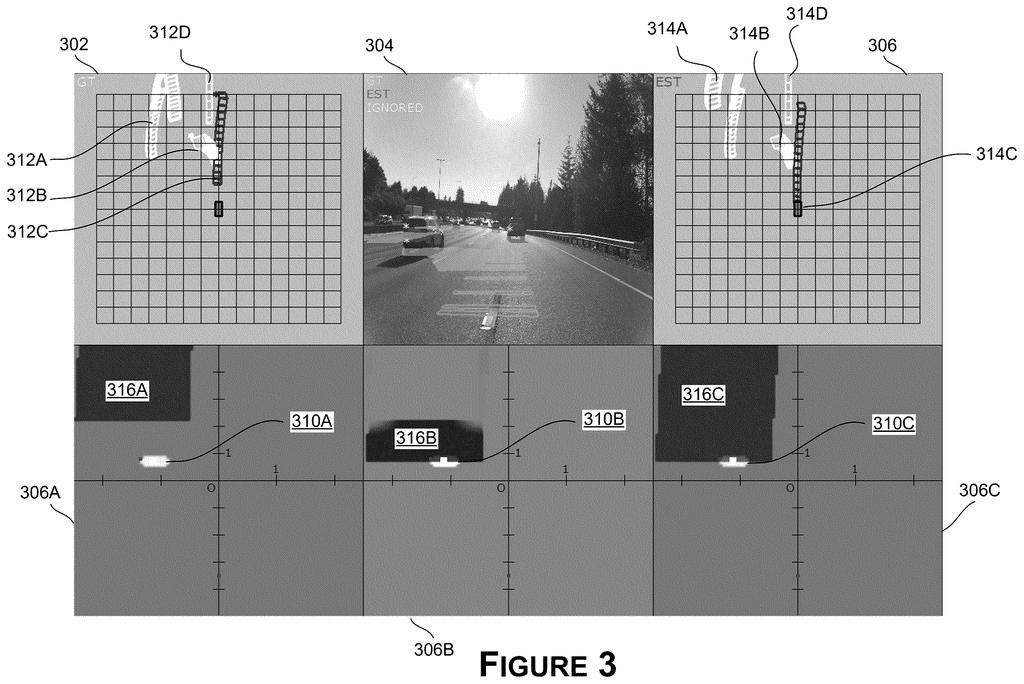
How Nvidia measures AI mistakes in self-driving systems
Today, AI systems in self-driving vehicles are tested mostly by checking whether their "vision" matches reality. But a perception model can be slightly wrong in ways that don't seem important, yet still cause the car to brake too late or turn at the wrong moment. That disconnect between "the AI saw something wrong" and "the car did something wrong" is surprisingly hard to measure.
Nvidia's patent describes a system that traces the full chain from perception to decision. Instead of just grading the AI's vision on accuracy, the system asks: when the AI got this slightly wrong, did the car's behavior actually change? If yes, that error matters. If no, it might not be worth fixing first.
The practical payoff is a smarter training priority list. Engineers can focus on fixing the perception errors that genuinely hurt downstream decisions, rather than chasing every imperfection in the AI's world model.
… comparing the first set of one or more control decisions to the second set of one or more control decisions.
Translation: The car checks if its AI made different choices than it would have with perfect data.
How the decision-comparison loop catches perception gaps
The system runs two parallel decision-making pipelines side by side.
- Pipeline one uses the AI model's actual perception output, meaning what the neural network "sees" from cameras and sensors.
- Pipeline two uses ground-truth data, meaning verified, correct information about the same scene, typically from human annotators or a high-accuracy reference system.
- Both pipelines then compute what a real machine component (like steering or braking) would do given those inputs.
The key step is comparing the two sets of control decisions. If the AI's perception produced a different braking command than the ground-truth data would have, that gap is flagged as a meaningful error. If both pipelines reach the same decision despite the AI seeing things slightly differently, the discrepancy is deprioritized.
This comparison then feeds back into two places: it can trigger retraining of the machine learning model with a focus on the errors that actually changed outcomes, or it can flag cases where the ground-truth data itself may be inaccurate and needs correction. The loop is end-to-end, meaning it covers perception, decision, and label quality all at once.
… discrepancies in downstream decision making of the system between the ground truth information and the perception information may be evaluated to either aid in updating or retraining of the machine learning model …
Translation: Errors found by comparing real perception to reality are used to retrain the AI.
What this means for autonomous vehicle AI reliability
For autonomous vehicles, the difference between a perception error that matters and one that doesn't is everything. Current training pipelines often treat all errors as equally important, which wastes engineering time on imperfections that never affect how the car actually drives. A system that surfaces only the errors tied to real behavioral changes could meaningfully speed up how quickly safe AI drivers are developed.
There is also a quieter benefit for data labeling. When the system flags a discrepancy and the AI was actually correct but the ground-truth label was wrong, engineers get a signal that their training data has a flaw. Catching bad labels automatically is one of the harder unsolved problems in large-scale AI development, and this patent takes a practical, decision-grounded approach to it.
Nvidia's 69th patent application we've tracked since May in the self-driving sensing race continues a pattern that includes one on two parallel decision paths and another on dual decision-making systems.
Nvidia's system judges its AI by whether a mistake changes what the car actually does, not by whether the mistake exists at all. That triage is sensible, but it means small errors that look harmless across every test scenario can survive undetected until they meet the one situation where they finally matter.
The system also leans on reference data assumed to be correct, and when that reference data is wrong, the evaluation steers in the wrong direction. Nvidia builds in a correction loop to catch those errors, which helps, but every correction mechanism is itself something that can fail.
The tradeoff is defensible: obsessing over every minor flaw in how an AI reads its surroundings wastes resources that could go toward things that actually affect safety. That trade reads as reasonable for ordinary driving, and fragile precisely where ordinary driving ends.
There are more where this came from
We read every patent application Big Tech publishes and send you the ones worth knowing. Plain English, free, every week.
The drawings
11 drawing sheets from US 2026/0274275 A1 · click any drawing to enlarge


Want this weekly breakdown for a company we don't cover? Patentlyze Pro →
Be the first to weigh in