
Nvidia Patents a Camera System That Repositions Stitched Video During Eye Flicks
Your eyes make tiny involuntary jumps dozens of times per second, and Nvidia thinks that's the perfect moment to rearrange the seam in a stitched camera view before you notice anything changed.
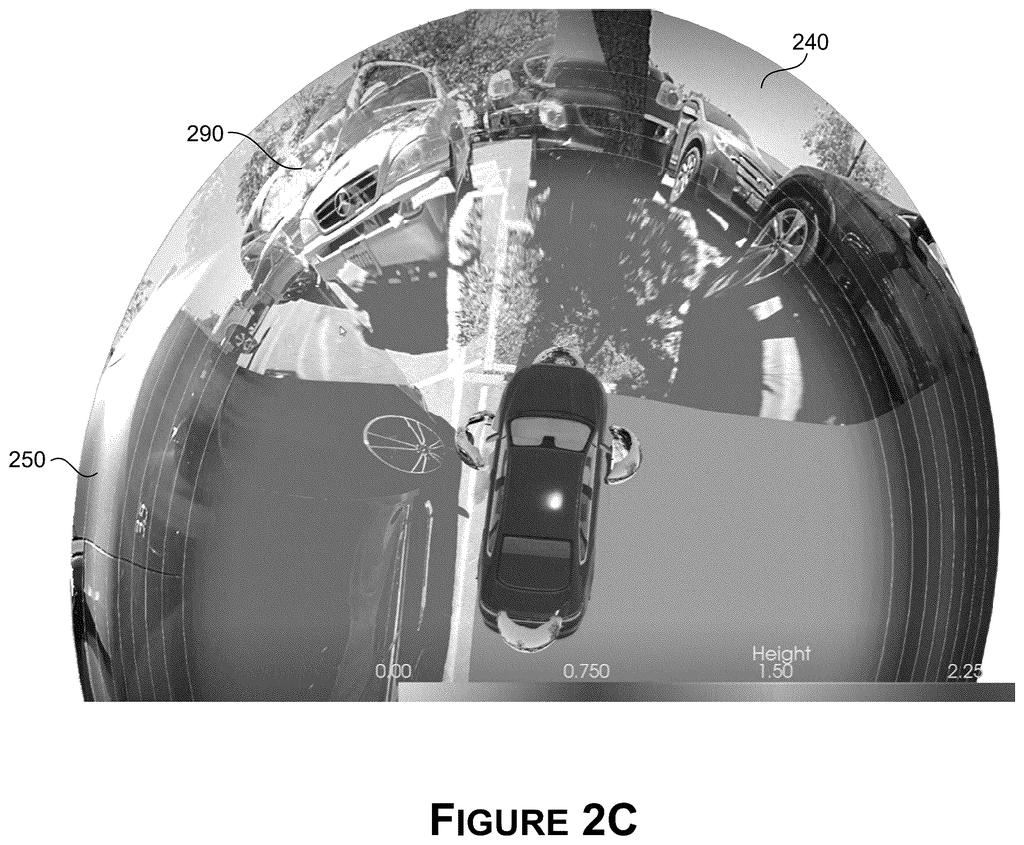
What Nvidia's saccade-timed image stitching actually does
You're sitting in a vehicle looking at a wide display that shows the view from several cameras stitched together into one panoramic image. Where those camera feeds meet, there's a hidden boundary called a seam, and moving that boundary to get a cleaner picture can sometimes cause a visible jump or glitch.
Nvidia's patent describes a system that tracks your eyes and waits for a saccade (the rapid, involuntary flick your eyes make when shifting focus, something that happens so fast your brain barely registers it) to make big adjustments to that seam. When your eyes are in mid-flick, or when you're looking somewhere else entirely, the system relaxes its usual caution and repositions the boundary more aggressively.
The result is a display that can optimize what it's showing you without introducing distracting visual glitches, because it does the heavy lifting during the moments you're least likely to catch it.
… determining, based at least on the indicator, a dynamic seam placement for a seam in an overlapping region of two or more image frames; generating a composite image frame based at least on stitching image data of the two or more image frames using the dynamic seam placement; …
Translation: The system calculates where to join multiple camera feeds together based on eye movement.
How eye tracking picks the moment to shift the seam
Modern wide-angle displays in vehicles or XR headsets often combine footage from multiple overlapping cameras into a single view. The line where two camera feeds meet is called a seam. Placing that seam in a visually clean spot (an area without high-contrast edges or moving objects) produces a more convincing image, but the best location for the seam changes from moment to moment as the scene changes.
If the system moves the seam too quickly to track the best position, the viewer sees an obvious jump in the image. To prevent that, most systems restrict how fast the seam can travel, which means it sometimes sits in a suboptimal spot for longer than necessary.
Nvidia's approach adds eye tracking to the equation. The system monitors the viewer's gaze and detects two specific moments:
- Saccades: the fast, involuntary eye movements that happen when you shift your gaze. During a saccade, lasting only a fraction of a second, the visual cortex is largely suppressed and you don't consciously register motion.
- Gaze-away events: moments when the viewer is simply not looking at the display.
During either event, the normal constraints on seam movement are relaxed or dropped entirely. The seam can jump to a much better position in one go, then resume gradual movement once the viewer's eyes are back and steady. The result is a composite image that is both stable-looking and better-positioned than a purely time-limited system could manage.
… one or more constraints may be applied to limit the movement of dynamically placed seams such that any given seam moves gradually over time, limiting potential discontinuities in a visualization of the stitched image on a display.
Translation: Seams are normally forced to move slowly so viewers do not notice awkward visual jumps.
What this means for in-car displays and VR headsets
For vehicles with multi-camera surround displays, or for XR headsets that stitch feeds from multiple lenses, this technique could reduce one of the most persistent visual annoyances: the subtle but distracting glitch that appears when the system tries to clean up its own image boundary. Better seam placement means fewer visual artifacts without needing more powerful processors or higher-resolution cameras.
Nvidia keeps filing on machine-perception and display systems for vehicles and XR. If this approach makes it into production hardware, the practical payoff is a display that feels more like a single clean window and less like a collage of camera feeds, which matters a lot as wider surround displays become more common in cars.
Nvidia's 65th filing we've tracked since May in the self-driving sensing race adds to a run that includes one splitting images into sections and one mapping blind spots.
The shortest path to shipping this is surprisingly short. The document describes pure software logic, and the only hardware it requires, eye tracking and multiple cameras, already exists in devices like car dashboards and virtual reality headsets. A product team working on either of those could, in principle, treat this as a firmware update rather than a ground-up build.
The one honest uncertainty the document leaves on the table is whether eye movement can be detected fast enough for the trick to work reliably. The whole system depends on catching a split-second window when the brain is too busy to notice a visual seam jumping around.
If that detection proves reliable in real-world conditions, this goes from a research document to a checklist item for the next software release on hardware that is already in people's hands.
There are more where this came from
We read every patent application Big Tech publishes and send you the ones worth knowing. Plain English, free, every week.
The drawings
15 drawing sheets from US 2026/0278737 A1 · click any drawing to enlarge


Want this weekly breakdown for a company we don't cover? Patentlyze Pro →