
Nvidia Patents an AI System That Breaks Images Into Sections Using Visual Modifications
Identifying exactly which pixels in an image belong to a tumor, a road, or a person is one of the hardest jobs in computer vision. Nvidia is patenting an approach that feeds deliberately modified versions of an image into a neural network to help it draw those boundaries more accurately.
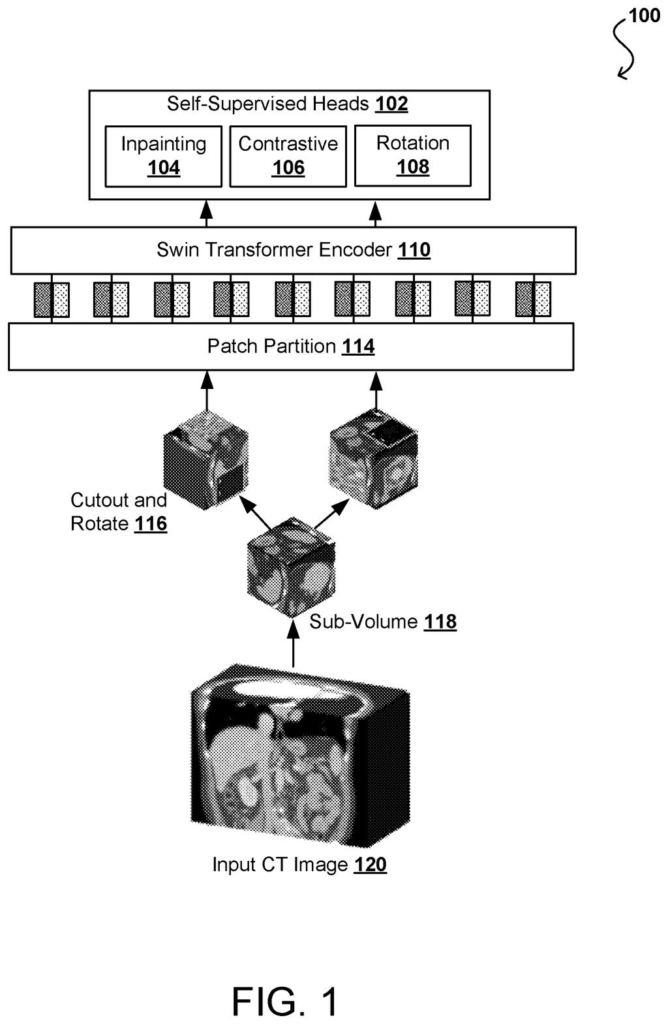
What Nvidia's visual-modification segmentation actually does
Teaching a computer to outline a specific object inside a photo is harder than it sounds. Today, image segmentation systems often struggle with ambiguous edges, low contrast, or unusual lighting, and they need huge amounts of hand-labeled training data to get it right.
Nvidia's patent describes a system where a neural network doesn't just look at your original image. It also looks at one or more modified versions of the same image, such as versions with adjusted contrast, color shifts, or other visual tweaks. By comparing what changes and what stays the same across those versions, the network can make better guesses about where one object ends and another begins.
The practical payoff shows up anywhere you need precise outlines: spotting a tumor on an MRI scan, mapping buildings in satellite imagery, or helping a self-driving car tell the road apart from the sidewalk.
one or more circuits to use one or more neural networks to segment an image based, at least in part, on one or more visual modifications of the image.
Translation: The chip uses artificial intelligence to split pictures apart by looking at visual changes.
How the neural network uses altered images to find boundaries
At its core, the patent describes a processor and circuit architecture that runs one or more neural networks specifically for image segmentation, which means dividing an image into labeled regions ("this cluster of pixels is a liver, that cluster is background tissue").
The key technical twist is that segmentation is guided by visual modifications of the input image. The patent doesn't lock down a single type of modification; the claim is deliberately broad, covering any alteration that helps the network. In practice, these modifications act as a kind of signal amplifier: by showing the model the same scene under different visual conditions, you give it extra information to resolve close calls at object boundaries.
This approach relates to a broader technique in deep learning called data augmentation (feeding a model variations of the same input so it learns features that are stable across changes) and to multi-view or self-supervised learning (where a model learns by comparing different views of the same underlying data rather than relying entirely on human-labeled examples).
The patent is filed at the hardware level, covering the processor circuits, which means Nvidia is staking a claim not just on a software trick but on the underlying compute architecture designed to run this kind of network efficiently.
Apparatuses, systems, and techniques are presented to perform segmentation on images.
Translation: The filing introduces new hardware and software methods for dividing images into distinct sections.
What this means for medical imaging and computer vision
Segmentation is a foundational task in medical imaging, where misidentifying the boundary of a tumor by even a few pixels can affect treatment planning. It also matters in autonomous driving, satellite analysis, and industrial inspection. Any improvement here has real downstream consequences for accuracy and the amount of expensive human annotation required.
Nvidia's long bet on medical AI and computer vision means this patent fits into a broader product push around tools for healthcare researchers and autonomous systems developers. For everyday users, the most visible effect would be in diagnostic software or camera applications that automatically identify and highlight regions of interest with fewer errors.
Nvidia's 64th filing we've tracked since May in self-driving sensing follows its work on mapping blind spots and building AI training worlds.
Manual image labeling in medical settings costs thousands of radiologist hours each year, and automated systems still fail often enough that human experts must review nearly everything. That gap between what automation promises and what it reliably delivers has real consequences for patients waiting on diagnoses.
Nvidia's approach here, teaching software to recognize structures in an image by also studying altered versions of that same image, is a reasonable match for the scale of that problem. More signal from the same data means less dependence on expensive labeled examples, which matters most where labeled data is scarcest.
The patent's language, however, is broad enough to cover a wide swath of techniques researchers have already published. Whether this represents a concrete engineering achievement or a legal boundary marker around familiar territory will depend on technical details the public filing does not yet provide.
There are more where this came from
We read every patent application Big Tech publishes and send you the ones worth knowing. Plain English, free, every week.
The drawings
56 drawing sheets from US 2026/0278851 A1 · click any drawing to enlarge


Want this weekly breakdown for a company we don't cover? Patentlyze Pro →