
Nvidia Patents Neural Network-Driven Error Correction for 5G Radio Signals
Nvidia wants to replace static error-correction tables in wireless radios with a neural network that reads signal quality on the fly and adjusts accordingly. It's a small but telling move into 5G infrastructure silicon.
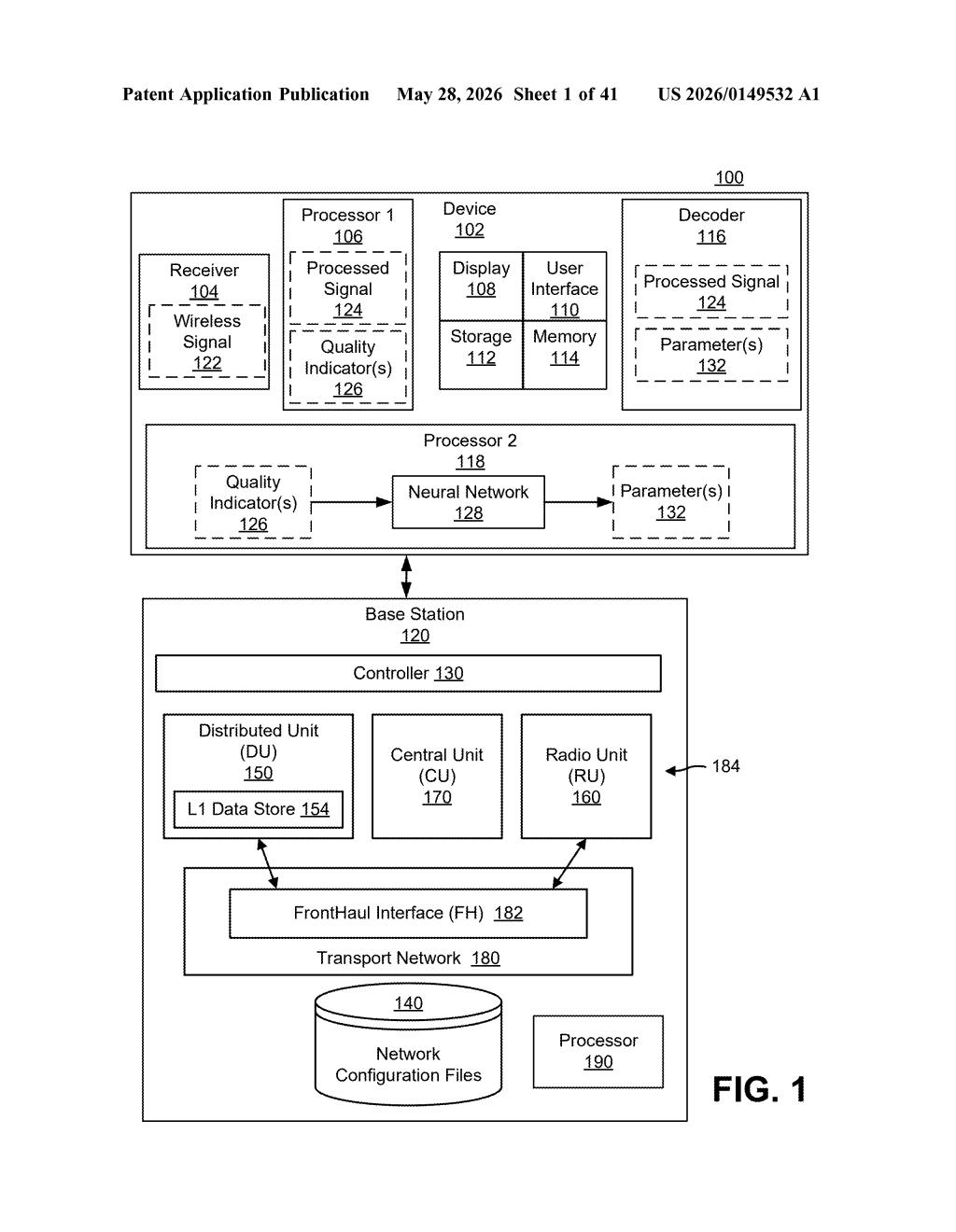
What Nvidia's AI-driven wireless error correction actually does
Imagine your phone is in a crowded stadium, and the wireless signal coming in is noisy and inconsistent. Your phone's radio chip has to check every packet of data for errors and fix them — but today it does that using the same fixed rules whether the signal is crystal-clear or barely holding on.
Nvidia's patent proposes replacing those fixed rules with a neural network that watches how good or bad the signal is in real time. If the signal quality is degraded, the AI can dial up the aggressiveness of the error-checking. If the signal is clean, it can ease off and save processing power.
The result is error correction that adapts to actual conditions rather than always assuming the worst — or the best. For radio access network (RAN) hardware, that kind of efficiency matters a lot, especially as telecom carriers push to squeeze more performance out of their base stations.
How the neural net tunes EDC parameters from signal quality
The patent describes a processor that runs one or more neural networks to control how error detection and correction (EDC) algorithms behave on incoming radio access network (RAN) signals — the signals traveling between a base station and devices like phones or IoT modules.
The system works in a pipeline:
- A raw wireless signal is received and preprocessed (cleaned up for further processing).
- One or more quality indicators are generated — think of these as real-time scores measuring how noisy or reliable the signal is.
- The neural network takes those quality scores as input and outputs tuned parameters for the EDC algorithm, rather than using factory-default settings.
- The system then checks: are the neural-network-generated parameters meaningfully different from the standard ones? If yes, use the custom parameters. If no, fall back to defaults.
This conditional fallback is a practical engineering detail — it avoids the overhead of custom processing when the signal is fine and standard correction is good enough. The patent covers the chip-level processor implementing this, not just a software approach, which positions it squarely in purpose-built telecom silicon territory.
What this means for Nvidia's RAN and telecom ambitions
Nvidia has been steadily building out its telecom and RAN portfolio — its Aerial SDK and Grace-Hopper-based platforms are already targeting software-defined base stations. A patent like this fits that trajectory: replacing hard-coded DSP logic with learned, adaptive behavior is exactly the kind of thing GPU and AI-accelerator companies are positioned to do better than legacy telecom chipmakers.
For you as an end user, the near-term impact is indirect — better error correction in base station hardware means more reliable connections in dense or noisy environments. But the bigger story is Nvidia staking out IP in adaptive wireless processing, a space that will matter a lot as Open RAN deployments scale up.
This is a focused, credible patent rather than a sweeping moonshot. Nvidia is methodically building IP around AI-in-the-radio-stack, and this fits a clear strategic line from their Aerial SDK work. The conditional fallback mechanism shows real engineering pragmatism — this reads like something close to implementation, not blue-sky research.
There are more where this came from
We read every patent application Big Tech publishes and send you the ones worth knowing. Plain English, free, every week.
Want this weekly breakdown for a company we don't cover? Patentlyze Pro →