
Nvidia Patents a Unified Training Framework That Merges Two Types of AI Learning
Most AI models are trained to either generate content or classify it — rarely both at once. Nvidia's new patent describes a training framework that unifies those two goals into a single learning loop.
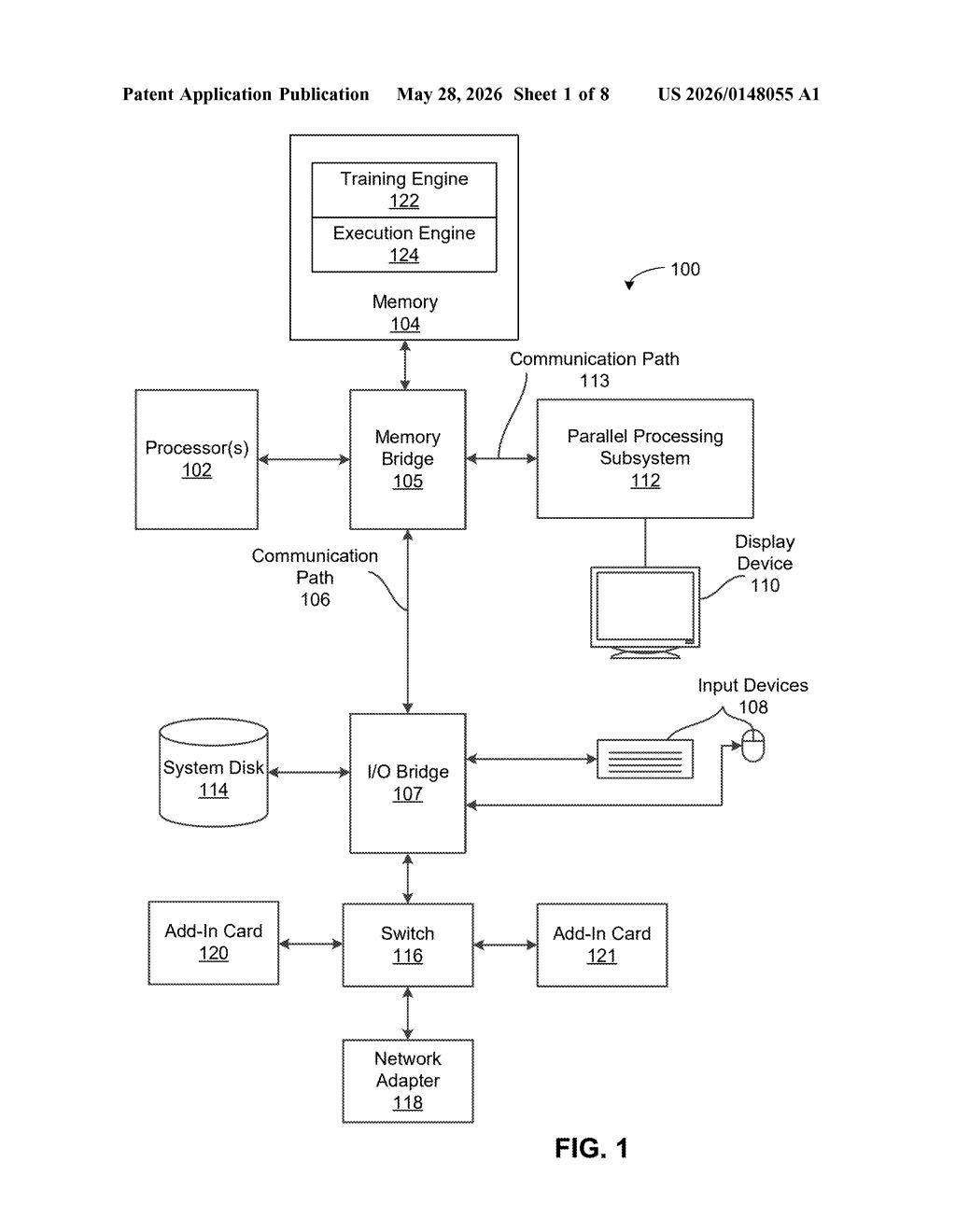
How Nvidia's contrastive framework trains one model to do two jobs
Imagine you're teaching a student two separate skills: one teacher drills them on creative writing, another on identifying whether an essay is good or bad. Now imagine one curriculum that builds both skills at the same time, more efficiently. That's roughly what Nvidia is filing a patent for here.
Most AI models today are either generative (they produce text, images, or other outputs) or discriminative (they classify or compare things). Training separate models for each task is expensive and redundant. Nvidia's approach trains a single model to handle both, using a special mathematical signal called a contrastive term that teaches the model how similar or different things are relative to a broader set of examples.
The practical upside is that you'd need fewer models to do the same work — and the shared training might make each capability stronger because the model learns richer internal representations of the data.
How the contrastive loss term bridges both learning objectives
The patent describes a training method that encodes input data samples into latent representations (compressed mathematical summaries of the input, stored as vectors in a high-dimensional space). Those representations are then used to compute a combined training loss.
The key piece is the contrastive term inside that loss function. Contrastive learning (a technique that teaches a model what things are similar to each other by comparing them against many other examples) is typically used in discriminative models like CLIP or SimCLR. Here, Nvidia's framework incorporates it alongside generative objectives — so the same model is being pushed to both understand relationships between data points and produce realistic outputs.
Specifically, the contrastive term approximates the expected similarity between one sample's latent representation and a distribution of other training samples. In plain terms: it asks, "how does this data point relate to everything else the model has seen?" That signal is blended with other loss terms and used to update the model's parameters during training.
- Encode training samples into latent vectors
- Compute a loss that includes a contrastive similarity term over the full data distribution
- Update model weights based on the combined loss
- Output a single trained model capable of both generative and discriminative tasks
What unified AI training means for model efficiency at scale
The real-world cost of training separate generative and discriminative models is enormous — in compute, time, and money. A framework that yields both capabilities from one training run is a meaningful efficiency gain, especially at Nvidia's scale where they're both building and selling the infrastructure that runs these workloads.
For teams building multimodal AI systems — models that need to both generate and evaluate content — this kind of unified approach could simplify architecture decisions significantly. It also fits a broader industry trend toward foundation models that generalize across tasks rather than being narrowly specialized, which is increasingly where enterprise AI budgets are headed.
This is a solid, methodologically interesting patent that targets a real pain point in applied ML: the redundancy of training separate generative and discriminative models. It's not a flashy consumer-facing invention, but for teams running large-scale training pipelines, a unified framework like this is the kind of thing that quietly saves millions in compute costs. Worth tracking as a signal of where Nvidia's AI research arm is investing.
There are more where this came from
We read every patent application Big Tech publishes and send you the ones worth knowing. Plain English, free, every week.
Want this weekly breakdown for a company we don't cover? Patentlyze Pro →