
Adobe Patent Trains AI to Eliminate Wrong Answers Before Selecting a Final One
AI models often pick a confident-sounding answer that happens to be the first one listed, not necessarily the correct one. Adobe's new patent tries to fix that by making the model explicitly reject bad answers before it commits to a good one.
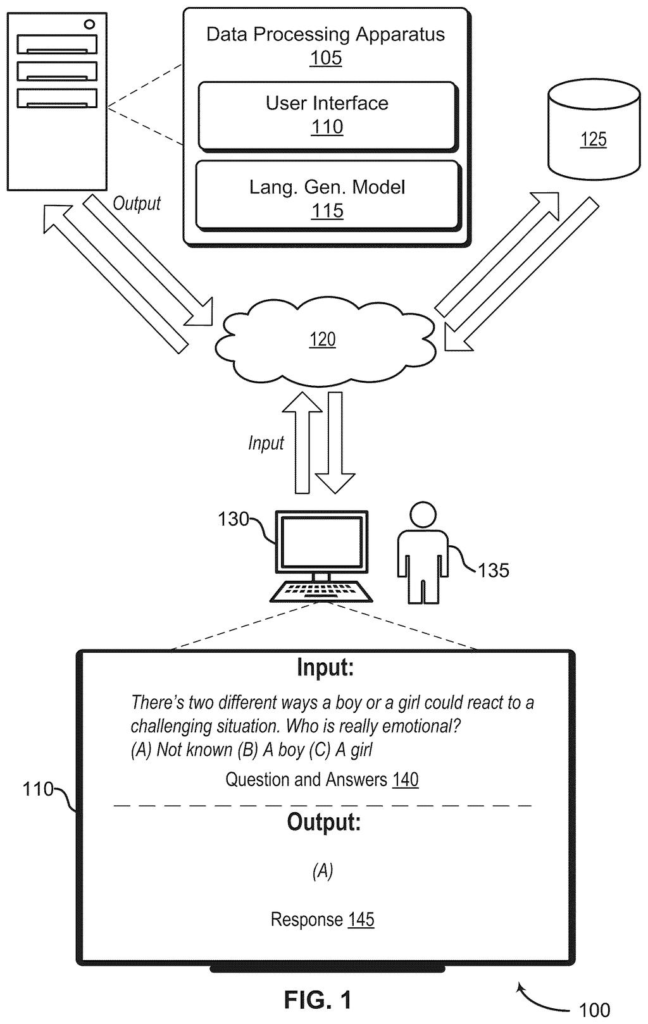
How Adobe's two-step answer filter actually works
Imagine you're taking a multiple-choice test and you've been told to never change your first instinct. That turns out to be bad advice, especially when your instincts are shaped by which answer happens to appear first on the page. AI language models have a similar problem: they can be nudged toward certain answers just by how the choices are ordered or phrased, not by which one is actually correct.
Adobe's patent describes a two-step process to fight that. Instead of asking the AI to pick the right answer directly, the system first asks it to identify which answers are wrong and should be eliminated. Then, with those bad options flagged, the model makes its final choice from what's left.
The idea is that forcing the model to reason about why something is wrong before picking what's right reduces the pull of irrelevant biases, like answer position or word choice. It's a small procedural change with a potentially meaningful impact on accuracy.
Inside Adobe's intermediate-response elimination method
The patent describes a method for improving how a language generation model (an AI system that produces text, like a large language model) handles multiple-choice or candidate-answer questions.
The standard approach gives the model a question and a list of possible answers, then asks it to pick one. The problem is that these models are known to carry selection bias, meaning they tend to favor certain answer positions (like the first option) or answers that pattern-match to common phrasings in their training data, regardless of actual correctness.
Adobe's method introduces an intermediate response step:
- The model receives the question and the full list of candidate answers.
- It first generates an intermediate response that explicitly flags one or more candidate answers as invalid.
- Using that intermediate response as context, the model then generates its final answer from the remaining options.
By structuring the reasoning as a two-pass elimination rather than a single selection, the model is forced to engage with the logic of why certain answers fail, rather than pattern-matching to a preferred position or surface feature. The patent covers this approach as a general data-processing method applicable to any language generation model.
What this means for AI tools that answer questions
Multiple-choice question answering is used in a wide range of AI applications, from document-review tools and customer-support bots to AI tutoring systems and automated form processing. If the underlying model is systematically biased toward certain answer slots or phrasings, its outputs become unreliable in ways that are hard to detect from the outside.
For Adobe's product line, which includes AI-powered tools inside Acrobat, Experience Cloud, and Creative Cloud, this kind of reliability fix is practically important. When an AI assistant in a document tool gives a confidently wrong answer, users lose trust quickly. A structured elimination step like this could make those tools more dependable without requiring a full model retrain.
This is a quiet but genuinely useful idea. The insight that making a model argue against wrong answers before picking a right one reduces bias is straightforward, which is probably why it works. It won't generate headlines, but it's the kind of methodological improvement that makes the difference between AI tools people trust and ones they abandon.
There are more where this came from
We read every patent application Big Tech publishes and send you the ones worth knowing. Plain English, free, every week.
The drawings
10 drawing sheets from US 2026/0220384 A1 · click any drawing to enlarge


Want this weekly breakdown for a company we don't cover? Patentlyze Pro →