
Samsung Patents a Screen Technology That Keeps Display Brightness Consistent and Stable
Every pixel in an OLED screen relies on a tiny circuit to control how brightly it glows. Samsung's latest patent tweaks that circuit in a way designed to keep brightness more stable — even as components age or temperatures shift.
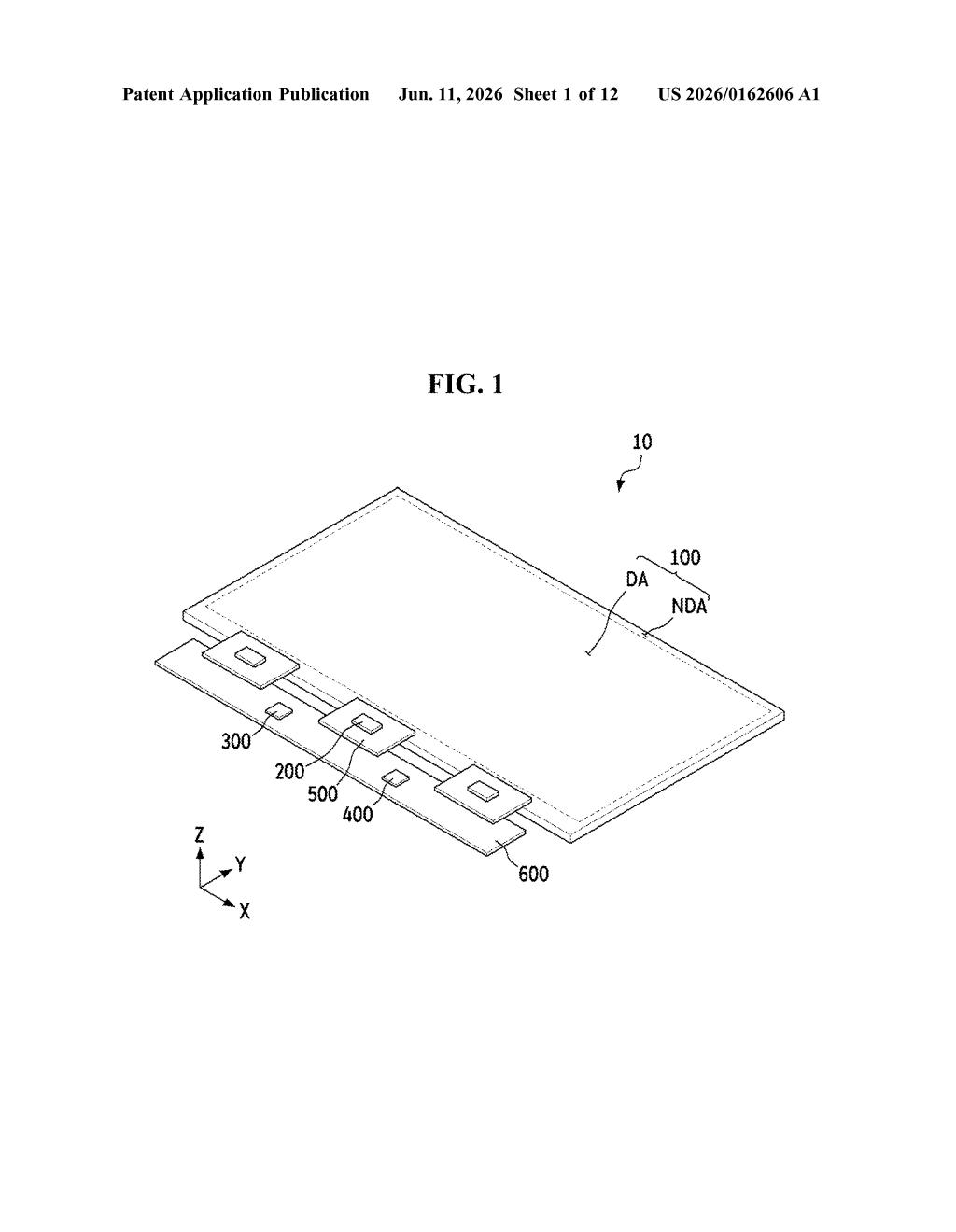
What Samsung's dual-capacitor pixel circuit actually does
Imagine a dimmer switch that slowly drifts over time, making a light bulb flicker in ways too subtle to notice at first — until one day the picture looks uneven. That's a real problem inside OLED screens, where millions of microscopic circuits each control a single glowing dot.
Samsung's patent describes a revised version of that per-pixel circuit. The key addition is a second small electrical reservoir (a capacitor) placed at a specific point in the circuit. Together, the two capacitors help keep the voltage that controls brightness rock-steady, even when the surrounding components aren't perfectly consistent.
This kind of low-level pixel engineering is the unglamorous backbone of OLED image quality. Getting it right means colors stay accurate, blacks stay deep, and the screen doesn't develop uneven patches after months of use.
How the two capacitors stabilize the driving transistor
At the heart of every OLED pixel is a driving transistor — a microscopic switch that controls how much current flows through the light-emitting element, and therefore how bright that pixel appears. Variations in that current, caused by manufacturing differences or aging, are a chronic source of image-quality problems.
Samsung's circuit addresses this by introducing a bias electrode on the driving transistor — an extra control terminal that can be used to nudge the transistor's behavior independently of its main gate. A dedicated second transistor feeds the correct voltage to this bias electrode based on an incoming data signal.
The structural innovation is in how two capacitors are positioned:
- A first capacitor sits between the gate electrode and the source electrode of the driving transistor — a standard arrangement for holding a programmed voltage level.
- A second capacitor sits between the bias electrode and the source electrode — a less common placement that helps anchor the bias voltage and resist drift.
Together, the two capacitors create a more stable voltage environment around the driving transistor, reducing the chance that small variations in the circuit will translate into visible brightness differences between pixels.
What this means for future Samsung OLED displays
OLED displays are only as good as the uniformity of their pixel circuits. Panel aging, temperature swings, and manufacturing tolerances all conspire to make individual pixels drift from their programmed brightness over time — which is why high-end OLED TVs and phones run periodic compensation routines. A circuit architecture that's inherently more stable reduces how hard that compensation has to work, which can translate to better image quality and longer panel life.
For you as a buyer, this kind of incremental pixel-circuit improvement is the sort of thing that compounds quietly across product generations. It won't show up in a spec sheet, but it's part of why premium Samsung OLED panels tend to hold their picture quality better than budget alternatives.
This is foundational display engineering — the kind of work that never makes a press release but accumulates into a meaningful quality lead over time. Samsung Display supplies panels to a huge share of the premium smartphone and TV market, so even incremental improvements to pixel-circuit stability have wide downstream impact. It's not a flashy filing, but it's exactly the sort of IP that matters in a commoditizing display market.
There are more where this came from
We read every patent application Big Tech publishes and send you the ones worth knowing. Plain English, free, every week.
Want this weekly breakdown for a company we don't cover? Patentlyze Pro →