
Qualcomm Patents Technology That Picks the Right Filter to Sharpen Compressed Video
Every time you stream compressed video, the decoder tries to erase the blurring and blocking artifacts compression leaves behind. Qualcomm's new patent describes a way to let the decoder choose from multiple different cleanup strategies depending on what kind of image content it's looking at, rather than applying the same blunt filter to everything.
How Qualcomm's video cleanup filter picks its approach
Imagine watching a video call where one corner of the screen has a person's face, another has text on a whiteboard, and the background is a blurry window. When video is compressed and then decoded, each of those regions reacts differently to the process and ends up with different kinds of visual noise.
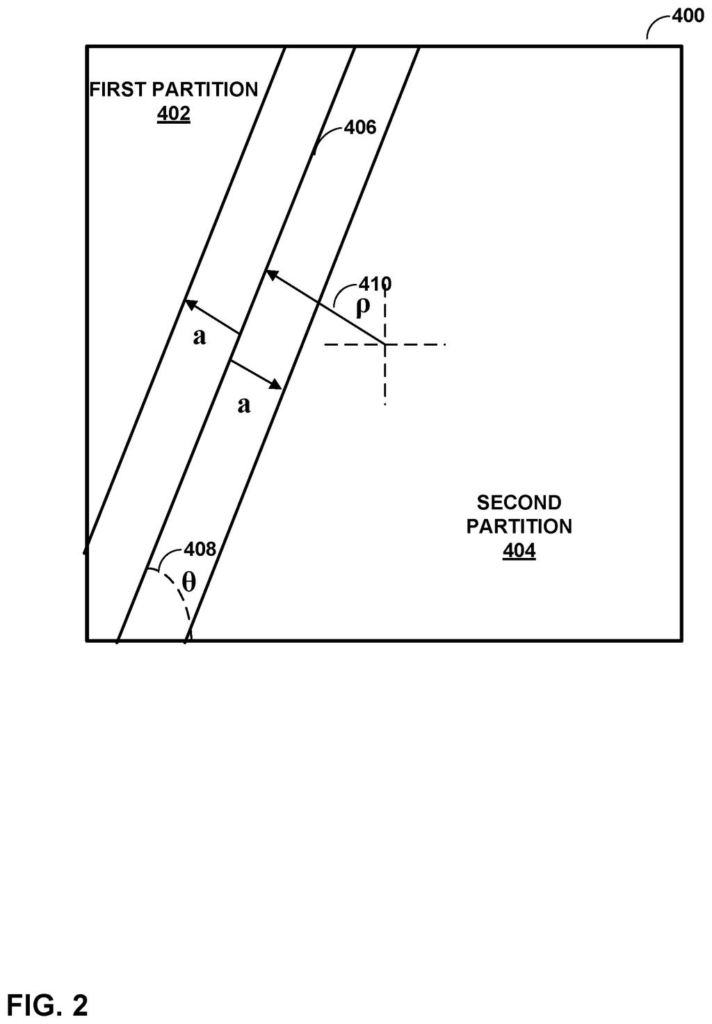
Qualcomm's patent describes a system that looks at each small block of decoded video and asks: what kind of content is this? Is it a sharp geometric edge, a gradual gradient, a textured surface? Based on that answer, it picks from a menu of specialized filters, each tuned for that content type. One classifier looks at the geometric shape of how the block was split during encoding; another looks at the direction and strength of edges in the image.
The result is that each part of your video frame gets a cleanup filter that actually fits it, rather than a one-size-fits-all pass. That can mean fewer soft edges, fewer blocky artifacts, and overall a picture that looks closer to what was originally recorded.
… determining a filter class for the reconstructed block using a classifier from a plurality of classifiers, wherein the plurality of classifiers includes one or more of a first classifier based on a geometry partition and a second classifier based on a histogram of gradients …
Translation: The system figures out how to categorize the video block using specific tools like shape layouts and gradient patterns.
How the classifier sorts blocks before filtering
The patent centers on what video engineers call a loop filter, specifically an adaptive loop filter (ALF). After a video decoder reconstructs a compressed block of pixels, the image usually has artifacts: blocky edges, smearing, ringing around sharp lines. A loop filter is applied after reconstruction to clean those up before the frame is displayed.
What makes this patent distinct is the multi-classifier approach to deciding which filter to use. The system has at least two classifiers:
- Geometry partition classifier: looks at how the encoder originally divided the image block during compression (the "partition geometry") and uses that shape as a clue about what kind of content is inside.
- Histogram of gradients classifier: analyzes the direction and intensity of pixel-level edges in the block, a technique borrowed from image recognition research.
Based on whichever classifier is active, the block gets assigned to a filter class, a category that maps to a specific pre-determined filter kernel (essentially a small mathematical recipe for adjusting pixel values). That filter is then applied to the reconstructed block.
The patent allows the system to use one classifier, the other, or a combination, and the choice can be signaled in the bitstream so both encoder and decoder stay in sync. This is a codec-level software change, not a new physical chip architecture, though it would run on Qualcomm's existing video processing hardware.
A method and apparatus for coding video data includes filtering video data using a loop filter, such as an adaptive loop filter (ALF), that is determined using a classifier from a plurality of classifiers.
Translation: The technology cleans up compressed video by running it through an adjustable filter chosen by a smart classifier.
What this means for video quality in Qualcomm chips
For consumers, this kind of filter improvement tends to show up as better-looking video at the same data rate, which matters most in constrained situations: video calls on a weak connection, streaming at lower bitrates, or recording at high compression on a phone. Qualcomm's chips power the video codecs in a huge share of Android flagship phones and some laptop platforms, so a meaningful quality improvement at the codec level can reach a lot of devices.
The patent sits squarely in the ongoing standardization work around next-generation video codecs, where adaptive filtering is a known competitive battleground among chip and codec makers. The approach described is a software-level codec enhancement, meaning the shortest path to shipping it runs through a codec firmware or driver update rather than new silicon, which lowers the barrier considerably. Readers interested in how this fits alongside other video and chip filings can find that context across the latest Big Tech patents covering video codec and mobile processor development.
The ship path here is shorter than most codec patents because this is a software-level change to an existing filter architecture, no new hardware required, just updated classifier logic in the decoder. The two-classifier design, geometry partitions plus edge histograms, is a concrete and testable extension of what ALF already does in HEVC and VVC today. The main unknowns are whether the added classification overhead fits within the power budget of mobile decoding and whether the quality gains are large enough to meet standardization thresholds if Qualcomm pursues this through a codec standards body.
There are more where this came from
We read every patent application Big Tech publishes and send you the ones worth knowing. Plain English, free, every week.
The drawings
9 drawing sheets from US 2026/0238785 A1 · click any drawing to enlarge


Want this weekly breakdown for a company we don't cover? Patentlyze Pro →
Be the first to weigh in