
Qualcomm Patents a Lower-Power AI Video Filter for Mobile Chips
Qualcomm has filed a patent for a way to run AI-powered video cleanup on a phone chip without draining the battery, by breaking one expensive math operation into several smaller, cheaper ones that chain together.
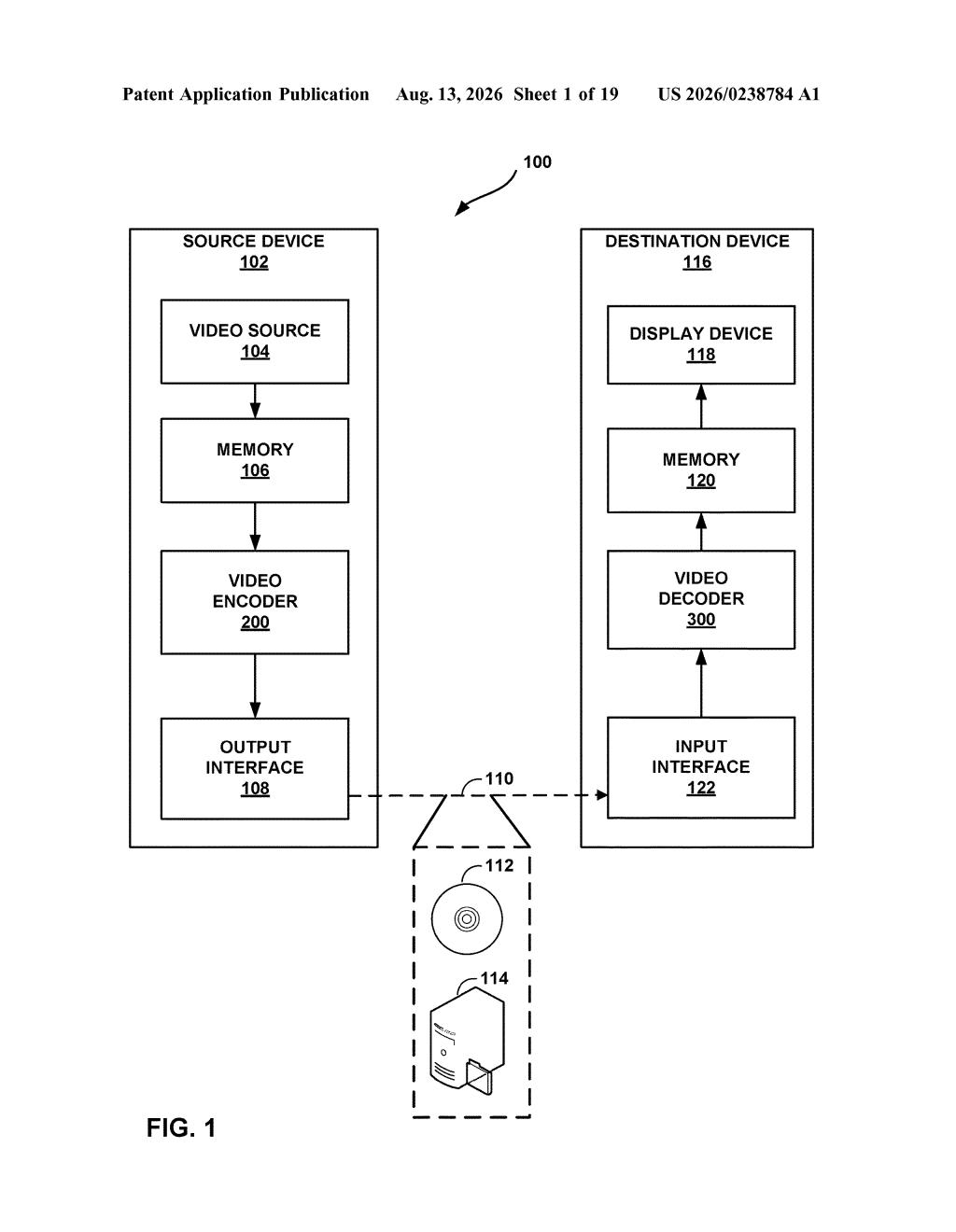
What Qualcomm's AI video filter actually does to your stream
Every time your phone plays a compressed video, the chip decodes each frame and then tries to repair the blurring and blockiness that compression introduced. Doing that repair with an AI model gives the best picture quality, but AI is power-hungry, and phone chips have hard limits.
What Qualcomm's patent describes is a way to get most of the quality benefit of a full AI filter while spending far less processing power to get there. Instead of running one giant math operation across the whole image at once, the system chains together several much simpler operations that together approximate the same result.
The payoff for you: sharper-looking video on a streaming app or video call, without your phone heating up or the battery dropping faster than it should.
… performing a neural network (NN)-based filter process on the reconstructed block to generate a filtered block, wherein the NN-based filter process includes performing a plurality of separable convolutions, in a backbone block of the NN-based filter process, to approximate a multi-dimensional convolution …
Translation: The chip cleans up video using an artificial intelligence filter designed to run efficiently.
How the separable convolution chain cuts compute load
Video compression always discards some image information to save space, and when the decoder reconstructs each frame, visible flaws appear, especially around sharp edges and text. A neural network filter (an AI system trained to recognize and fix those flaws) can clean up those artifacts frame by frame, but running one is computationally expensive.
Qualcomm's patent describes a specific filter architecture built around separable convolutions. A convolution, in this context, is a mathematical sliding-window operation the AI uses to examine every patch of a frame. A full multi-dimensional convolution looks at width, height, and depth all at once, which is accurate but slow. Separable convolutions break that single operation into sequential one-dimensional passes (first horizontal, then vertical, for example), which produce a similar result at a fraction of the cost.
The patented backbone block chains these steps in a specific order:
- A 1×1 convolution that compresses the data into a smaller working set
- A PRELU layer (a learned activation function that decides which signals to pass forward and which to suppress)
- A second 1×1 convolution that expands back out
- A horizontal separable convolution pass
- A vertical separable convolution pass
- A final 1×1 convolution to reassemble the result
The net effect is that the network approximates what a heavier, more expensive filter would produce, while running fast enough to keep up with real-time video on a mobile chip.
A video coder is configured to perform a neural network (NN)-based filter process on reconstructed blocks of vide data.
Translation: The system uses artificial intelligence to process and improve video frames on mobile devices.
What this means for AI video on phones and tablets
On a phone or tablet, every milliwatt of power spent on AI video filtering is a milliwatt not spent on the screen, the radio, or the app itself. Qualcomm's chips power a huge share of Android flagship devices, and those chips already include dedicated AI accelerators. A filter architecture designed specifically to be efficient on those accelerators could allow device makers to turn on AI-based video enhancement by default, something that is currently either off or limited to plugged-in modes.
This filing sits squarely in the ongoing effort by chip companies to close the gap between the quality of AI video tools and the practical power budgets of mobile hardware. Qualcomm already sells its chips on the strength of their AI performance, and patents like this one map the specific engineering decisions behind that pitch. For readers tracking where video and AI intersect at the silicon level, Big Tech patent news covers the steady stream of neural-network video filings from Qualcomm, Apple, and others working the same problem from different directions.
The core tradeoff here is fidelity for speed: separable convolutions are an approximation, and the patent does not quantify how close that approximation gets to the quality of a full multi-dimensional convolution. That gap is the real question. If the quality loss is imperceptible in normal viewing conditions, the power savings are a genuine win for mobile video. If the approximation breaks down on fast motion or high-contrast scenes, it becomes another filter that chip vendors enable in benchmarks and users disable in settings. The architecture is carefully specified, which suggests Qualcomm has measured the tradeoff, but the patent does not publish those numbers, so the engineering bet remains unverified from the outside.
There are more where this came from
We read every patent application Big Tech publishes and send you the ones worth knowing. Plain English, free, every week.
The drawings
19 drawing sheets from US 2026/0238784 A1 · click any drawing to enlarge


Want this weekly breakdown for a company we don't cover? Patentlyze Pro →
Be the first to weigh in