
Samsung Patents a Fix That Stops Background Tasks From Making Screens Stutter
Every time your TV or phone freezes mid-animation, there's a good chance a background process is hogging a resource the display needs. Samsung's new patent tackles that exact problem with a targeted CPU scheduling trick.
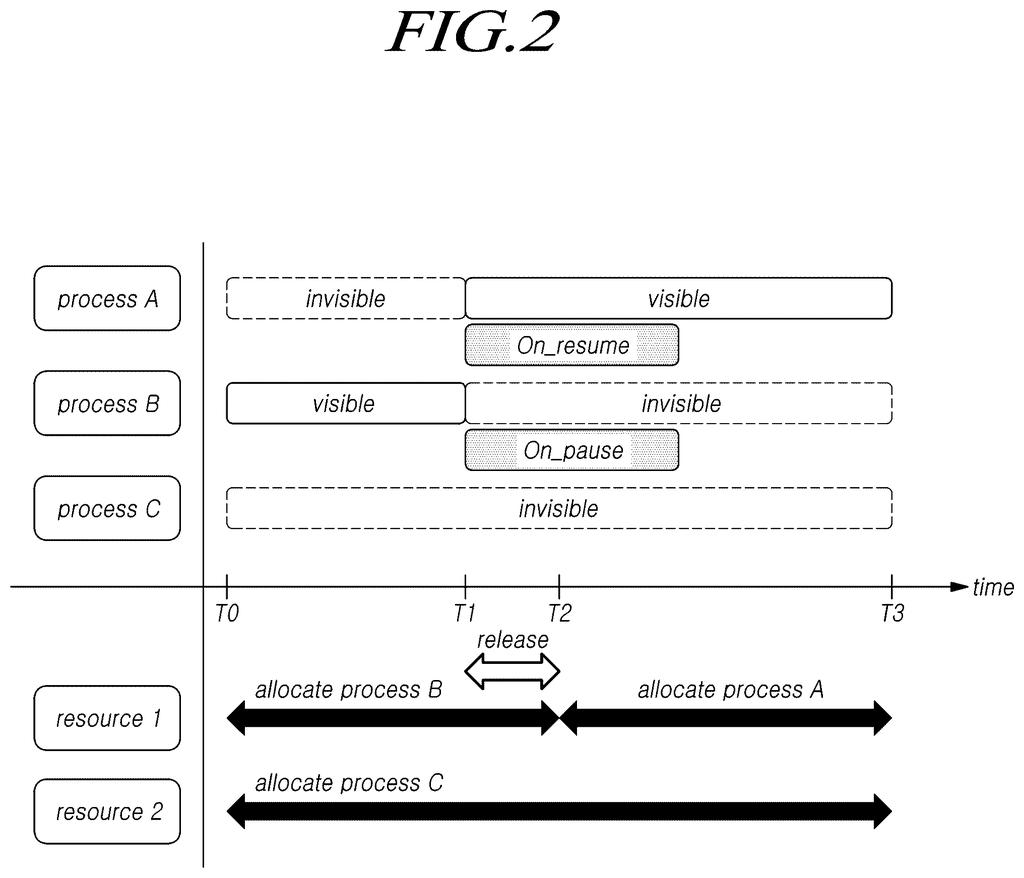
How Samsung's scheduling trick prevents screen freezes
When your phone or TV is drawing something on screen, it needs access to shared internal resources like memory or a hardware component. If a background app is already using that resource, the display process has to wait, and that wait is what causes stutters, freezes, or dropped frames.
Samsung's patent describes a fix where the device temporarily promotes the background process to a higher priority so it can finish its work and release the resource faster. Once it lets go, its priority drops back to normal. The display process never actually gets blocked for long, and you get a smoother picture as a result.
The key insight is that the device does this automatically, without you doing anything. No setting to toggle, no app to close. The processor detects the conflict and resolves it in the background, then resets everything to its original state.
… based on determining that the first resource is in use by a second process and that a CPU scheduling priority of the first process is higher than a CPU scheduling priority of the second process, adjust the CPU scheduling priority of the second process to be higher than or equal to the CPU scheduling priority of the first process …
Translation: If a background task is hogging a resource needed by your screen, the system temporarily gives that task a priority boost.
How the priority swap and restore cycle works
The patent describes a display device (a phone, TV, or similar screen-bearing product) that monitors CPU scheduling priorities across processes in real time.
When a process responsible for rendering the screen requests a shared resource and finds it locked by a lower-priority background process, the system does something counterintuitive: instead of simply waiting, it raises the blocking process's priority to match or exceed the display process's priority. This is a technique sometimes called priority inheritance (the idea that a low-priority task should temporarily inherit the urgency of the high-priority task it's blocking), applied here specifically to display output.
Once the background process finishes with the resource and releases it, the system immediately restores that process's priority to its original level. The display process can then acquire the resource and continue rendering.
- Detects when a screen-rendering process is blocked by a lower-priority background task
- Temporarily elevates the background task's CPU priority to unblock the display faster
- Resets the background task's priority the moment the resource is freed
This is deliberately narrow in scope: the adjustment is temporary, targeted, and automatically reversed, so it does not permanently distort the device's scheduling order.
… in response to the first resource being released by the second process, restore the CPU scheduling priority of the second process to an original CPU scheduling priority.
Translation: Once the background task finishes using the resource, the system returns it to its normal, lower priority level.
What this means for Samsung TV and phone displays
For anyone watching a video, playing a game, or using an app that relies on smooth animation, this kind of invisible conflict is one of the more common causes of jank that is hard to blame on any single app. Samsung's approach addresses it at the operating-system level, which means it could apply across the full range of Galaxy phones, tablets, and smart TVs without requiring developers to write special code.
The fix is narrow enough that it probably does not require a major OS change, which suggests it could realistically ship in a software update. Samsung files a steady volume of display and processor efficiency patents, and this one sits alongside the latest Big Tech patents targeting low-level scheduling improvements for consumer display hardware, a category that has grown as screen refresh rates push to 120Hz and beyond.
If you have ever blamed a dropped frame on your phone being 'old' or 'cheap,' a bug like this is often the real culprit, and fixing it in the scheduler rather than in each individual app is the right place to do it. The payoff is real: smoother screens on existing hardware, no app updates required. The filing is fairly narrow in technical scope, but that narrowness is what makes it believable as something that actually ships.
There are more where this came from
We read every patent application Big Tech publishes and send you the ones worth knowing. Plain English, free, every week.
The drawings
9 drawing sheets from US 2026/0236298 A1 · click any drawing to enlarge


Want this weekly breakdown for a company we don't cover? Patentlyze Pro →
Be the first to weigh in