
Qualcomm Patents a Way to Send Only the Visible Part of a Mirrored Screen
When you mirror your phone to a TV or projector, your device sends the whole screen every single frame, even the blank parts. Qualcomm's new patent describes a system that skips the empty areas entirely, sending only the pixels that actually contain content.
What Qualcomm's partial-frame screen mirroring actually does
Every time you cast your phone screen to a TV or wireless display, your device is sending a full rectangle of video, corner to corner, whether those corners have anything useful in them or not. If you're mirroring a video that's surrounded by black bars or a floating window on a plain background, your phone is still burning bandwidth transmitting all that nothing.
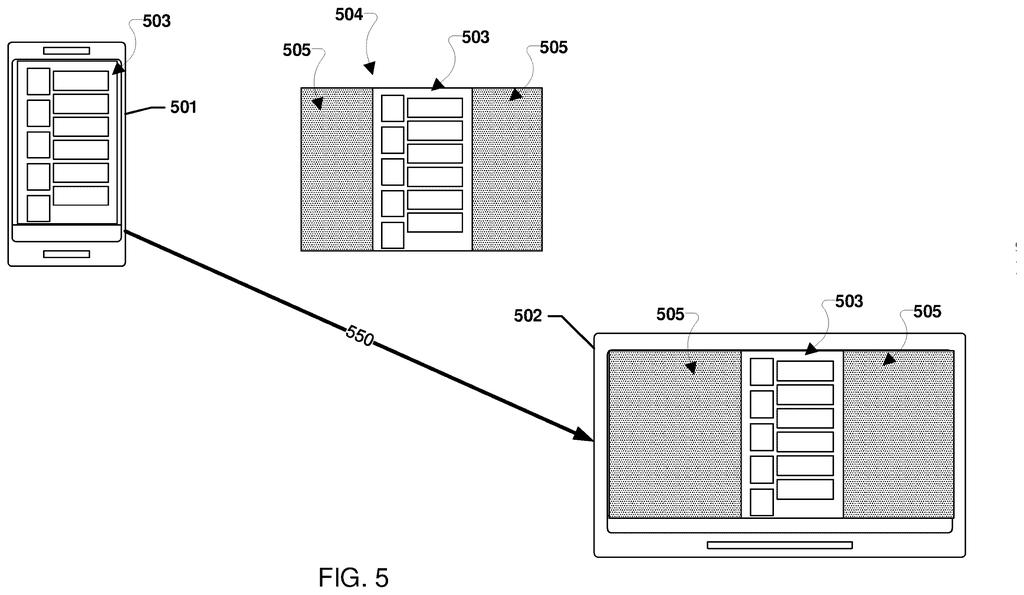
Qualcomm's patent describes a smarter handshake. Before streaming begins, the source device (your phone or laptop) figures out which part of the screen actually has content worth sending. It first sends a plain, solid-color frame so the receiving display knows what to show in the empty areas, then it sends only the active region as a smaller partial frame going forward. The display fills in the rest itself.
The result is that your device isn't working as hard, and the wireless connection between the two gadgets carries less data, which can help in crowded Wi-Fi environments or on devices with modest processors.
generate and encode a frame of pure filling color in response to establishing a session for mirror-casting of video content with a sink wireless device; send the encoded frame of pure filling color to the sink wireless device; determine a valid frame region of interest; …
Translation: The device starts by sending a blank screen before figuring out what part of the video you actually want to see.
How the source device decides what pixels to transmit
The patent targets Miracast, the Wi-Fi standard that lets devices mirror screens wirelessly to TVs, monitors, and projectors without a cable. The problem it solves is straightforward: Miracast sessions transmit full frames even when most of the frame is static or empty, which wastes bandwidth and processing power.
The system works in a defined sequence:
- When a session starts, the source device generates and encodes a pure filling color frame (essentially a blank canvas in one solid color) and sends it to the receiving display. This tells the sink what color to paint any area not covered by content.
- The source then calculates a valid frame region of interest, meaning the bounding box of the screen area that actually contains changing video content.
- It sends the coordinates of that region to the sink, so the sink knows where to place the incoming partial picture.
- From that point forward, the source encodes and transmits only the pixels inside that region as a partial frame, skipping everything outside it entirely.
The encoding step is standard video compression (H.264 or H.265 style, though the patent doesn't mandate a specific codec), applied to a smaller pixel grid. The sink device reconstructs the full display by combining the incoming partial frame with the stored background color. The net effect is that the wireless link carries a meaningfully smaller payload per frame.
Various embodiments include systems and methods for supporting Miracast® edge-to-edge (E2E) stream transmission. Various embodiments provide systems and methods for Miracast® E2E stream transmission of partial frame regions.
Translation: These patents describe ways to transmit only specific portions of a wireless display stream rather than the whole screen.
What this means for wireless screen-sharing quality
For everyday users, the clearest benefit is more reliable screen mirroring in situations where Wi-Fi is congested, like a conference room with a dozen devices on the same network, or a home where the TV, phones, and laptops are all competing for the same router. Sending less data per frame gives the connection more headroom, which translates to fewer dropped frames and smoother playback on the receiving screen.
For device makers, this kind of optimization matters most at the chip level, which is exactly Qualcomm's territory: the company supplies the wireless chips inside a huge share of Android phones, Windows laptops, and streaming dongles. A patent like this fits the latest Big Tech patents in wireless video transmission, where incremental efficiency gains at the chip layer add up to real differences in battery life and connection stability across millions of shipped devices.
The problem this patent attacks is real. Miracast has had a reputation for unreliability in congested wireless environments for years, and the root cause is often bandwidth saturation from transmitting more data than the session actually needs. Partial-frame transmission is a direct, proportionate response to that specific failure mode. The engineering approach here is conservative and well-matched to the scale of the problem: it doesn't require a new protocol or new hardware, just a smarter agreement at session setup about what to actually send.
There are more where this came from
We read every patent application Big Tech publishes and send you the ones worth knowing. Plain English, free, every week.
The drawings
11 drawing sheets from US 2026/0238848 A1 · click any drawing to enlarge


Want this weekly breakdown for a company we don't cover? Patentlyze Pro →
Be the first to weigh in