
Qualcomm Patents Technology to Detect and Report Fake Network Connection Requests on Phones
Some of the control messages that tell your phone to reconnect to a cell tower travel without encryption, so a nearby attacker could fake one. Qualcomm's patent application has the phone watch for fishy timing and tell the network when something looks off.
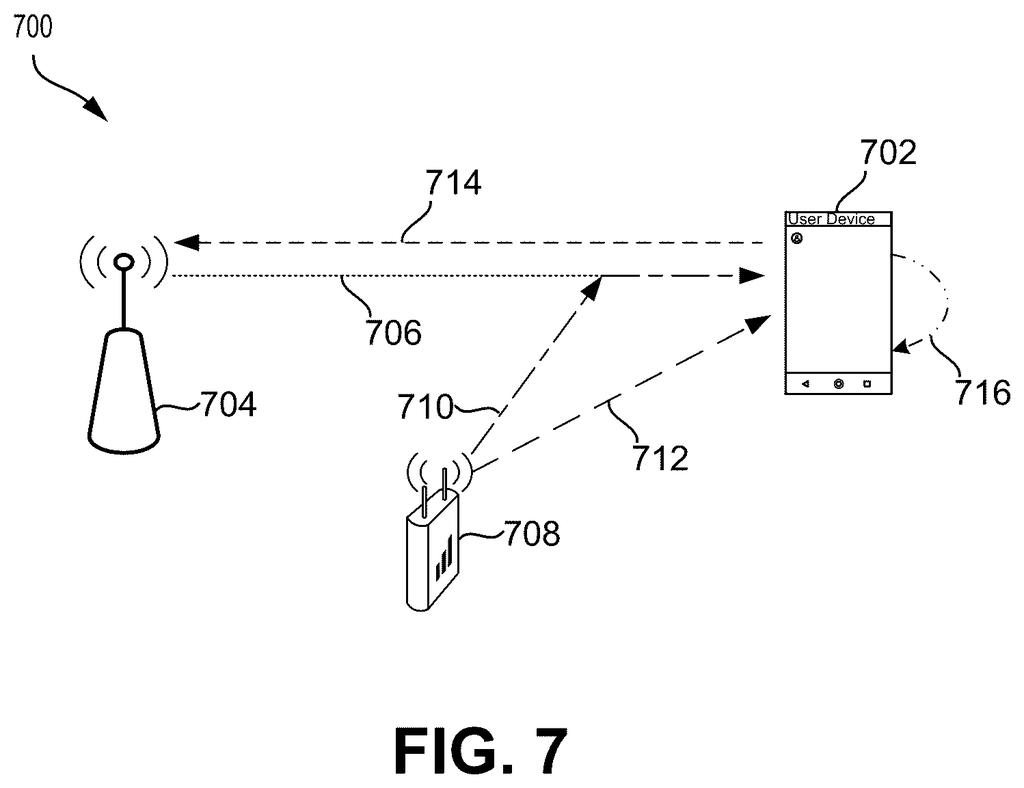
What Qualcomm's fake-reconnect detector does
You're streaming a show on the train, and the video keeps freezing. Your phone keeps dropping what it's doing to reconnect to the nearest cell tower, over and over, and your battery drains faster than it should.
Here's one way that can happen. When your phone loses its timing with a tower, the tower sends it a reconnect order. But those orders travel without encryption or a tamper check, so an attacker nearby could fake one, or alter a real one, and keep your phone busy reconnecting.
Qualcomm's patent application describes a phone that watches for signs an order is fishy, like two orders arriving in quick succession or the tower never answering. When it spots something, it writes up a security report and sends it to the network so the carrier can investigate.
receive, in a downlink control information (DCI) message, a physical downlink control channel (PDCCH) order; determine a security event based on the received PDCCH order; generate a security report based on the determined security event; and output the security report to a network.
Translation: The device catches a suspicious network command, logs it as a security threat, and sends an alert back to the carrier.
How your phone decides a reconnect order is fake
In 5G, when a phone drifts out of sync with a tower, the network sends it a PDCCH order. That is a command, carried inside a control message called DCI (downlink control information), telling the phone to run a random access procedure, or RACH (basically a reconnect handshake). DCI messages are not encrypted or tamper-protected, so an attacker who learns the phone's temporary ID, which is sent in the clear when it connects, could inject a fake order or alter a real one so it gets blocked.
The patent has the phone check each order it receives for signs of trouble. Each warning sign is called a security event:
- A second order arrives before the time alignment timer expires (the clock saying the phone should still be in sync).
- A scheduling message collides with the reconnect slot named in the order.
- A small timing adjustment arrives before the full timing command that normally comes first.
- The tower never answers repeated reconnect attempts, or the number of missed replies passes a set limit.
- Service quality drops past a threshold while more reconnects keep getting scheduled.
When one of these fires, the phone builds a report. It can include how many orders arrived, which messages conflicted with them, how many reconnect attempts failed, service quality readings, and the phone's location. The report goes to a base station or another part of the network.
The list of events can be built in at the factory or sent down by the network. The filing says thresholds can be tuned from normal-use history and can differ by location.
Why carriers may want phones reporting attacks
The practical payoff is for the people running the network. Today a phone that gets hit with fake reconnect orders just suffers: stalled apps, a hotter battery, a dropped connection. Under this design, each affected phone becomes a small sensor that tells the carrier what it saw, so the carrier can investigate. The location details in the report could help narrow down where the fake orders come from.
For you, the benefit would be indirect. The patent describes detecting and reporting, and it says nothing about stopping a fake order from reaching your phone. Your phone still has to spot the pattern first, and the carrier still has to do something with the report. The ideas apply to phones, watches, headsets and cars, since any device on a cellular connection receives these orders.
Qualcomm's 571st filing in our Qualcomm coverage since May adds to a run that includes the predictive radio patent and the watch-based car finder.
Every check the phone runs rests on a guess about what a healthy network looks like, and those guesses can be wrong. A crowded cell tower, a weak signal, or a carrier hiccup can look suspicious enough to trigger a false alarm, which is why the filing wisely allows thresholds to be tuned by location and normal usage patterns.
The deeper cost is timing: the phone reports after reconnecting at least once, meaning an attacker can keep pressing while a carrier slowly reads the evidence. Sending location and signal quality data back to the network also creates a privacy exposure for anyone sensitive about where their phone has been.
That said, the trade reads as worth it. Simple timing checks burn almost no battery, and giving carriers documented evidence to investigate is more than they had before, as long as carriers actually act on what they receive.
Get our take in your Top Stories
Liked this breakdown? Add Patentlyze as a preferred source on Google, and our plain-English take shows up more often in your Top Stories the next time Qualcomm patent news breaks.
There are more where this came from
We read every patent application Big Tech publishes and send you the ones worth knowing. Plain English, free, every week.
The drawings
9 drawing sheets from US 2026/0353087 A1 · click any drawing to enlarge


Show the other 1 sheets

Want this weekly breakdown for a company we don't cover? Patentlyze Pro →
Be the first to weigh in