
Qualcomm Files Patent for Phones That Grade Their Own Signal-Predicting AI
A phone's AI can look like it is failing while your connection runs fine. This Qualcomm filing lets the network judge that AI on several checks at once.
What Qualcomm's AI report card for phones does
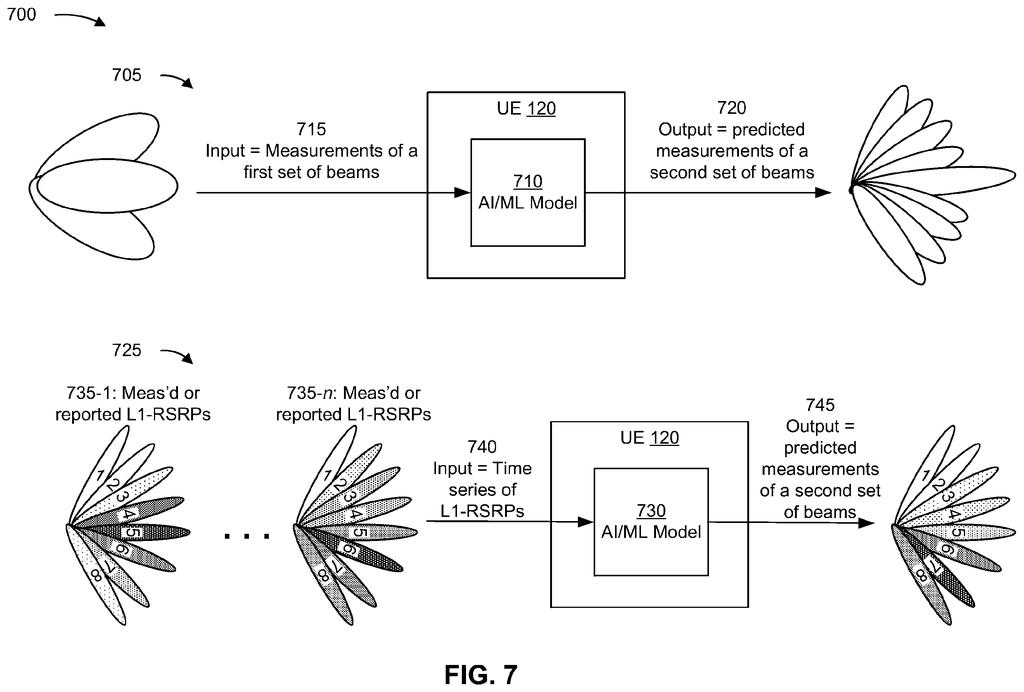
Your phone does more than receive signals from a cell tower. It also uses AI to guess which direction of signal will work best. Judging whether that AI is any good by a single score can mislead. The guesses may look off while your connection runs fine, and acting on that one score can lead to worse beam choices and even a lost connection.
Qualcomm's patent application describes a more detailed report card. The network tells your phone which events to watch for, such as the AI's guesses missing the mark or your signal quality sagging. Your phone then reports back when a single event happens, or only when a chosen combination happens together.
With the fuller picture, the network can keep the AI running, switch it off, or adjust it. It can also change the rules later.
receive configuration information indicating a plurality of events that are associated with artificial intelligence or machine learning (AI/ML) model monitoring, each event of the plurality of events associated with a respective criterion of a plurality of criteria; …
Translation: The phone gets instructions on what conditions to watch for while checking its own artificial intelligence software.
How a phone decides when to flag its AI
The patent covers both ends of the conversation: your phone (the filing calls it user equipment, or UE) and the network equipment it talks to, such as a cell tower.
The network first sends the phone configuration information: a list of events to watch, each tied to a rule (a criterion) with a threshold. The filing gives four examples:
- The AI's beam predictions (guesses about which directional radio beam will work best) miss too often within a time window.
- Link quality, such as signal strength or throughput, stays below a threshold for too long.
- The data the AI sees now drifts away from the data it was trained on (an out-of-distribution check).
- The AI's predicted signal strength differs from the measured strength too many times.
The phone checks these rules, sometimes using dedicated reference signals (known test signals the network sends so the phone can measure them). It can report each event as it happens, or hold the report until a chosen combination occurs, such as poor prediction accuracy plus poor link quality. Reports travel over uplink control information or MAC signaling (two existing control channels in 5G).
When the network receives a report, it can activate, deactivate, or modify the AI model. It can also send updated configuration that changes the events, thresholds or time windows. The filing says single-event reporting lowers the processing load on the phone, while combination reporting lowers it on the network.
The UE may identify, according to one or more criteria of the plurality of criteria, that a set of events, of the plurality of events, corresponding to the one or more criteria have occurred.
Translation: The device notices when specific performance triggers or errors happen while running its prediction models.
Why one bad score shouldn't switch off the AI
For you, the practical stake is a more reliable connection. If a phone's AI model gets shut off because one score looked bad, the phone may fall back to less efficient ways of choosing signal beams. The filing says relying on a single score can lead to radio link failure, the technical term for losing the connection.
The filing also gives network operators a choice about where the work happens. Phones can report individual events and let the network combine them, or phones can do the combining themselves. The document uses 5G standards vocabulary and says the idea can extend to 6G. What it describes is a reporting scheme between phones and networks, and the filing names no product.
Qualcomm's 515th filing in our Qualcomm coverage since May extends the company's GPS-trust work, building on roadside equipment catching bad satellites and spotting fake GPS signals.
The problem is real but narrow. An AI model that guesses signal directions can be judged unfairly by one score, and switching it off by mistake can cost you speed or, in the worst case, a dropped connection. Most people will never notice it happening, which keeps the stakes modest.
The fix is sized to match. Letting the phone and the network agree ahead of time on which checks count, and whether to report them alone or together, is careful bookkeeping. The claims are broad, covering single events, combinations, and the network side of the exchange.
Expect the audience to be the engineers who write cellular rulebooks. You would feel it only as a steadier signal.
Get our take in your Top Stories
Liked this breakdown? Add Patentlyze as a preferred source on Google, and our plain-English take shows up more often in your Top Stories the next time Qualcomm patent news breaks.
There are more where this came from
We read every patent application Big Tech publishes and send you the ones worth knowing. Plain English, free, every week.
The drawings
13 drawing sheets from US 2026/0323351 A1 · click any drawing to enlarge


Show the other 5 sheets


Want this weekly breakdown for a company we don't cover? Patentlyze Pro →
Be the first to weigh in