
Qualcomm Patents RF Sensing System That Triggers Camera Actions Automatically
Qualcomm wants your device to use radio waves — not just its camera — to know when something is about to enter the frame, then act on that knowledge before the lens even sees it.
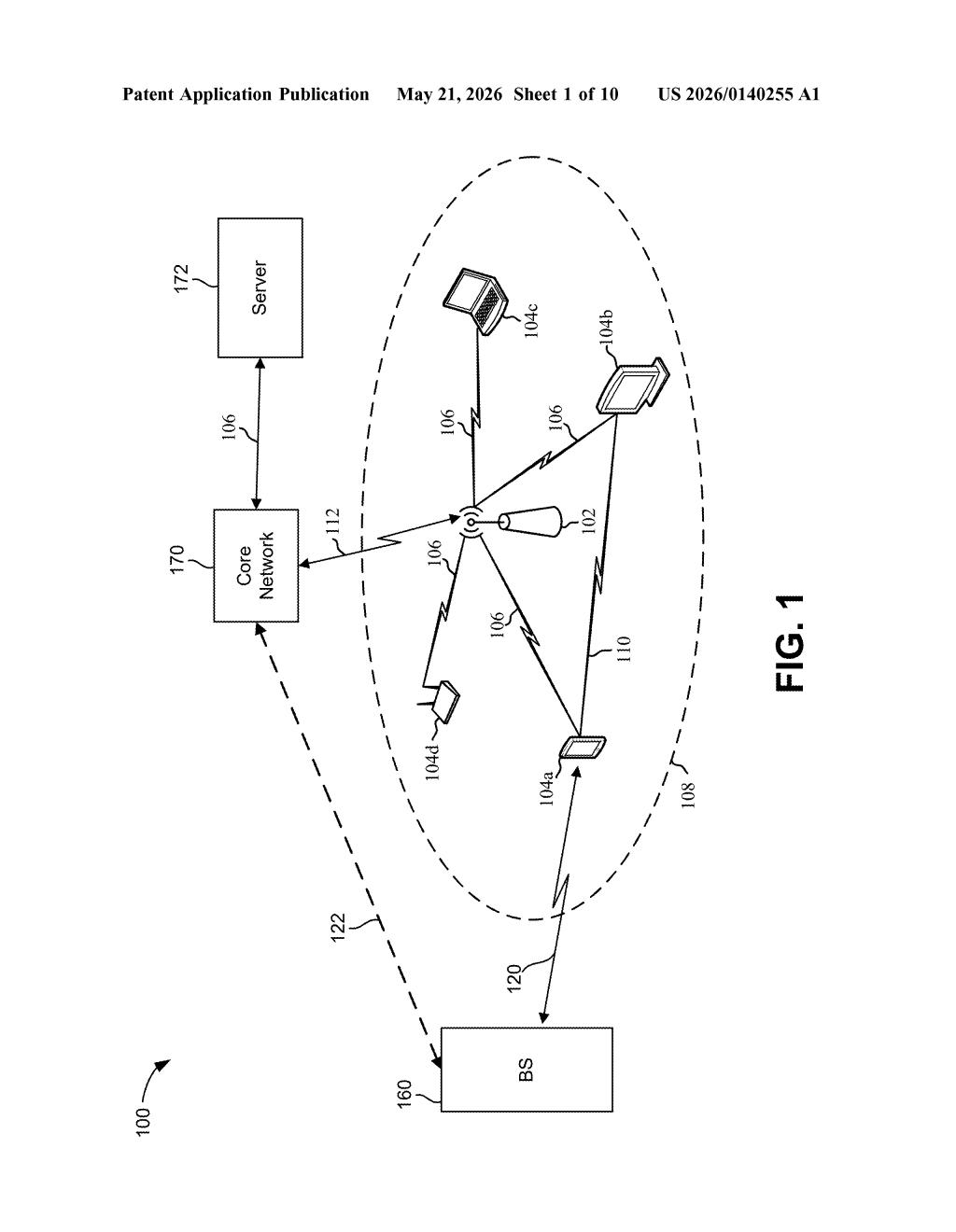
How Qualcomm's RF radar guides your camera's decisions
Imagine your XR headset or phone's camera waking up, zooming in, or switching modes the moment someone walks into the room — before they're actually visible on screen. That's the core idea here.
Qualcomm's patent describes using RF sensing (think miniature radar built into a chip) to bounce radio signals off objects in the physical world. By analyzing how those signals reflect back, the device can figure out where things are relative to what the camera is currently pointed at.
If an object is close enough to the camera's field of view, the device automatically triggers an action — could be waking the sensor, adjusting exposure, or flagging the scene for a mixed-reality overlay. It's like giving your device a sixth sense that works even in the dark or through obstructions.
How reflected RF paths map to the camera's field of view
The system works in two parallel layers: RF sensing and image capture, with a processor acting as the bridge between them.
- The device continuously transmits RF signals and collects the echoes — called reflected paths — that bounce back from objects in the physical environment.
- It then maps those reflections to 3D locations in space and compares them against the current field of view (FOV) of the image sensor — essentially the cone of space the camera can see.
- If a detected object falls within a threshold distance of that FOV boundary, the processor triggers a predefined action on the device or sensor.
The patent frames this primarily as an extended reality (XR) optimization — meaning AR/VR headsets or mixed-reality devices where knowing what's near (but not yet in) the frame is valuable for rendering, tracking, or safety. The "action" triggered is deliberately abstract in the claim language, giving Qualcomm broad coverage over what the response could be: autofocus, wake-from-sleep, scene labeling, hazard detection, or something else entirely.
Notably, the RF sensing here is doing spatial work the camera physically cannot — detecting objects in darkness, at the edge of frame, or partially occluded.
What this means for XR headsets and always-on cameras
For XR headsets and always-on camera devices, latency and awareness are everything. A passthrough AR headset that waits for the camera to see an obstacle before reacting is already too slow. RF sensing as a pre-camera detection layer could let devices pre-load rendering resources, trigger safety alerts, or smooth out tracking — all before the image sensor even fires.
Qualcomm sits at the chip level across a huge swath of Android phones, XR headsets (including Meta's and Microsoft's hardware), and IoT devices. A sensing capability baked into the modem or a companion RF chip could make this a platform-level feature rather than a one-off product trick. That's the real leverage here.
This is a genuinely interesting systems patent — not because RF sensing is new, but because tying it directly to camera FOV geometry as a trigger layer is a specific, useful idea. Qualcomm is clearly thinking about XR platforms where the camera alone isn't fast or omnidirectional enough. Worth watching as a signal of where Snapdragon XR silicon is headed.
Get our take in your Top Stories
Liked this breakdown? Add Patentlyze as a preferred source on Google, and our plain-English take shows up more often in your Top Stories the next time Qualcomm patent news breaks.
There are more where this came from
We read every patent application Big Tech publishes and send you the ones worth knowing. Plain English, free, every week.
Want this weekly breakdown for a company we don't cover? Patentlyze Pro →