
Samsung Patents a System That Sends Sensitive Data to Whichever Security Chip Responds Faster
Samsung is patenting a way for a phone to benchmark its own secure chips in real time and then route encryption work to whichever one finishes faster. It sounds like a footnote, but it has real implications for how next-generation encryption gets deployed on consumer hardware.
How Samsung's dual-chip encryption routing actually works
Imagine your phone has two separate vaults for handling sensitive work like signing a document or encrypting a message. One vault is built into the main chip, and the other is a completely separate, physically isolated security chip. Both can do the job, but depending on the task, one might be significantly faster than the other.
Samsung's patent describes a system where, before your phone commits to running an encryption operation, it checks which vault can complete that specific job more quickly. Then it automatically sends the work to the faster one. You would never see this happen; it all runs invisibly in the background.
The reason this matters now is that the industry is moving toward a new generation of encryption algorithms designed to resist future quantum computers. Those algorithms are more computationally demanding, so deciding where on the chip they run has a real impact on how fast your device stays secure.
How the main processor picks between TEE and SEE
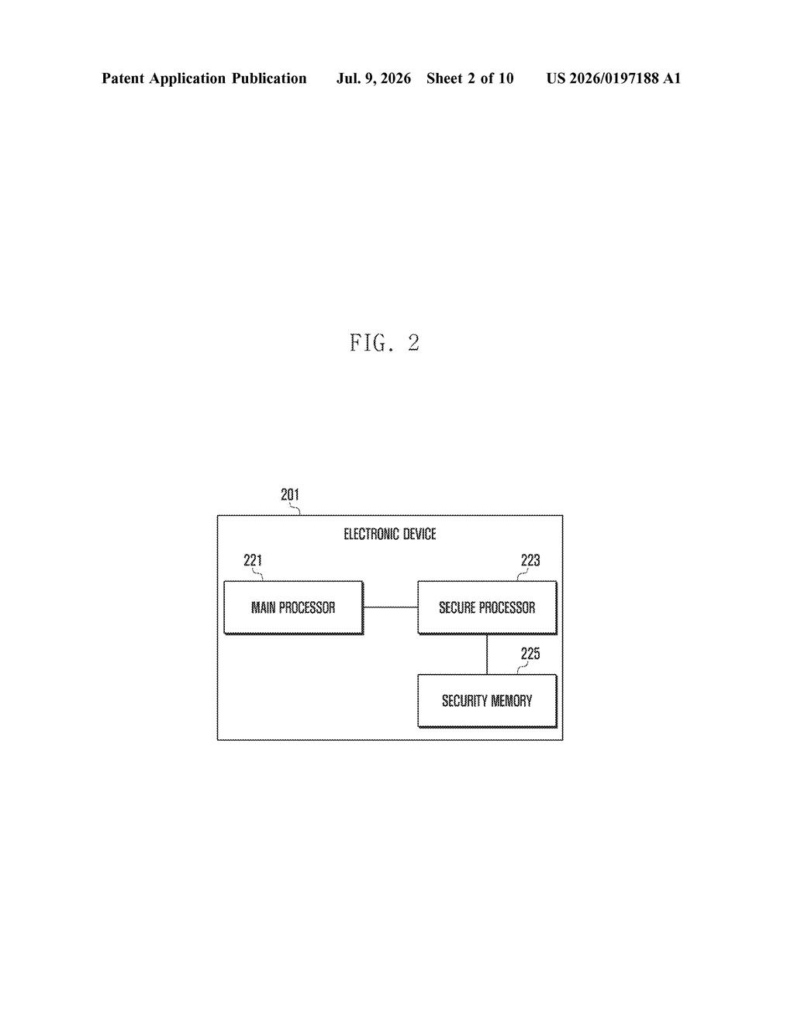
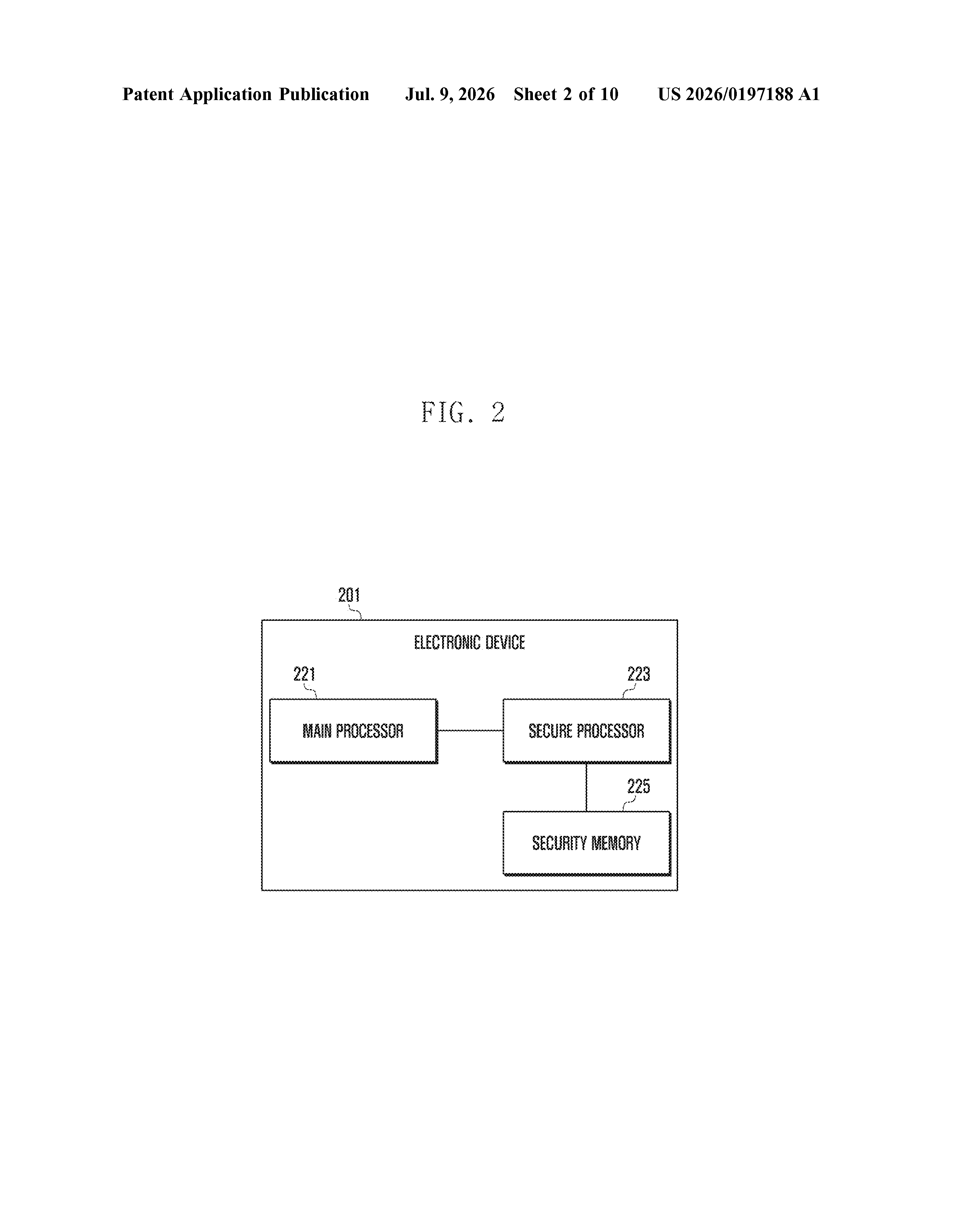
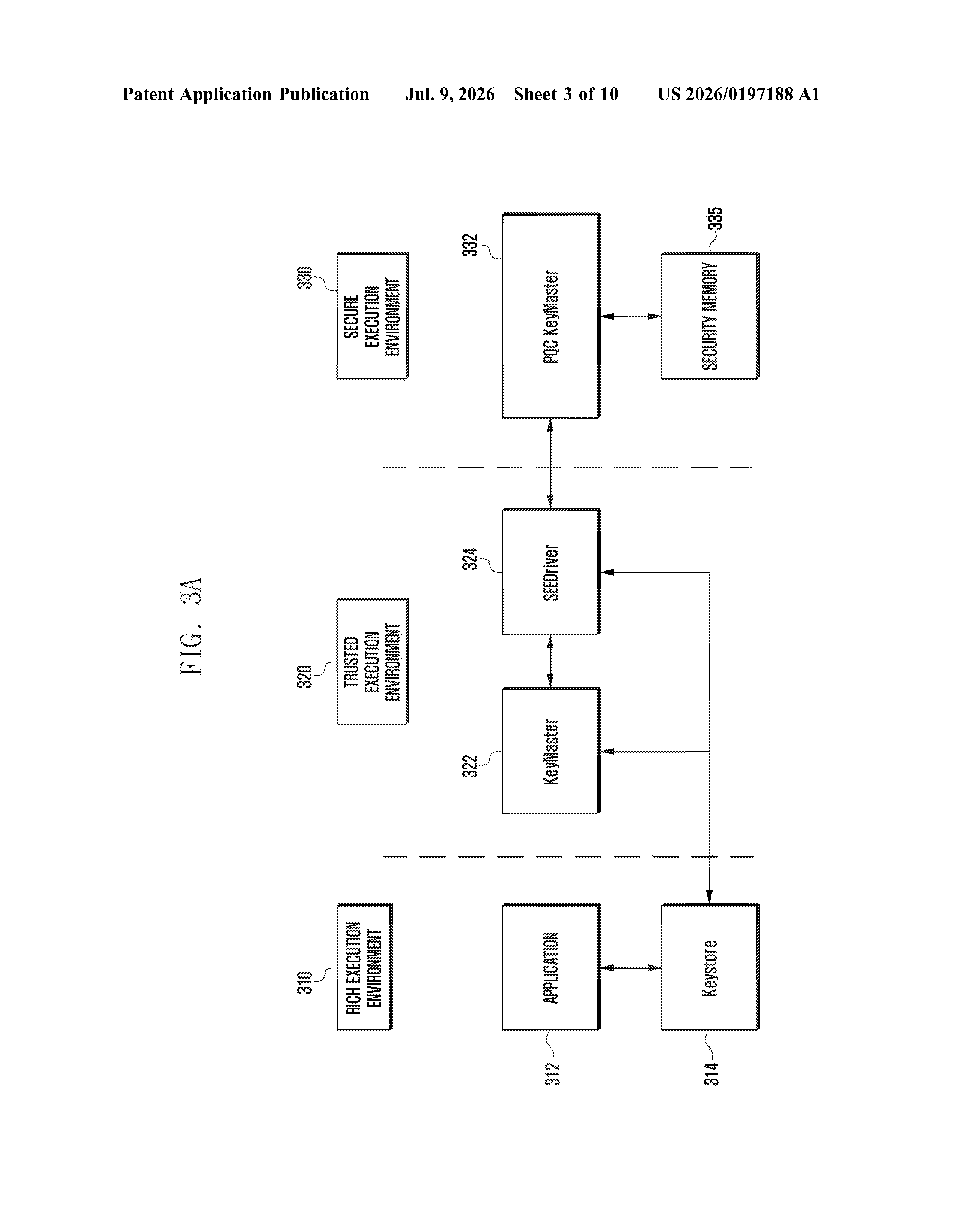
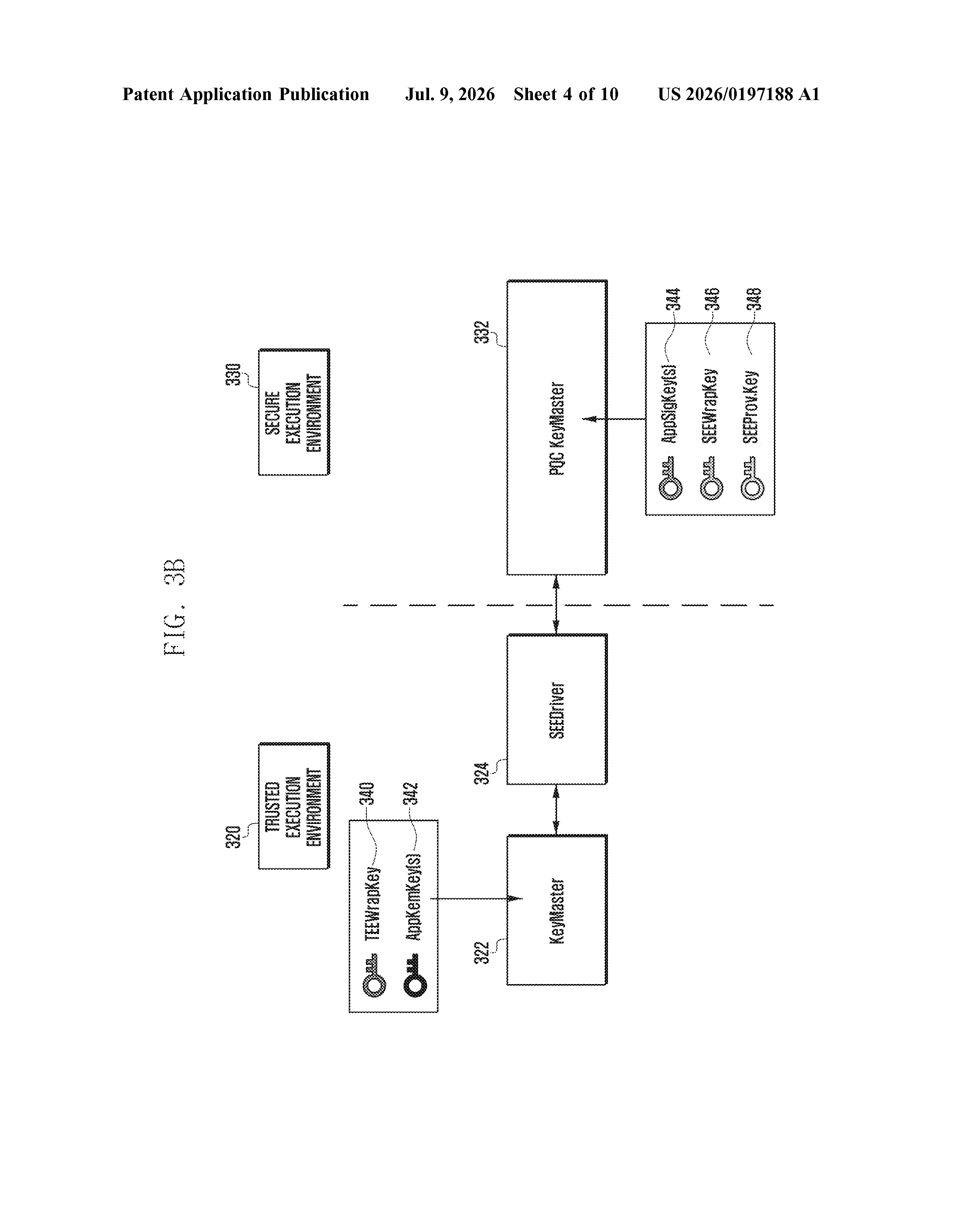
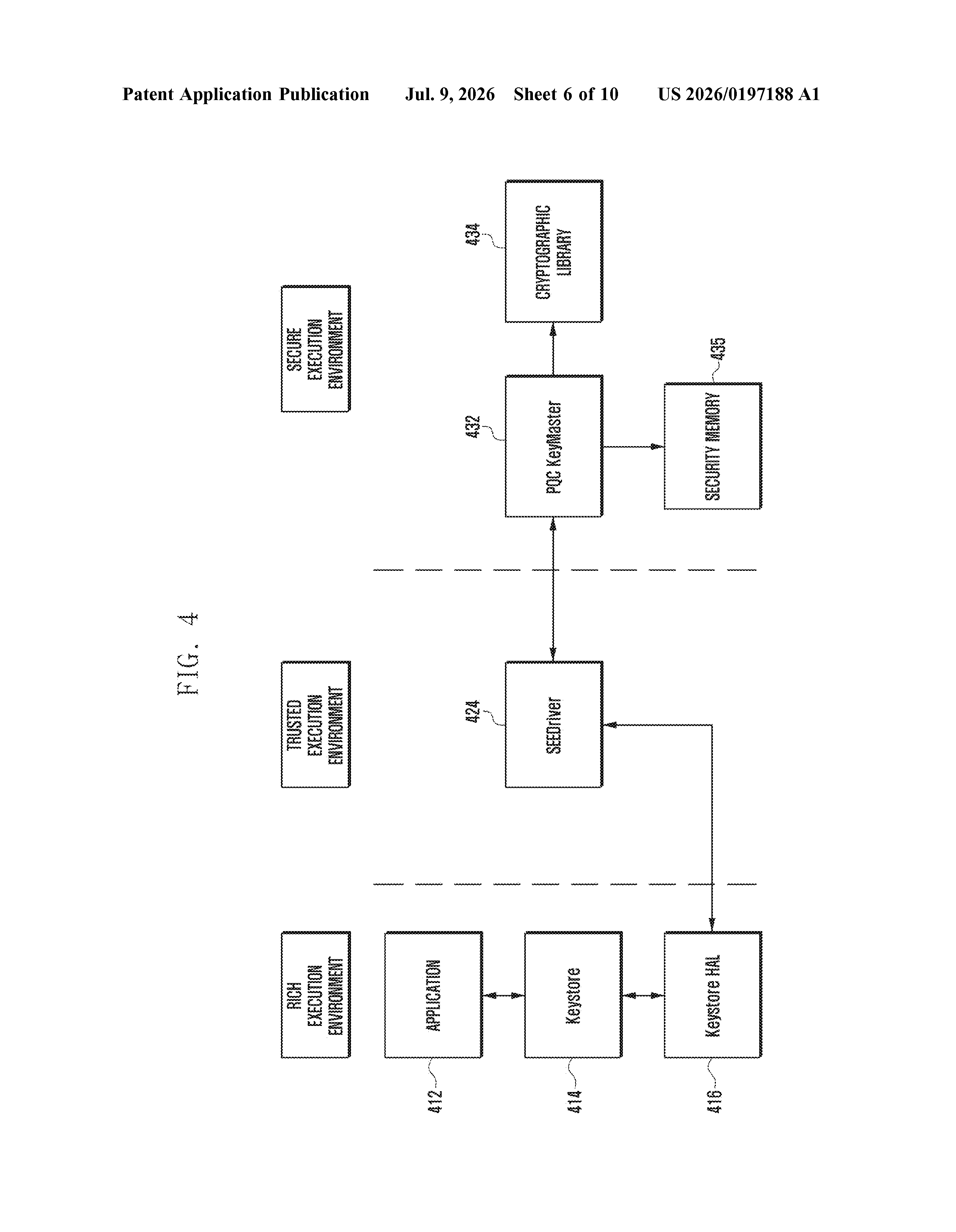
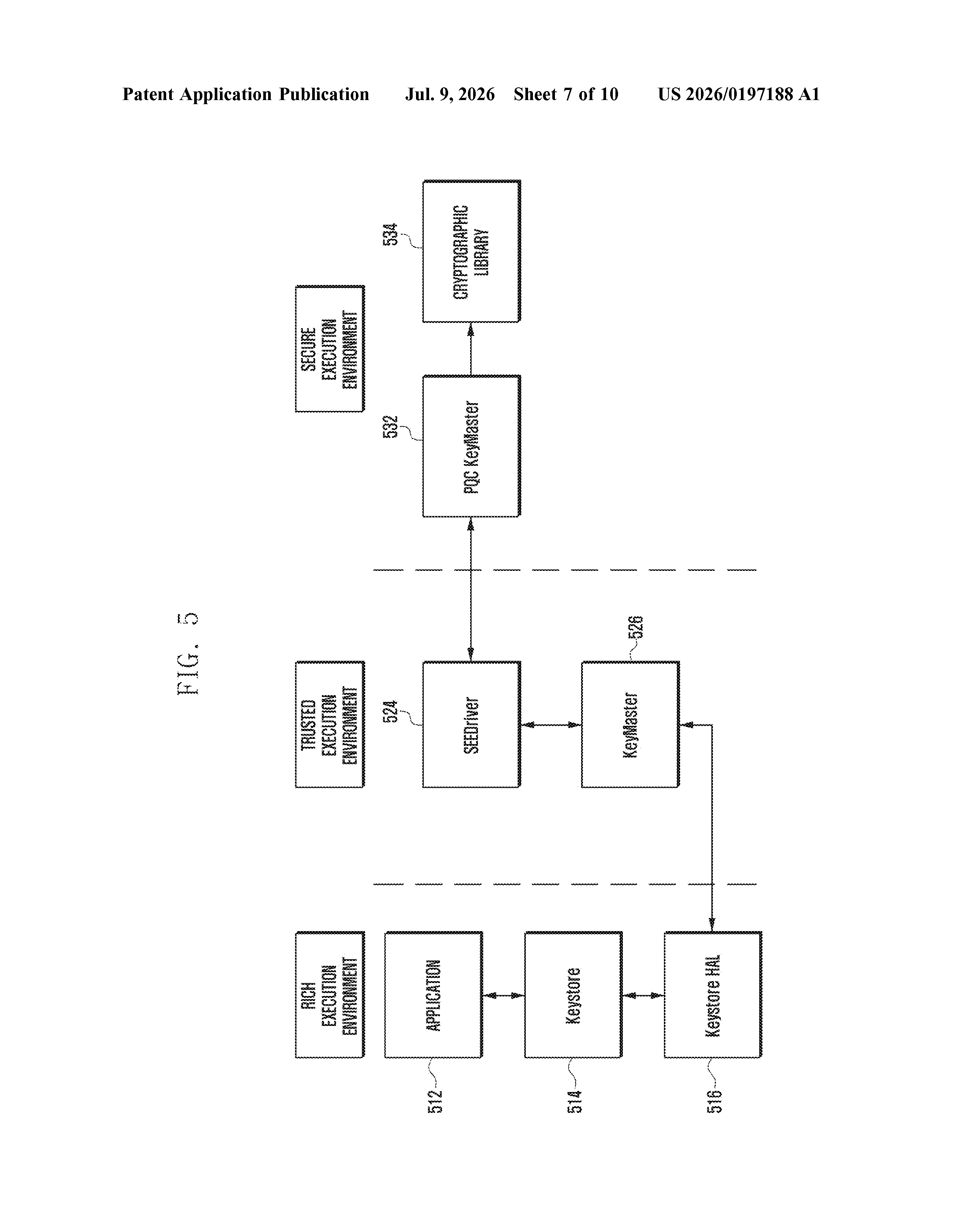
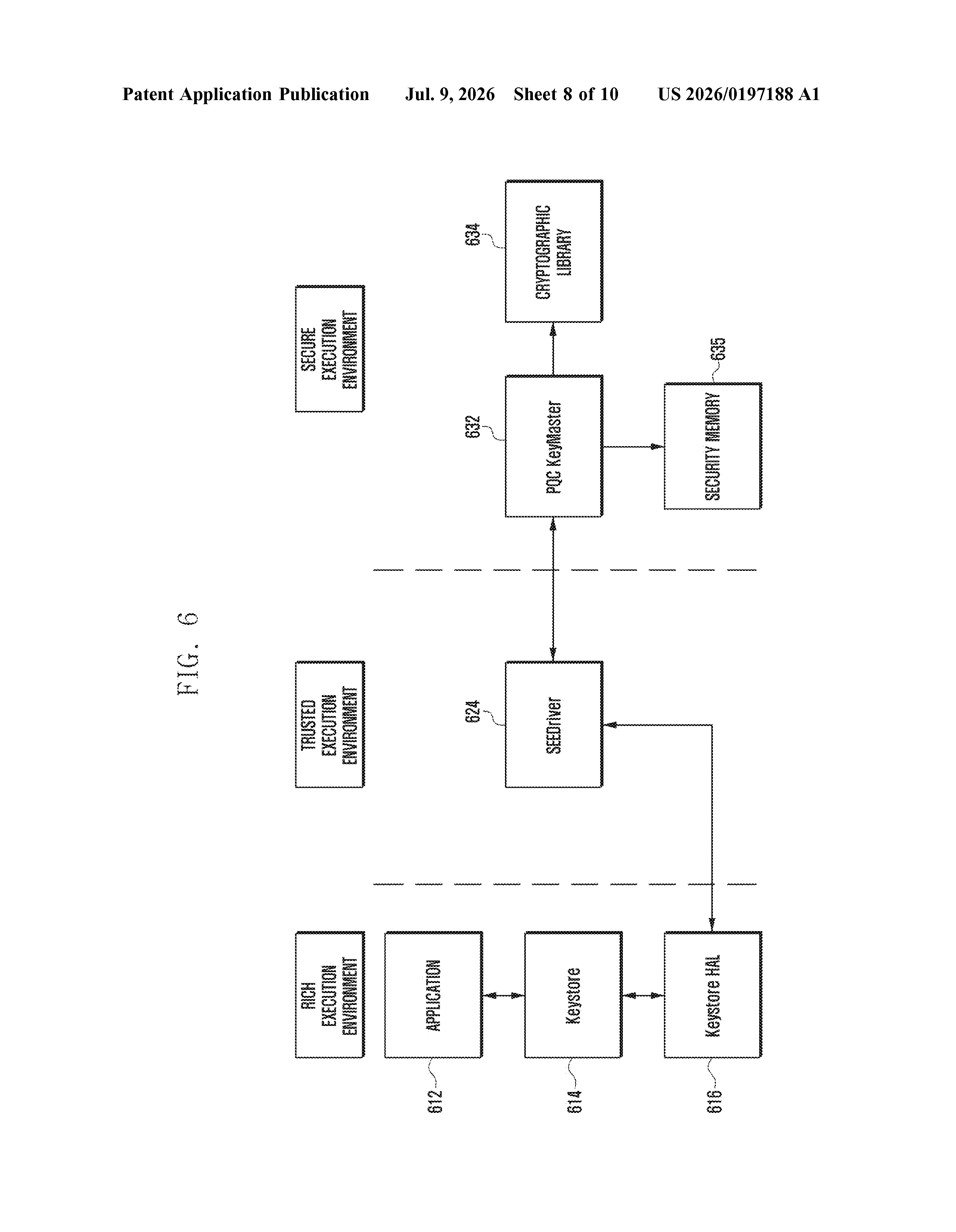
The patent describes an electronic device with two distinct secure environments sitting below the regular operating system:
- TEE (Trusted Execution Environment): A protected zone inside the main processor. It shares the same chip as your apps and OS but is isolated from them. Think of it as a locked room inside a busy office building.
- SEE (Secure Execution Environment): A completely separate, physically distinct security chip. It cannot be reached by the main processor's software at all, making it harder to attack from software alone.
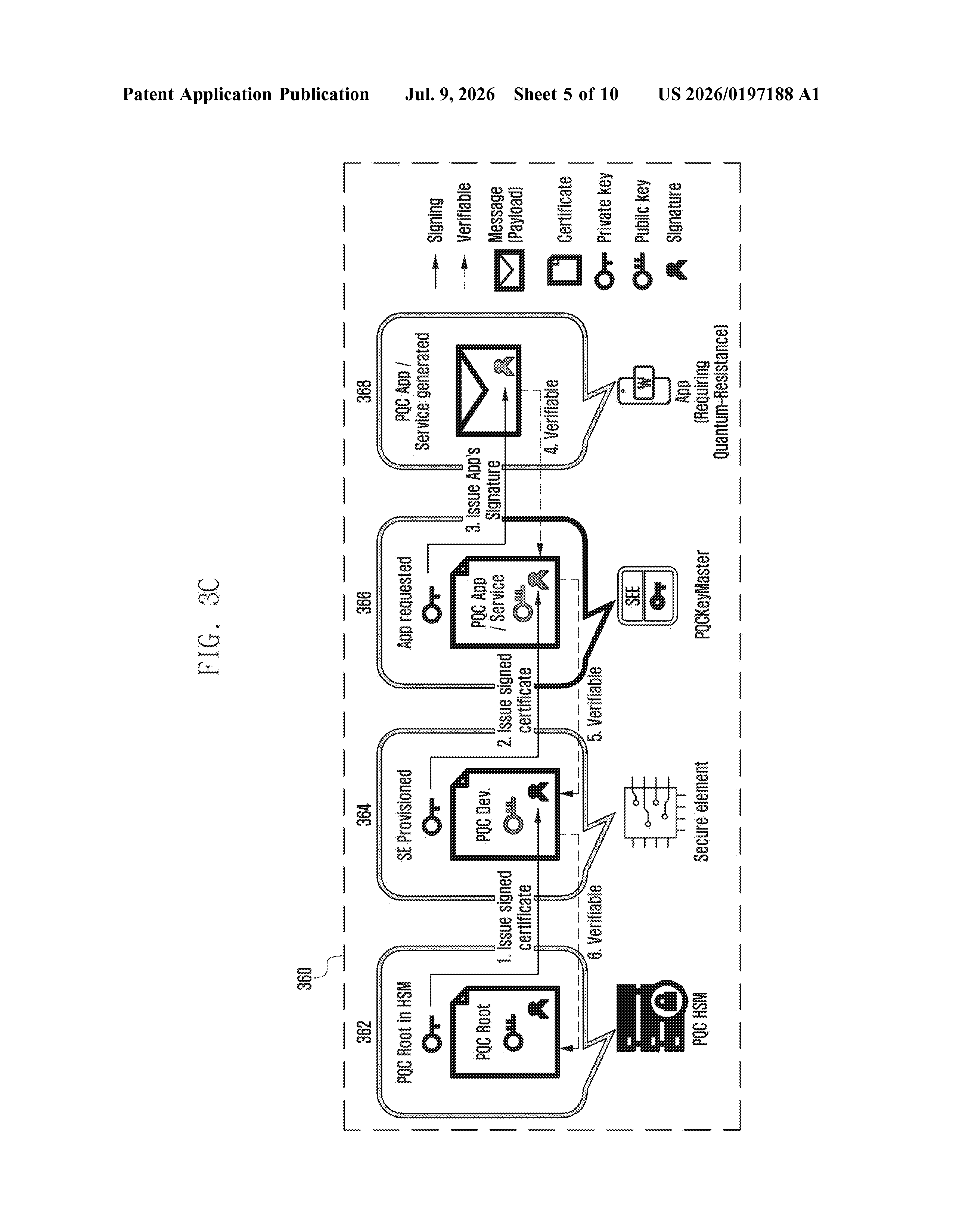
The core invention is a speed-check routing mechanism. When the device needs to run a digital signature (confirming that data is authentic) or a key encapsulation mechanism, or KEM (a method for securely exchanging encryption keys, especially relevant to post-quantum cryptography), the main processor first measures how fast each environment can handle that specific operation.
Based on that benchmark, it assigns the operation to whichever environment is faster for that task. Because different algorithms have different computational shapes, the TEE might win for one operation while the SEE wins for another. The system adapts per task rather than picking one environment for everything.
What this means for post-quantum security on mobile devices
The timing of this patent lines up with a global push to adopt post-quantum cryptography (PQC), a new class of encryption algorithms that are intentionally more complex so that future quantum computers can't break them. The U.S. government finalized its first PQC standards in 2024, and device makers now need to figure out how to run these heavier algorithms without slowing things down. Samsung's routing approach is a practical answer to that challenge.
For you as a user, the payoff is a phone that can adopt stronger encryption without noticeably slowing down secure operations like mobile payments, app authentication, or encrypted messaging. The device does the performance math so the software doesn't have to make a static choice that ages poorly as algorithms evolve.
This is unglamorous infrastructure work, but it's the right kind: a concrete engineering answer to a real and imminent problem. As post-quantum algorithms roll out across mobile platforms, the question of where on the chip to run them is not trivial, and Samsung is staking out an answer early. Don't expect a press release about this one, but do expect something like it to show up in a Galaxy security update.
There are more where this came from
We read every patent application Big Tech publishes and send you the ones worth knowing. Plain English, free, every week.
The drawings
10 drawing sheets from US 2026/0197188 A1 · click any drawing to enlarge
Want this weekly breakdown for a company we don't cover? Patentlyze Pro →
Be the first to weigh in