
Samsung Patents a Phone Assistant That Waits on Hold and Gets Firm in Your Voice
Samsung's patent application describes an AI that waits on hold for you, then talks to the customer service agent in your own voice. The longer the problem drags on, the firmer it sounds.
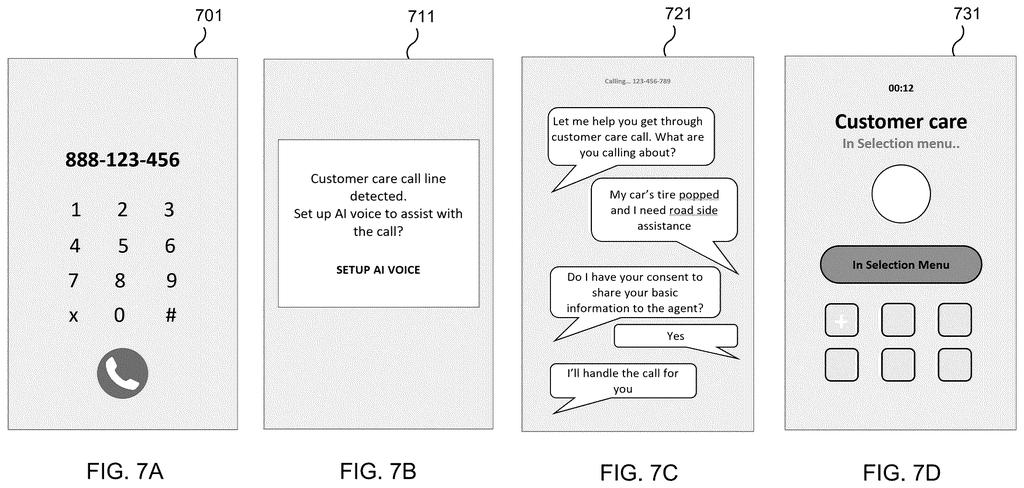
What Samsung's call-handling AI actually does
A driver stands on a dark highway shoulder next to a flat tire, phone at one ear, listening to a recorded voice read out menu options. He still has to set out a warning sign. You have probably lived a smaller version of this: a long stretch on hold, afraid to look away in case a human finally picks up.
Samsung's patent application describes an AI assistant that takes the call for you. It works through the phone menus, waits on hold, and once a person answers it can speak to them in a copy of your own voice. Its tone changes as the call goes on. It may start neutral or urgent, get more assertive while nothing is resolved, and sound satisfied once the issue is fixed.
When a real agent arrives, your phone and any connected watch or earbuds alert you. You tap to take over and see a short summary of what was said.
… intervening, using the voice AI model, in the voice communication in place of the user by outputting a second audio segment for the voice communication generated by the AI model with a first vocal nuance; …
Translation: The artificial intelligence takes over the phone call from the user and speaks with a specific tone.
How the AI picks neutral, firm, or satisfied
The assistant starts by listening. A voice AI model (software that understands and produces speech) works out why you are calling and what the situation is, using keywords, the type of number you dialed, or a quick question to you. It then steps in for you, pressing or speaking menu choices until the call reaches hold.
Once a human agent answers, the assistant can keep talking, and it picks a vocal nuance, meaning an emotional tone. The filing names three: neutral, assertive (or urgent), and satisfied. The first tone depends on the call, so a roadside emergency could start urgent. Later tones come from what has happened in the meantime. The claims list these signals:
- How much time has passed (one example stays neutral for the first 10 minutes)
- Keywords such as 'accident' or 'emergency'
- Signs of progress toward fixing the issue
- How many questions have been asked
- How many times the call was passed to someone new
The voice would copy yours, built from samples of your calls plus a short session where you act out each tone. A screen shows the call status, with buttons to hand the call to the AI or take it back. If you are away from the phone, it can alert a connected watch or a home device, and the filing mentions Bluetooth distance sensing with a one-meter zone. When you return, it finishes its sentence, asks the agent to hold briefly, and shows you a summary.
The voice AI model outputs a third audio segment for the voice communication generated by the AI model with a second vocal nuance (for example, assertive) different than the first vocal nuance.
Translation: The digital assistant changes its tone of voice during the conversation based on how the call goes.
What this means for your next customer service call
If this ever shipped as a phone feature, the biggest change would be your time. You could walk away from a long hold, deal with the actual emergency or just make dinner, and get pulled back only when a person is ready to talk. The filing's own examples are a flat tire at night and a locked account after too many password tries.
It also raises fair questions. A cloned voice sounding irritated on your behalf is a new thing for a call center to face, and the filing itself says the agent may need to be told an AI is speaking if the law requires it. The examiner's first review rejected the claims as filed, which is routine at this stage and usually followed by amendments.
Samsung's 16th filing we've tracked since July in our agents that act for you list follows a weather-checking home cooler and fixing a fridge in VR, adding another piece to how assistants might handle everyday tasks for you.
Most of this is software. The phone app has to notice the number you dialed, a voice model has to copy your voice from samples, and the assistant has to listen for menu options and press the right ones. The wearable alerts reuse a Bluetooth connection that many phones and watches already have, so no new hardware seems required.
The shortest route to a product is the plain middle of the idea: wait through the menus and the hold, then buzz your wrist when a person answers. That part could work with an ordinary synthetic voice. The claims center on the tone shifting, so that is the piece Samsung is trying to cover, and it is also the piece that would need the most testing.
The tone-matching asks for your voice samples, your consent to share account details, and possibly a notice to the agent that an AI is on the line. Verdict: the hold-waiting assistant looks close to buildable, while the angry-on-your-behalf voice is a longer road.
Get our take in your Top Stories
Liked this breakdown? Add Patentlyze as a preferred source on Google, and our plain-English take shows up more often in your Top Stories the next time Samsung patent news breaks.
There are more where this came from
We read every patent application Big Tech publishes and send you the ones worth knowing. Plain English, free, every week.
The drawings
10 drawing sheets from US 2026/0351252 A1 · click any drawing to enlarge


Show the other 2 sheets


Want this weekly breakdown for a company we don't cover? Patentlyze Pro →
Be the first to weigh in