
Samsung Patents a Device That Turns Live Conversations Into AI-Generated Images
Samsung is exploring a device that listens to a conversation in real time, figures out the topic and emotional tone, and automatically generates images that capture what the speakers are talking about and how they feel.
What Samsung's conversation-to-image system actually does
Two people sit down for a meeting, and by the end, their device has produced a visual summary of everything they discussed, complete with representations of the speakers and the ideas on the table. That summary wasn't typed or sketched. It was generated automatically from the audio of their conversation.
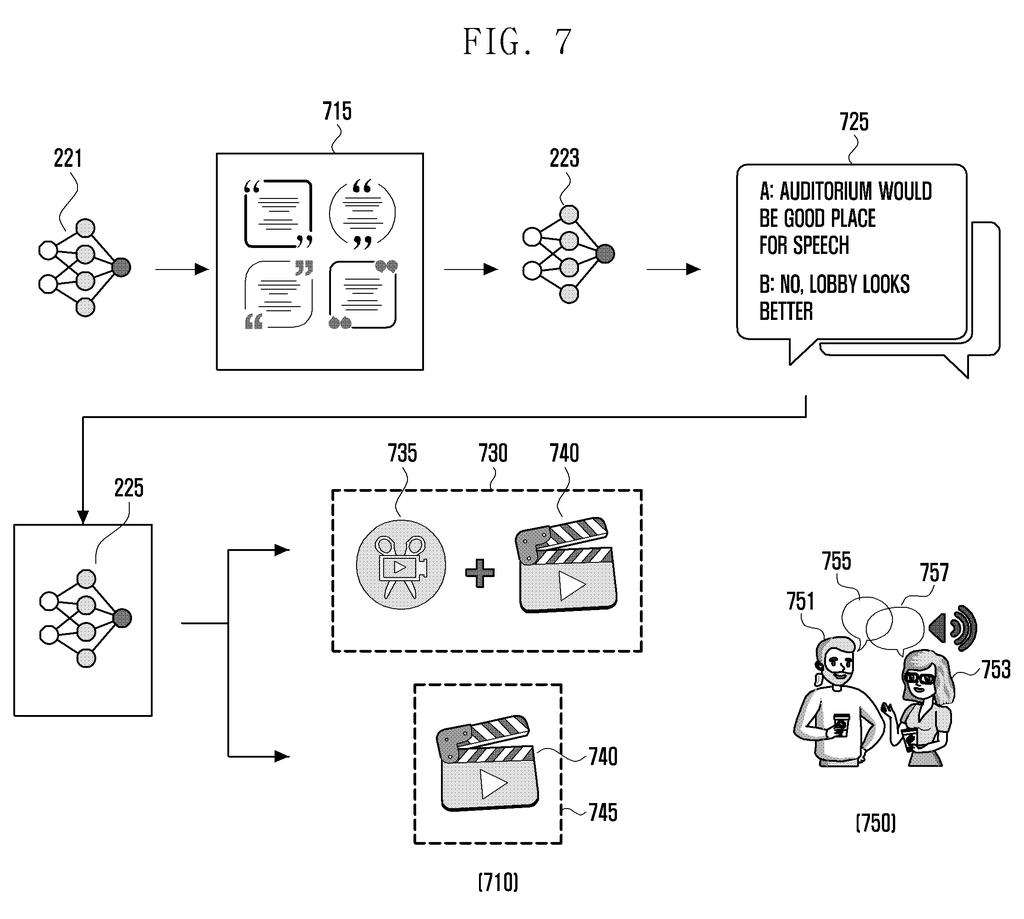
Samsung's patent describes a system that does exactly that. The device listens to a conversation, converts the speech to text, and then analyzes the text to understand the topic, the mood in the room, and how well each speaker seems to grasp what's being said. From all of that context, it builds prompts and uses them to generate images that represent both the people talking and the content they're discussing.
The final output is a single composite image tied to the whole conversation. Think of it as an automatic visual memo, generated without anyone lifting a finger.
… analyze, based on the converted text data, context information of the conversation comprising at least one of information related to a topic of the conversation, information related to understanding of the plurality of speakers of the conversation, or information related to mood of the conversation …
Translation: The device listens to your chat to figure out what you are talking about, how well you understand it, and your current mood.
How the device reads mood and builds image prompts
The system works in four stages. First, it converts incoming voice data from multiple speakers into text. That transcription is the raw material for everything that follows.
Second, a context-analysis step examines that text for three layers of information: topic (what the conversation is about), comprehension (how well each speaker appears to understand the subject), and mood (the emotional tone of the exchange). This isn't a simple keyword search. The patent describes extracting structured context that feeds the next step.
Third, the device generates one or more prompts from that analyzed context. These prompts are the instructions an AI image-generation model uses to create pictures.
Finally, the system generates a set of images, each containing:
- At least one object representing the speakers themselves (called "first objects")
- At least one object representing the conversation's content (called "second objects")
Those component images are then combined into a single composite image that summarizes the entire conversation visually. The patent doesn't specify which image-generation model handles the rendering, focusing instead on the pipeline that connects speech to finished image.
… generate, based on the generated at least one prompt, images including at least one of at least one first object indicating the interlocutors and at least one second object indicating the content of the conversation.
Translation: The system creates pictures that show both the people talking and the specific subjects they are discussing.
What this means for AI-assisted communication tools
For anyone who attends a lot of meetings or works through language barriers, the idea of an automatic visual summary is genuinely appealing. A shared image that captures the topic, the tone, and who said what could help people align after a conversation faster than re-reading a transcript.
Samsung's framing is broad enough to cover consumer devices like phones and tablets, not just enterprise conferencing gear. If this system found its way into a Galaxy device or a smart speaker, it could change how people review and share conversations. For readers who follow AI-driven communication tools, plain-English patent summaries of filings in this speech-and-image space are tracking a clear shift toward devices that don't just record what you said but interpret and visualize it.
Samsung's sixth filing we've tracked since July in our AI agents that act for you watchlist connects to voice to prompt and checking work before acting.
The payoff for a real user here is specific: instead of scrolling back through a transcript or trying to remember the emotional arc of a meeting, you get a picture. That's a concrete reduction in cognitive work. Whether the generated images are actually useful depends entirely on how accurately the mood and comprehension layers perform in noisy, real-world conversations. The patent claims the function but doesn't commit to a quality bar, which means the gap between the idea and something people would actually trust is still wide open.
Get our take in your Top Stories
Liked this breakdown? Add Patentlyze as a preferred source on Google, and our plain-English take shows up more often in your Top Stories the next time Samsung patent news breaks.
There are more where this came from
We read every patent application Big Tech publishes and send you the ones worth knowing. Plain English, free, every week.
The drawings
8 drawing sheets from US 2026/0245264 A1 · click any drawing to enlarge


Want this weekly breakdown for a company we don't cover? Patentlyze Pro →
Be the first to weigh in