
Samsung Patents a Phone Antenna That Sends Two Radio Signals at Once
Your phone's metal frame already doubles as an antenna, but Samsung's new patent takes that further by making the frame and an internal circuit trace send two radio waves in different directions simultaneously, a trick that could reduce dropped signals when you grip your phone in an awkward way.
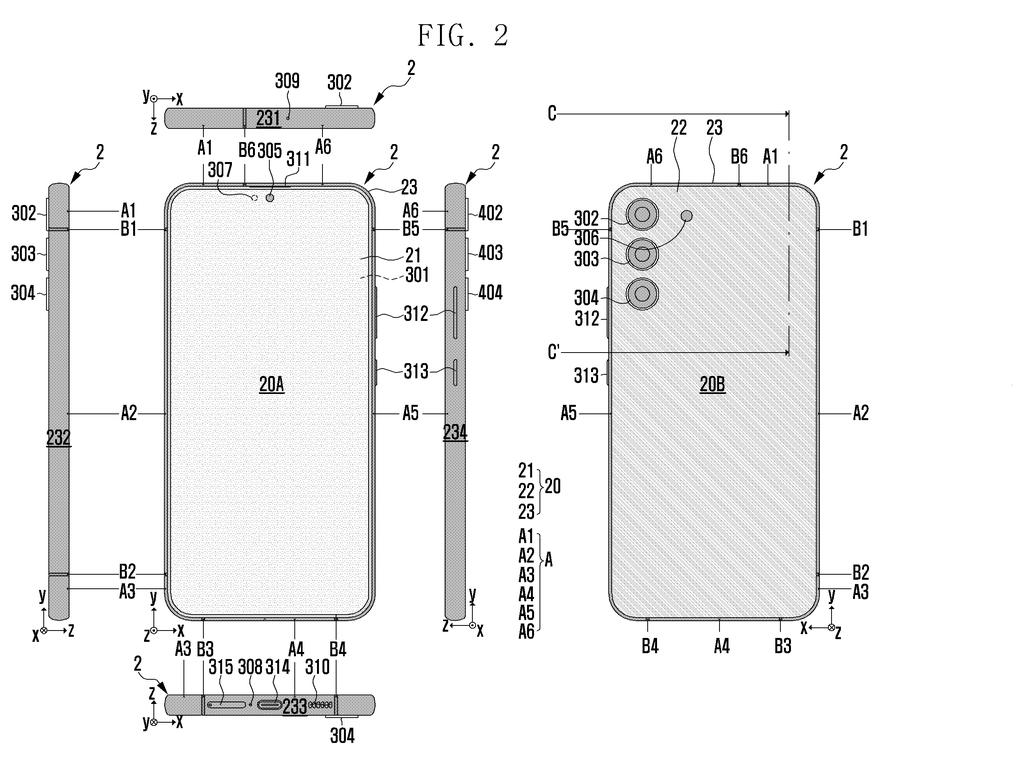
What Samsung's dual-wave phone frame antenna actually does
Every time you grip your phone on a call, your hand can partially block the antenna signal just by covering part of the metal frame. Radio engineers have spent decades trying to work around that problem, and this patent is Samsung's latest attempt.
The idea is to run two antennas through one shared structure. The metal band around the outside of the phone sends one type of radio wave, while a small conductive trace printed inside the device sends a second type pointed in a different direction. Together, they cover more angles than either could alone.
For you, the practical upshot is that your phone has more chances to maintain a clean connection even if your hand, your pocket, or a nearby surface is interfering with one of the signals. The phone doesn't have to work harder; it just has more directions to try.
… an antenna structure comprising a first side metal included in the side and a conductive pattern electrically connected to the first side metal; and a wireless communication circuit configured to transmit and/or receive a signal of a selected or designated first frequency band through the antenna structure …
Translation: The phone uses built in metal sides and a connected wire pattern to handle wireless signals.
How the metal frame and circuit trace split the signal
The patent describes an antenna structure built into the side of a phone that produces two distinct polarized waves (think of polarization as the direction a radio wave vibrates as it travels through the air, the same concept behind polarized sunglasses). Normally a single antenna element radiates one polarization. By splitting the job between two conductors, Samsung gets two different orientations out of what is physically one antenna region.
The two radiating elements are:
- The first side metal: part of the phone's physical outer frame, responsible for one polarization direction.
- The conductive pattern: a trace printed on an internal board or film, electrically connected to the frame metal, responsible for a second, different polarization direction.
A single wireless communication circuit drives both. The circuit is tuned to a specific frequency band, and both elements radiate that same band but at different polarization angles.
The reason this matters technically is polarization diversity: when two signals of the same frequency travel in different polarizations, interference that kills one often leaves the other intact. The receiver on the other end, or the phone's own modem, can combine them to reconstruct a cleaner overall signal. It's similar to how your ears work together to locate a sound even when one ear is partially covered.
… wherein the first side metal is configured to radiate a first polarized wave, and the conductive pattern is configured to radiate a second polarized wave different from the first polarized wave.
Translation: Different parts of the antenna broadcast two distinct types of radio waves at the same time.
What this means for call quality and wireless reliability
For everyday use, this kind of antenna design fights one of the most common causes of weak signal: your own hand. A human body absorbs certain radio polarizations more than others, so if your grip blocks the primary wave, a secondary one at a different angle can still get through. The result is fewer dropped calls and more stable data speeds without any action on your part.
Samsung's interest in antenna diversity for mobile devices shows up across multiple filings, and that makes sense: as phones get thinner and their metal frames get more design-constrained, fitting capable antennas inside is a real engineering puzzle. A dual-polarization approach that reuses the existing frame metal is an economical answer to that pressure.
Samsung's 76th filing we've tracked since May in our 5G and network push builds on ideas like borrowing GPS from nearby phones and syncing apps over satellites.
Squeezing two antenna jobs into one metal strip saves physical space, but it forces both jobs to share the same signal path. The risk is that the two signal directions bleed into each other inside a chassis crowded with batteries and circuit boards, which erodes the reliability benefit the design exists to provide.
The geometry that prevents that bleed is tuned to one specific phone shape, so every new model requires rethinking it from scratch. That is real recurring engineering cost baked into the approach.
The trade still reads as worth it. Phones are running out of room for antennas while users expect a strong signal no matter how they hold the device, and this design delivers better coverage without adding any new hardware. For a company building at this scale, that equation tilts decisively in favor of accepting the re-tuning burden.
There are more where this came from
We read every patent application Big Tech publishes and send you the ones worth knowing. Plain English, free, every week.
The drawings
19 drawing sheets from US 2026/0280129 A1 · click any drawing to enlarge


Want this weekly breakdown for a company we don't cover? Patentlyze Pro →