
Samsung Patents a Shortcut That Helps Phones Process Wi-Fi Signals Faster
Samsung has found a way to make a decades-old math operation run faster inside wireless chips, by flipping a single bit in a sequence of numbers instead of running the full calculation from scratch.
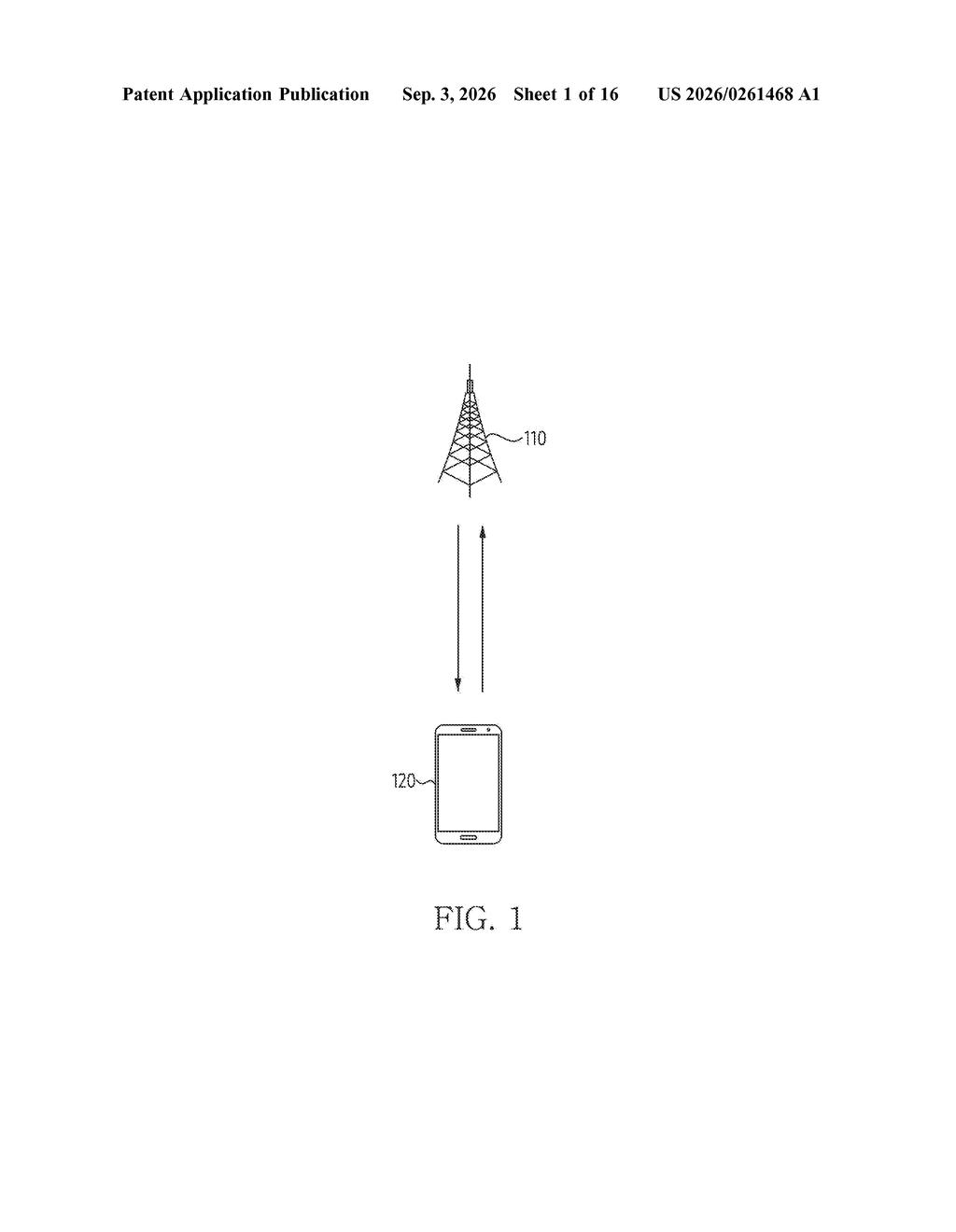
What Samsung's FFT shortcut actually does for your phone
You're downloading a large file over 5G and your phone is doing millions of math operations per second just to turn radio waves into the data you asked for. One of those operations, called a Fourier transform, is among the most common and expensive steps a wireless chip performs.
Samsung's patent describes a shortcut for that step. Instead of computing the full transform the standard way, the chip flips the leading digit in a short binary number for each output slot, which reorders the results in a way that skips a separate reorganization step the chip would otherwise have to do. The end result is the same decoded signal, just with less work.
This happens entirely inside the chip, invisibly. Your call quality, download speed, and battery life could all benefit a little, without any change to how you use the device.
… obtain a second symbol sequence related to the second domain by performing a fast Fourier transform (FFT) operation using a cyclic shift operation on the first symbol sequence …
Translation: The phone speeds up signal processing by tweaking standard mathematical transforms.
How flipping one bit changes the whole transform operation
Wireless standards like 5G and Wi-Fi use a technique called OFDM (orthogonal frequency division multiplexing), which packs data onto dozens or hundreds of separate radio frequencies at once. To unpack that data on your phone, the chip runs a Fast Fourier Transform (FFT), a mathematical operation that converts a signal from the time domain (a raw waveform over time) into the frequency domain (how much energy sits at each frequency). That conversion is what lets the chip read each data channel separately.
The standard FFT produces its output in a scrambled order called bit-reversed order, and chips typically run a second pass, called a bit-reversal permutation, to put everything back in the right sequence. That extra pass costs time and power.
Samsung's patent replaces that second pass with a cyclic shift operation, specifically, flipping the most significant bit (the leading digit in a short binary number that labels each output slot) from 0 to 1 or 1 to 0. This single-bit change effectively rotates the output index table so the results land in the correct order directly, without a separate reordering step.
The claim covers:
- Any FFT size supported by the device
- Applying the bit-flip to every output index in that size
- Embedding the operation inside the OFDM demodulation instruction set stored in memory
… change a value of a most significant bit (MSB) of a bit sequence of the FFT index from 0 to 1 or from 1 to 0 …
Translation: It works by flipping specific binary data bits during the math operation.
What this means for 5G and Wi-Fi chip efficiency
FFT operations run constantly inside every phone, router, and base station that uses modern wireless standards. Even small reductions in the number of steps per transform add up across billions of operations per second, which can translate to lower power draw, less heat, and marginally faster decoding throughput.
Samsung's steady stream of baseband-chip patents suggests the company is looking for every possible efficiency gain at the silicon level, where small wins matter at the scale of hundreds of millions of shipped devices. This particular technique is a software or firmware change to how the chip's instruction set handles FFT, which means it could, in principle, appear in existing hardware through a driver or firmware update rather than requiring a new chip design.
That makes this Samsung's 67th filing we've tracked since May in our 5G and network push, following an AI location system for 5G and an AR frame cleanup idea.
The improvement described here lives entirely in software, specifically in the instructions a processor follows when converting wireless signals into usable data. No new chip or antenna is required, which means the shortest path to a real product is a firmware update, the same quiet background download that already delivers security patches to phones today.
This particular operation runs continuously during any call, video stream, or web browse, so even a small reduction in effort per cycle accumulates across a full day of use. If the gains hold outside the lab, the practical result would be slightly longer battery life without any change to the device in your hand.
Improvements this close to shipping rarely travel alone. The most likely delivery route is an invisible inclusion in the next round of wireless software, bundled alongside other small refinements where no single change needs to carry the whole announcement.
Get our take in your Top Stories
Liked this breakdown? Add Patentlyze as a preferred source on Google, and our plain-English take shows up more often in your Top Stories the next time Samsung patent news breaks.
There are more where this came from
We read every patent application Big Tech publishes and send you the ones worth knowing. Plain English, free, every week.
The drawings
16 drawing sheets from US 2026/0261468 A1 · click any drawing to enlarge


Show the other 8 sheets


Want this weekly breakdown for a company we don't cover? Patentlyze Pro →
Be the first to weigh in