
Google
Google · Wearable · Filed Oct 21, 2025 · USPTO published Oct 1, 2026 · Oct 1 release
Google Patents a Smartwatch Method That Forecasts Your Next Irregular Heartbeat Episode
After your smartwatch catches one irregular heartbeat, what if it could tell you when the next one is likely to hit? That's the idea behind a new Google patent for predicting atrial fibrillation before it happens.
- Publication number
- US 2026/0294263 A1(US20260294263A1)
- Applicant
- Google LLC
- Filed · Published
- Oct 21, 2025 · Oct 1, 2026
- Inventors
- Zeinab Esmaeilpour, Anthony Zahi Faranesh
- Status when we published
- Waiting for an examiner
- Document
- 20 claims
- US classification
- 600/301
- Parent application
- National Stage Entry of PCT/US2023/019397 (filed Apr 21, 2023)(PCTUS2023019397)
What Google's AFib prediction system actually does
Imagine your watch flags an irregular heartbeat one Tuesday morning. Right now, that's usually where the story ends: you get a notification, maybe call your doctor, and then go back to wondering if and when it'll happen again. Google's new patent describes a system designed to do something more.
After detecting that first irregular heart rhythm event, your wearable keeps a closer eye on your heart for a set observation window. It looks for patterns in when and how often irregular beats show up during that period, then uses those personal patterns to generate a forecast for future episodes.
The key idea is that the system learns your rhythm of irregular rhythms, not just a general population average. If your AFib tends to cluster in the morning or spike every few days, the system is meant to pick up on that and flag it in advance.
determining, via one or more computing devices, a user wearing a wearable computing device has experienced an initial cardiac arrhythmia event based, at least in part, on biometric data obtained from one or more biometric sensors of the wearable computing device …
Translation: The watch figures out you had a heart hiccup using its built-in health sensors.
How the watch spots patterns and builds a personal forecast
The patent describes a four-step process running on a wearable device (think a smartwatch with optical heart-rate and electrical heart sensors).
- Detection trigger: The system first confirms you've had an initial cardiac arrhythmia event (an irregular heartbeat episode, with atrial fibrillation as the primary example) using biometric sensor data from the wearable.
- Observation window: Once that trigger fires, the device enters an active monitoring period, continuously collecting heart-rhythm data to build a picture of how your heart is behaving over time.
- Temporal pattern analysis: The system analyzes the timing and frequency of any additional arrhythmia episodes that occur during the observation window, looking for temporal patterns (meaning time-based regularities, like recurring clusters or predictable gaps between events).
- Prediction generation: Using those personal patterns, the system produces a forecast for when a future irregular heart event is likely to occur.
The patent doesn't name a specific prediction algorithm, leaving room for the system to apply whatever modeling approach fits the observed data. The claim is intentionally broad, covering any wearable computing device with biometric sensors capable of reading cardiac rhythm.
… determining one or more temporal patterns of cardiac arrhythmia events of the user during the observation period …
Translation: The system looks for repeating schedules in how often your heart acts up.
What this means for people living with AFib
For the roughly 6 million Americans living with AFib, the condition's unpredictability is one of the hardest parts. Episodes can arrive without warning and trigger anxiety, medication decisions, or emergency visits. A system that gives even a rough forecast window could help people and their doctors make better decisions about when to be extra cautious, when to take medication, or when a hospital visit might be coming.
On the product side, Google's track record in health-sensing patents makes the Pixel Watch line the obvious home for something like this. The feature would also place Google directly alongside Apple, whose Watch already has FDA-cleared AFib detection. Predicting future episodes, rather than just catching current ones, would be a meaningful step beyond what's currently on the market.
Google's 16th filing we've tracked since May joins earlier applications like one flagging fall risk from sleep and one pairing radar with blood pressure in our wearables that read your body watchlist.
Source: US 2026/0294263 A1 at the USPTO (PDF). Full patent text and figures are in the official publication.
Get our take in your Top Stories
Liked this breakdown? Add Patentlyze as a preferred source on Google, and our plain-English take shows up more often in your Top Stories the next time Google patent news breaks.
Add Patentlyze on Google
One click.
There are more where this came from
We read the new patents from Big Tech, carmakers and more and send you the ones worth knowing. Plain English, free, every week.
The drawings · 8 sheets
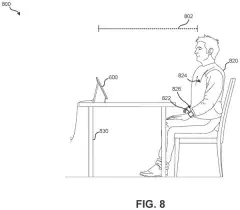
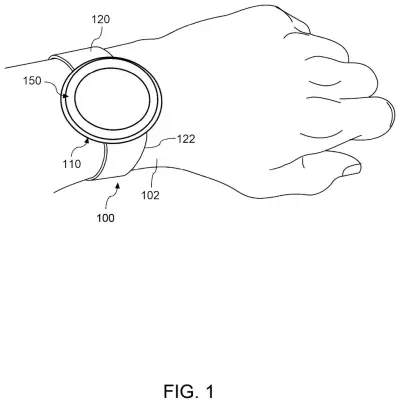
8 drawing sheets from US 2026/0294263 A1 · click any drawing to enlarge


More from Google
All 1,127 Google patents →
More in Hardware
All 2,375 Hardware patents →
Samsung
Samsung Patents a Device That Tracks Your Health Signs After You Take Medication
Meta
Meta's New Wrist Tracker Patent Finds Your Optimal Wear Position
Samsung
Samsung Patents a Way to Keep Your Smartwatch on Course When GPS Fails
Samsung
No comments yet