
Samsung Files Patent to Stop Multi-Camera Phones From Dropping Image Data
Every time a multi-camera phone finishes reading one picture, it has to pause the other cameras for a moment, and if the pause runs too long, data gets lost. Samsung's filing is about keeping those pauses as short as possible.
What Samsung's multi-camera pause fix actually does
A phone with three cameras gets pictures from all three at once, but its chip has only one processing lane. So the chip takes the images one row of pixels at a time and rotates between cameras, like a dealer passing out cards one at a time.
The trouble comes at the bottom of each picture. Many cleanup steps, like noise reduction, look at the rows above and below each row, and the last row has nothing below it. The chip fills the gap with a copy of a nearby row, and while it does, it tells every other camera to wait. Their rows pile up in a small holding area, and a long wait can overflow it and lose data.
Samsung's filing lets the chip put that end-of-picture step off for a limited number of turns, then finish the picture that has waited longest first. The goal is shorter pauses, so less of what your cameras capture gets dropped.
… determining a drain ranking of the plurality of image frames based on the standby counts; and performing a drain operation on end line image data of the plurality of image frames according to the drain ranking …
Translation: It prioritizes which camera frames get processed first based on how long they have been waiting.
How the chip ranks pictures by how long they waited
A line interleaving controller collects rows of pixels (the filing calls them line image data) from several camera sensors and sends them down one shared path in turns. A line buffer controller keeps a few recent rows in memory so filters can look at each row's neighbors.
When a frame's last row arrives, the controller runs a drain operation: it creates extra rows (copies of nearby rows) and extra timing signals so the filter can finish the final rows. During that, a stall signal blocks other cameras' rows, which wait in a small buffer. A long stall overflows the buffer and data is lost.
The fix: each waiting frame gets a standby count, the number of times its drain has been put off because another frame's rows arrived. A maximum standby count (4 in the example) caps the delay and can be looked up by image format or resolution. A sorting circuit ranks waiting frames, and the highest count drains first. A maximum of zero means drain at once.
A five-mode state machine (start, fill, run, wait, drain) runs the show. The filing says the approach lets this on-the-fly design run repeating algorithms such as noise reduction or neural-network steps.
… when all pieces of line image data included in the image frame are received, performing a drain operation on the image frame based on a maximum standby count of the image frame.
Translation: Once all the pieces of a picture arrive, the system clears them out using its longest waiting time as a guide.
Why dropped camera data matters for phones and cars
For you, the payoff is fewer glitches from devices with several cameras. Sharing one image processor among cameras saves chip area, and this design is meant to keep that sharing from causing dropped data. The filing says the shorter pauses are what prevent the loss.
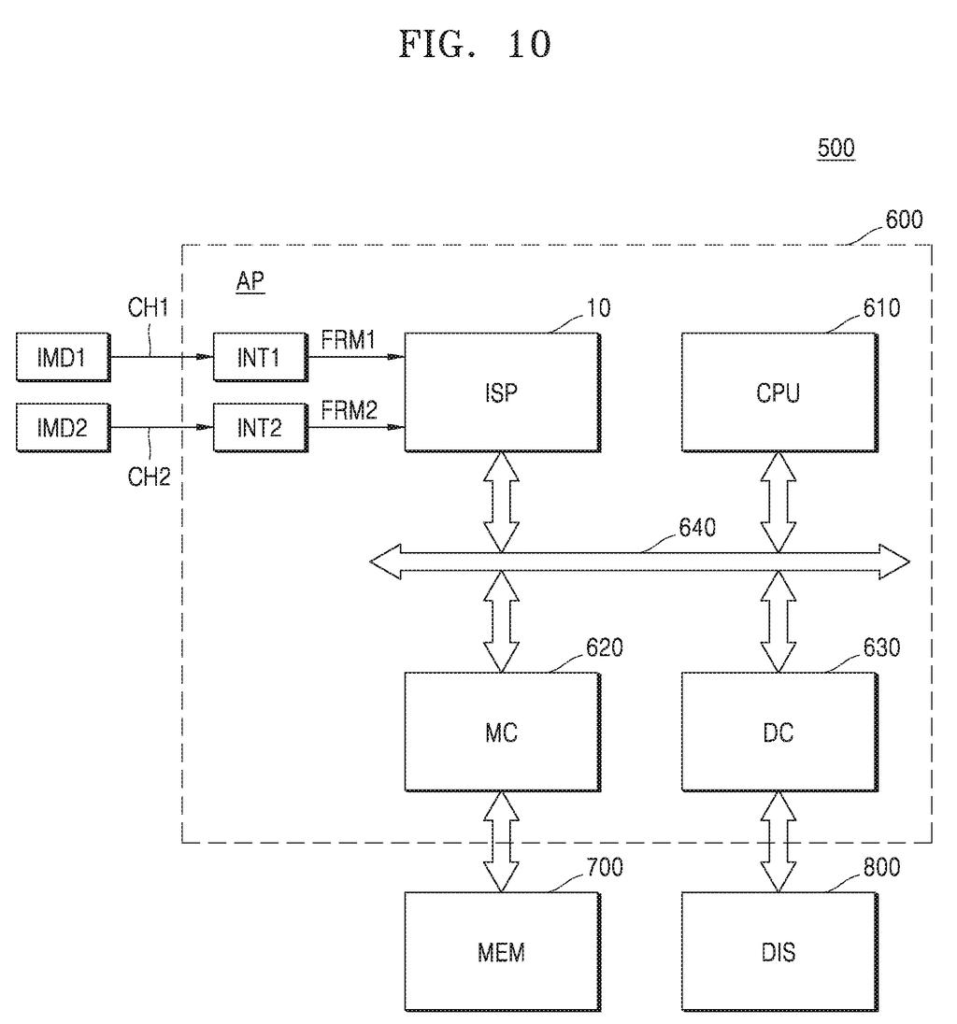
The filing lists phones, tablets, wearables, cars, drones and AR or VR headsets as places it could apply. Anything with several cameras feeding one processor faces the same traffic jam at the end of each frame. The filing describes a circuit-level improvement and does not name a specific product.
This is the 159th Samsung filing we've tracked since May in our camera sensor push watchlist, adding to work like the blinking eye fix and hidden color from photos.
The shortest path to a product here runs through chip design. The logic lives in the image processor's circuitry, so a phone cannot pick it up through a software update. Samsung would have to build it into a future chip, and the filing describes modest parts for that job: a counter per picture, a sorting circuit and a five-mode state machine.
The filing builds on pieces a multi-camera chip already has: several camera inputs, row-by-row processing and a small holding area. Nothing new has to exist first, apart from picking the wait limit for each camera setup, which the filing says can come from a simple lookup table.
The payoff is invisible by design. If it works, you never notice, because nothing gets dropped. That makes this a routine but useful engineering fix, and the people who will care are the chip designers building the next processor.
Get our take in your Top Stories
Liked this breakdown? Add Patentlyze as a preferred source on Google, and our plain-English take shows up more often in your Top Stories the next time Samsung patent news breaks.
There are more where this came from
We read every patent application Big Tech publishes and send you the ones worth knowing. Plain English, free, every week.
The drawings
13 drawing sheets from US 2026/0343119 A1 · click any drawing to enlarge


Show the other 5 sheets


Want this weekly breakdown for a company we don't cover? Patentlyze Pro →
Be the first to weigh in