
Samsung Files Patent to Teach AI to Pull Hidden Color Data Out of Ordinary Photos
Your phone camera records three colors per pixel, but a new Samsung patent application describes teaching AI to estimate far more (31 in the filing's example), using a printed color chart in the photo as an answer key.
What Samsung's color-chart photo trick does
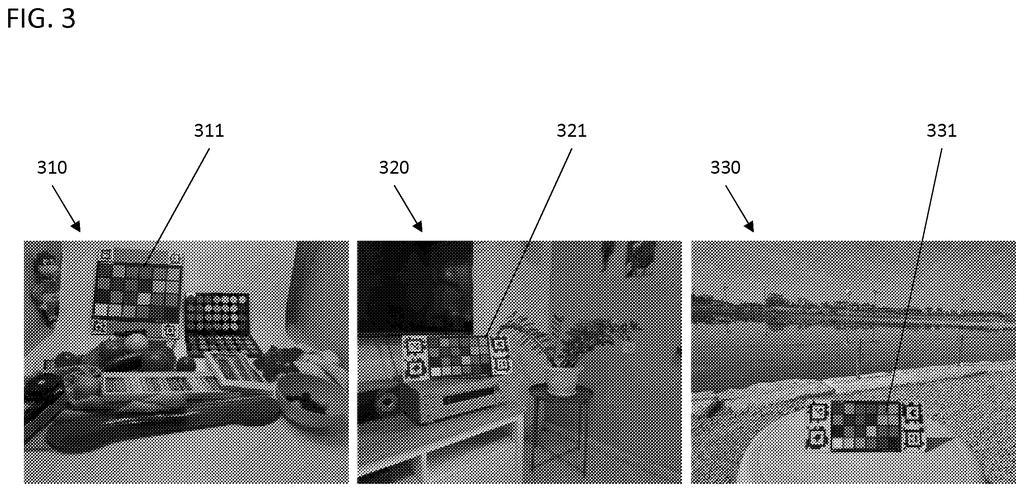
A researcher snaps a photo of a room with a printed color chart propped against the wall. A small light meter sits nearby, recording exactly what kind of light fills the space.
Samsung's patent application uses setups like that to train an AI. Your phone camera records just three colors for each pixel: red, green and blue. The AI's job is to estimate much more detail from that ordinary photo, such as 31 separate slices of the color spectrum. The chart acts as an answer key. The company knows how the chart reflects light, and the meter says what the light was like, so it can work out what each chart patch should look like in full detail.
The rest of the photo has no answer key, so the filing adds two extra checks to keep the AI's guesses believable. Your own photos would not change. This is about how the AI gets taught.
obtain, using the RGB camera, a first red-green-blue (RGB) image of a scene comprising an object, wherein the object corresponds to a predetermined reflectance value, obtain a first illumination value corresponding to the first RGB image by measuring, using the spectral photometer, a first illumination of the scene when the first RGB image is captured …
Translation: The system takes a normal photo while using a special light meter to measure the exact lighting at that moment.
How the AI checks its guesses against a chart
The patent covers a way to train a spectral reconstruction model: an AI that takes a regular RGB image and predicts a hyperspectral image, meaning one with many more color channels. The filing's example output has 31. Training uses an RGB camera plus a spectral photometer, a device that measures the light shining on a scene.
Each training photo includes an object with a known reflectance value (how much of each wavelength a surface bounces back), such as a color chart. Multiplying that known value by the measured lighting gives a ground truth spectrum for the chart patch. The model gets the photo and the lighting value, produces its guess, and a supervised loss (a score of how far off the guess is) compares the chart patch to the ground truth. The model's internal settings are then adjusted to shrink that gap.
Because only the chart has answers, the filing describes two extra checks:
- RGB consistency: shrink the predicted detail back down to three colors using the camera's own filter response, and check it matches the original photo.
- Reillumination consistency: when the same scene is shot under two different lights, adjust the first prediction for the second light and check it matches the second prediction.
The claims also cover a broader version that needs no camera at all: any image in a lower-detail color space converted to a higher-detail one.
… provide the first RGB image and the first illumination value as input to the spectral reconstruction model to obtain a first hyperspectral image …
Translation: It feeds the standard photo and the light measurements into the AI to generate a detailed color data map.
Why cheaper training data matters for phone cameras
If you care about how well a camera understands color, the bottleneck is data. Real detailed-color (hyperspectral) training data needs expensive, complicated equipment. The filing says earlier approaches trained on fake RGB images made from that data, which don't match what real cameras capture. Shooting real photos with a chart in frame and a light reading is a much easier way to build a training set.
The filing names no product. It says the output could be shown on a display or passed to computer vision tasks (software that interprets images). Read it as groundwork for any imaging feature that depends on accurate color, though the filing does not spell out a consumer feature.
Samsung's 157th filing we've tracked in our camera sensor push since May builds on work like catching a jump's sharpest frame and saving power during video.
Samsung's filing is mostly a lab recipe. The hardware it needs (a regular camera, a light meter, a printed color chart) is cheap and already exists. The shortest path to anything shippable is software: collect photos, train the model, run it.
What has to exist first is proof. The filing gives no accuracy numbers, and the chart covers only a small patch of each photo, so nobody can tell yet how well the AI guesses the rest of the scene. The training also depends on the response of the specific camera used, so each camera type would need its own data.
Our read: a sensible, low-cost fix for a data shortage, and probably invisible to you even if it ships. It would sit inside some other camera or imaging feature.
Get our take in your Top Stories
Liked this breakdown? Add Patentlyze as a preferred source on Google, and our plain-English take shows up more often in your Top Stories the next time Samsung patent news breaks.
There are more where this came from
We read every patent application Big Tech publishes and send you the ones worth knowing. Plain English, free, every week.
The drawings
9 drawing sheets from US 2026/0330828 A1 · click any drawing to enlarge


Show the other 1 sheets

Want this weekly breakdown for a company we don't cover? Patentlyze Pro →
Be the first to weigh in