
Samsung Patents a Shoulder Camera That Follows Your Arm Without Any Motors
Samsung is working on a camera mount that sits on your shoulder and repositions itself purely by following your arm movements, no batteries, no motors, no software required.
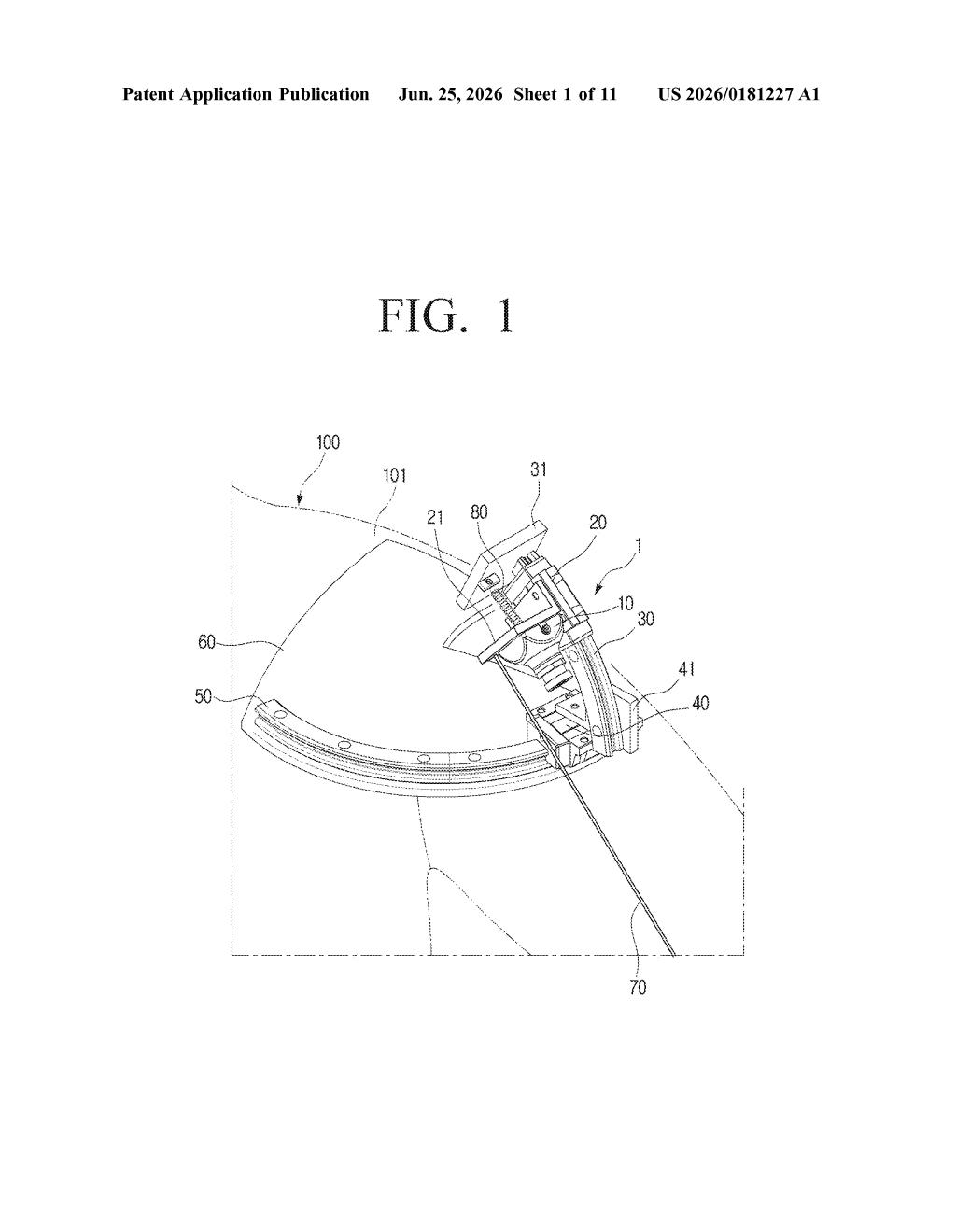
What Samsung's arm-linked shoulder camera actually does
Imagine a camera perched on your shoulder that automatically points where your arm goes, not by using any electronics, but purely through a mechanical linkage between the camera and your arm. That's the core idea here.
Samsung's patent describes a shoulder-mounted rig where a camera sits on a sliding carriage. Your arm is physically connected to that carriage by a connector. When you raise or lower your arm, the camera slides up or down. When you move your arm left or right, the camera shifts horizontally. The whole thing is passive, meaning it moves only because your arm moves, with no power source needed.
This is the kind of system you could picture a filmmaker, field worker, or even someone in a specialized suit wearing to capture first-person footage that stays aligned with their actions. Because it's purely mechanical, it's lighter and simpler than a powered gimbal.
How the carriage-and-guide system tracks arm motion
The system is built around two axes of movement. A vertical guide lets the camera carriage slide up and down. A horizontal guide lets a second carriage (which carries the entire vertical assembly) slide side to side. Both guides sit on a mount that rests on the user's shoulder.
A connector ties the camera carriage directly to the user's arm. As the arm moves, it physically pushes or pulls the carriage along whichever guide is relevant. Raise your arm and the camera rises. Extend it to the side and the camera shifts laterally. The motion is purely mechanical, no actuators, no sensors, no computation.
The patent also mentions this mechanism being integrated into a wearable suit, suggesting the design is meant for full-body wearable contexts rather than a standalone accessory. Think field recording, industrial inspection, or motion-capture adjacent applications.
Because nothing here requires power, the camera posture is always in sync with the arm by definition. There's no lag from a control loop and no battery drain from motors trying to keep up with movement.
What this means for hands-free wearable cameras
Wearable cameras today mostly rely on rigid mounts, motorized gimbals, or software stabilization. All of those approaches add weight, complexity, and power consumption. A purely mechanical system that ties camera position to arm geometry is a different tradeoff: simpler, lighter, and always-on, but with less flexibility in how the camera can be directed independently of the body.
For Samsung, this fits into a broader interest in wearable and body-worn devices. The explicit mention of a wearable suit in the title suggests this isn't just about a standalone shoulder rig. It could point toward industrial or specialized consumer wearables where continuous, low-power hands-free capture matters more than cinematic control.
This is a niche mechanical patent, not a consumer product announcement, but it's genuinely interesting as a design idea. Passive mechanical linkage for camera positioning is a clever alternative to the powered-gimbal approach, and the wearable-suit framing suggests Samsung is thinking about specialized use cases where keeping electronics simple is a real constraint. Don't expect to see this in a Galaxy phone, but it's a real engineering concept worth watching in the wearables space.
There are more where this came from
We read every patent application Big Tech publishes and send you the ones worth knowing. Plain English, free, every week.
Want this weekly breakdown for a company we don't cover? Patentlyze Pro →