
Samsung Patents a Scanner That Reads Product Tags and Camera Feeds Simultaneously
Most barcode and RFID scanners do one thing at a time. Samsung is patenting a device that reads invisible radio tags and live camera footage simultaneously, feeding both streams into a single interface.
What Samsung's simultaneous RFID-and-camera scan actually does
Imagine a warehouse worker pointing a handheld scanner at a row of shelves. Today, they might scan the RFID tags on boxes to log inventory, then separately photograph a damaged package or read a printed label. Two steps, two tools, two moments of attention.
Samsung's patent describes a single device that does both at once. While it continuously scans for RFID tags (the small chips embedded in product packaging, shipping labels, and retail goods that broadcast a unique ID wirelessly), the device is also recording a live video feed through its camera and pulling useful data out of that footage in real time.
The result is a combined picture of what's physically in front of you and what the invisible radio signals are saying, all on one screen, without stopping to switch modes. Think of it as a scanner that can see and hear at the same time.
How the device pulls data from two sources at the same time
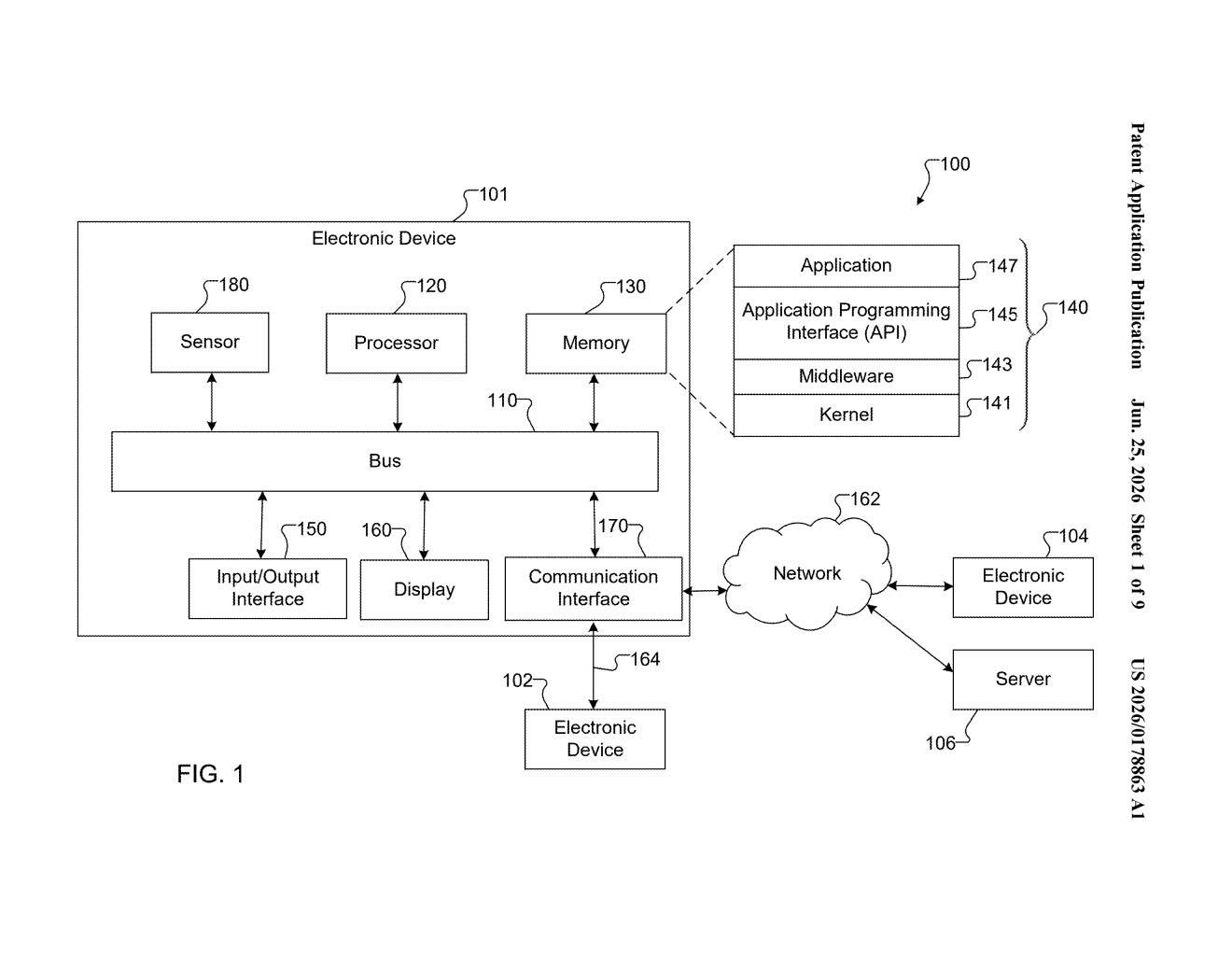
The patent describes an electronic device (most likely a handheld enterprise scanner or smartphone with an attached RFID reader) that runs two data-collection processes in parallel.
On one channel, an RFID reader continuously broadcasts radio signals and listens for responses from nearby RFID tags. Each tag replies with a unique identifier, and that data feeds into the device's display as a live list of detected items.
On the other channel, a camera records a video feed at the same time. The device's processor then extracts a second set of data from that footage. The patent does not spell out exactly what that extraction involves, but typical applications include reading printed barcodes, scanning QR codes, detecting text on labels, or identifying objects visually.
The key technical claim is that both processes run simultaneously rather than sequentially, and both outputs appear on a single user interface. This means the processor has to manage two data streams at once without one blocking the other, which is the engineering challenge the patent addresses.
What this means for warehouse and retail scanning tools
For warehouse workers, retail stock teams, and logistics operators, cutting a two-step scan down to one step sounds minor but adds up fast across thousands of items per shift. Reducing the number of times a worker has to stop, switch modes, or pick up a second device directly affects how long it takes to process a shipment or audit a shelf.
Samsung already makes enterprise-grade mobile scanners and Android-based handheld devices for industrial use. A combined RFID-plus-camera scan pipeline would fit naturally into that product line and compete with dedicated enterprise scanners from companies like Zebra Technologies and Honeywell. Whether this capability ends up in a phone, a ring scanner, or a dedicated handheld is an open question.
This is a practical, unsexy patent aimed squarely at enterprise hardware. It is not breaking new ground in theory (RFID and cameras have coexisted in devices for years), but packaging both into a single continuous scan session with a unified interface is the kind of workflow improvement that actually gets purchased by logistics managers. Worth watching for Samsung's enterprise device roadmap.
There are more where this came from
We read every patent application Big Tech publishes and send you the ones worth knowing. Plain English, free, every week.
Want this weekly breakdown for a company we don't cover? Patentlyze Pro →