
Samsung Patents a Context-Aware Lighting System for Freezer Drawers
Opening the top freezer drawer is simple — always turn the lights on. But opening the bottom drawer? Samsung thinks that deserves a smarter, more situational response.
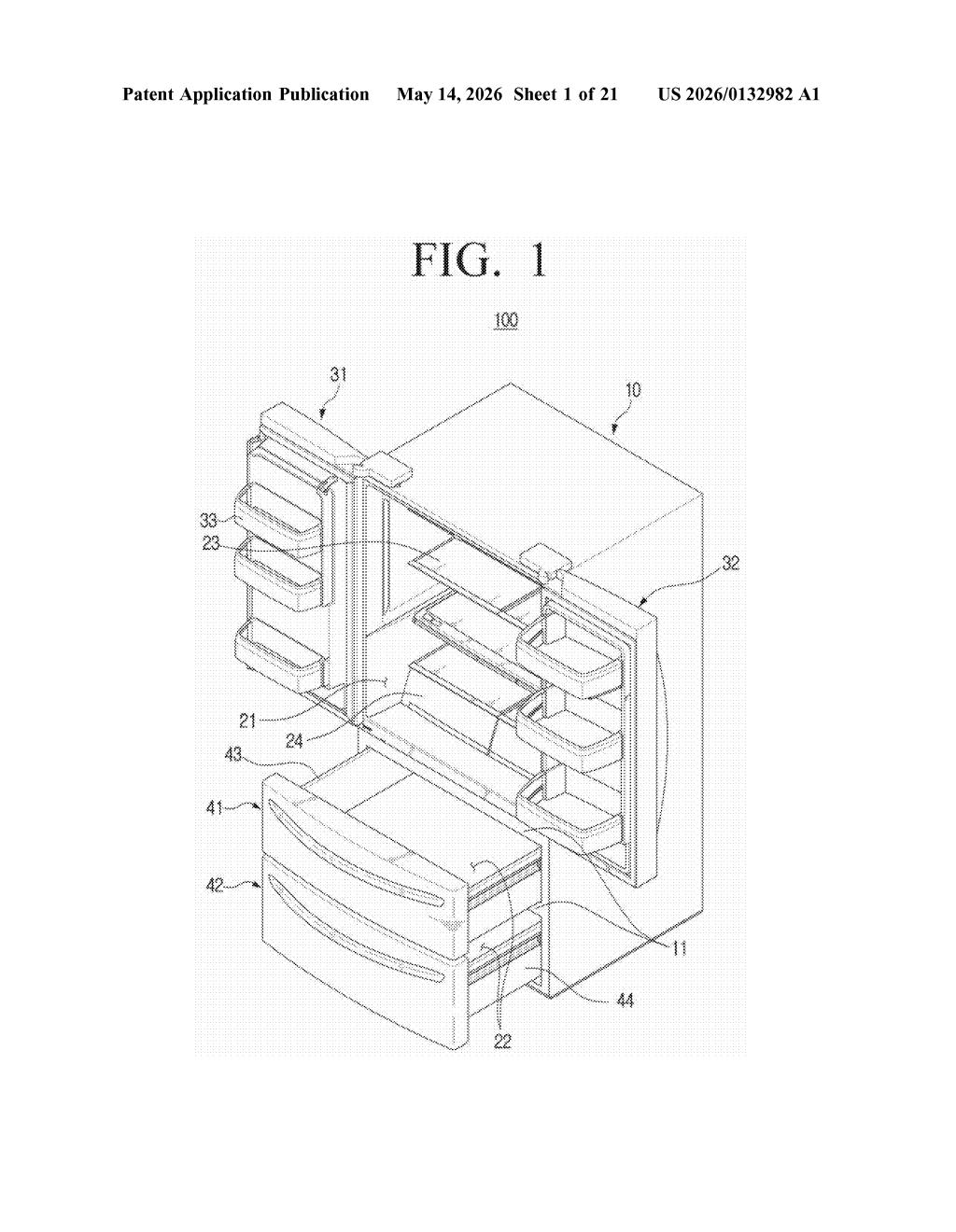
What Samsung's smart freezer lighting actually does
Imagine you're digging into your freezer's bottom drawer late at night in a dark kitchen. Should the bright fridge lights above automatically blast on? Samsung's patent says: it depends.
The idea is straightforward. When you open the top freezer drawer, the lights mounted below the refrigerator doors above it always switch on — you clearly need to see what's inside. But when you open a lower drawer, the system gets smarter: it checks what's going on inside the freezer and what's happening in the room around the fridge before deciding whether to illuminate.
Think of it like your phone's adaptive brightness — but for your freezer. The fridge reads contextual cues (like ambient light levels or whether the upper compartment is already open) and makes a judgment call about whether flooding the space with light is actually helpful or just wasteful.
How Samsung's processor decides which lights to turn on
The patent describes a refrigerator with a freezer compartment below the main refrigeration section, accessed via multiple stacked drawer-type doors. A row of light emitting elements (LEDs) sits beneath the upper refrigerator doors, positioned to illuminate the freezer area when drawers are pulled open.
The control logic works in two tiers:
- First drawer opened (top freezer drawer): The processor unconditionally turns on all the light emitting elements — straightforward, no conditions checked.
- Second drawer opened (a lower drawer, below the first): The processor evaluates two inputs — the state inside the freezer (what's going on in the compartment itself) and the context around the refrigerator (environmental factors outside it) — and then selectively activates the lights based on that combined assessment.
The patent doesn't fully enumerate every possible "state" or "context" variable, but the architecture clearly anticipates sensor inputs like ambient light levels, occupancy, or internal temperature and load conditions. The processor acts as a gating layer — deciding whether illumination adds value rather than defaulting to always-on behavior.
What this means for smart appliance lighting design
On the surface this looks like a minor appliance feature, but it reflects a broader push in smart home hardware to make every subsystem context-aware rather than dumb and reactive. Lighting is one of the most power-hungry passive features in a modern fridge, and building decision logic around when not to turn lights on is a legitimate efficiency play.
For Samsung's appliance lineup — which increasingly integrates with SmartThings and positions refrigerators as connected home hubs — a patent like this seeds the infrastructure for more adaptive, sensor-driven behavior across the whole unit. It's a small brick in a larger smart-kitchen architecture.
This is a narrow, incremental appliance patent — not the kind of thing that redefines a product category. But Samsung filing IP around conditional, context-aware lighting logic in refrigerators is a sign the company is serious about making every corner of its appliance hardware smarter, even the parts users rarely think about. Worth a footnote in the smart-home story, not a headline.
There are more where this came from
We read every patent application Big Tech publishes and send you the ones worth knowing. Plain English, free, every week.
Want this weekly breakdown for a company we don't cover? Patentlyze Pro →