
Sony Files Patent to Cut Camera Sensor Power by Turning Down the Voltage
A camera sensor does not need full power for every shot. Sony's filing describes a sensor that drops its supply voltage when it is working in a lower-sensitivity mode, so it can keep watching while using less electricity.
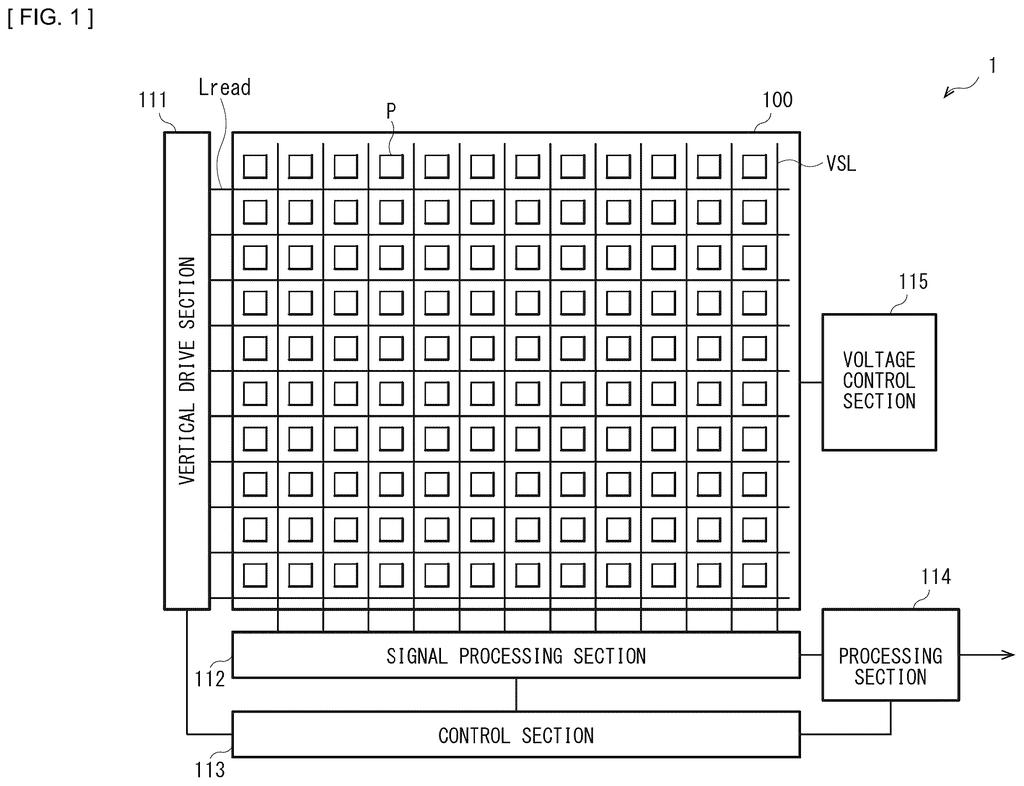
What Sony's low-power camera sensor does
A security camera stares at an empty hallway all night. Most of that time, nothing happens, yet the sensor inside keeps drawing the same power it would use to capture a detailed, bright photo.
Sony's filing describes a sensor with two modes. In a normal mode, each pixel is tuned to be very sensitive, so you get a sharp, high-resolution image. In a low-power mode, the sensor changes how it collects light and then runs its pixels on a lower voltage.
The filing says the lower voltage is what saves energy. The trick is in the timing: the sensor only drops the voltage when it is in the setup that can handle it. For you, that could mean a camera that watches longer on the same battery.
… execute control of supplying a second voltage that is lower than the first voltage to the first readout circuit in a case where the first signal is read while the first transfer transistor is in an on-state …
Translation: The system drops the operating voltage to save power during specific readout steps.
How the sensor picks a high or low voltage
Each pixel in an image sensor turns light into a small pool of electric charge. A part called a floating diffusion (a tiny holding tank that converts that charge into a voltage) stores the charge until it is read out. A transfer transistor (a switch) connects the light-catching part of the pixel to that tank.
The patent's claims cover a voltage control section that picks the supply voltage for the pixel's readout circuit. When the signal is read while the transfer switch is off, it supplies a higher voltage. When the signal is read while the switch is on, it supplies a lower one.
The description explains the logic. In the low-power mode, the switch stays on during exposure, so the light-catching part and the tank are joined. In this mode, the sensor can skip a complete charge transfer, which is what lets the voltage drop. The filing also says that adding capacitance (extra storage) to the tank, for example by linking neighboring pixels, cuts a type of noise that would otherwise get worse at low voltage.
The filing describes several ways to build the voltage control, including a simple selector, a resistor divider, an amplifier circuit or a DC-DC converter (a circuit that steps voltage up or down).
Why Sony's power-saving sensor matters
The practical payoff is battery life. A phone, a doorbell camera or a car's parking monitor often needs to look at a scene without recording anything fancy. A sensor that can run at lower voltage in those moments uses less power. The filing itself points to a car antitheft function that grabs images repeatedly while parked, using little power.
This is a filing from Sony's chip division, so it concerns the component inside the camera, not any one product. The examiner's first review rejected the claims as filed, which is routine at this stage and usually followed by amendments. It does not mean the application is approved.
Sony's 81st filing in the camera patents we cover since May adds to a body of work that includes one that scrambles faces in-camera and one aligning LiDAR with cameras.
Claim 1 is short and broad. It needs a pixel, a switch, a readout circuit and a voltage controller that supplies a lower voltage when the switch is on than when it is off. That is the whole test, and it says nothing about modes, noise or extra capacitance.
Those details show up only in the dependent claims, which narrow the idea to cases like added storage or linked pixels. If claim 1 survived as written, any sensor that lowers its supply voltage while that switch is on would fall inside it, however the maker built the rest.
That breadth is exactly what an examiner tends to push back on, so expect narrowing. The idea itself is plain good engineering: spend less power when the job is easier. It is a routine but sensible way to stretch battery life.
Get our take in your Top Stories
Liked this breakdown? Add Patentlyze as a preferred source on Google, and our plain-English take shows up more often in your Top Stories the next time Sony patent news breaks.
There are more where this came from
We read every patent application Big Tech publishes and send you the ones worth knowing. Plain English, free, every week.
The drawings
27 drawing sheets from US 2026/0332915 A1 · click any drawing to enlarge


Show the other 19 sheets


Want this weekly breakdown for a company we don't cover? Patentlyze Pro →
Be the first to weigh in