
Sony Patents a System That Rates Games and Movies by How Hard They Are on Your Brain
Picking a game or movie when you're tired is a gamble you usually lose. Sony has filed a patent for a system that would measure how mentally demanding any piece of content actually is, then use that score to recommend what to watch or play based on how much brain power you have left.
How Sony's mental-effort score would work for you
Right now, most streaming and gaming platforms sort content by genre, rating, or popularity, with almost no regard for how much concentration something actually requires. A puzzle-heavy strategy game and a casual endless-runner both sit under "Games," even though your brain experiences them very differently.
Sony's patent describes a system that would analyze games, movies, and interactive media for their cognitive load, basically a score for how hard something is on your mind. It pulls in data like how complex the visuals are, how much a user has to interact, how long the content runs, and even feedback from other users. Those inputs feed into models that produce a difficulty-for-your-brain number.
With that score, the platform could show you a ranked list of content that fits your current mood and capacity, flag how long you should engage before taking a break, and even tell you whether your device is up to the task. The goal is to help you find the right thing to watch or play without having to guess.
… determining, from the user input and one or more properties of the content, a cognitive-load profile for the content; and generating, from the cognitive-load profile and an available time interval for a user, a recommendation identifying content for interaction by the user.
Translation: The system figures out how mentally taxing a piece of media is and suggests what to play next based on your free time.
How the system measures and models cognitive demand
The system ingests several layers of data to build its cognitive load estimate for any piece of content. According to the patent, these include:
- Metadata and scope: content length, the variety of assets (characters, environments, interactive objects), and structural complexity.
- Gameplay or interaction metrics: how often users are required to act, how fast decisions must be made, and how many simultaneous things a user tracks at once.
- Visual and audio analysis: extracts from the content itself are analyzed for how much perceptual processing they demand, such as busy screen layouts or rapid cuts.
- User feedback: aggregated reports from players or viewers about how demanding they found the content.
Those inputs are run through models that account for both general population tendencies and user-specific factors, meaning the system can personalize its estimate based on what it knows about a particular person's history and preferences.
The output is a complexity value that the platform can display in a few ways: ranked content lists ordered by cognitive demand, suitability indicators (essentially a "this is a good match for you right now" flag), or suggested engagement durations so the system can nudge you to take a break before fatigue sets in.
The patent also connects cognitive demand scores to device compatibility, suggesting that hardware with more processing power might be recommended for content that is cognitively intensive, implying the two scale together in some configurations.
These models assess the contributions of individual content properties to overall mental effort, producing values that, for example, relate to complexity.
Translation: Algorithms measure how different parts of a game or movie drain your brain to calculate its overall difficulty.
What a cognitive difficulty score means for players
For you as a user, the practical payoff is a platform that stops treating all content as interchangeable. If you sit down exhausted after work, a recommendation system built on this patent would steer you toward low-effort content rather than surfacing the 80-hour strategy epic you will almost certainly abandon after 20 minutes. That kind of friction is why libraries of thousands of games and movies often end up with people re-watching something familiar.
The flip side is a real data-collection concern. Building personalized cognitive profiles means the platform has to track how you engage with content in detail, which is a meaningful privacy trade-off. a growing pile of Sony content-personalization filings suggests the company sees this as infrastructure for its PlayStation and entertainment platforms, but how much behavioral data feeds these models will matter as much as how accurate they turn out to be.
Sony's 579th filing in our Sony coverage since May joins ideas like voice-based matchmaking and a motorized button-pressing clip.
The real win here is avoiding a familiar frustration: you open a platform, nothing feels right, and you cannot quite explain why. A system that learns when you have the energy for something demanding and when you do not could solve that problem before you notice it.
The value shows up most clearly in what it prevents. Recommending a dense, forty-hour game to someone with twenty minutes and a tired brain is a small failure that happens constantly, and a cognitive load score built around your specific patterns has a real shot at stopping it.
The detail about accounting for the device you are playing on is unexpected. It suggests the system is trying to catch friction you would never think to report, which, if it works, means the recommendation is smarter than you realize.
There are more where this came from
We read every patent application Big Tech publishes and send you the ones worth knowing. Plain English, free, every week.
The drawings
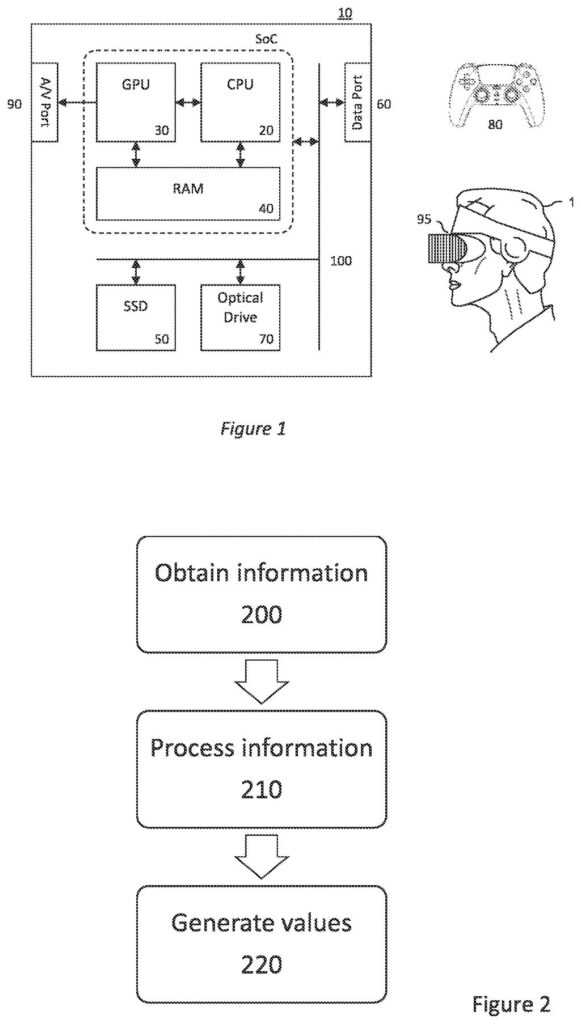
2 drawing sheets from US 2026/0295433 A1 · click any drawing to enlarge


Want this weekly breakdown for a company we don't cover? Patentlyze Pro →
Be the first to weigh in