
Sony Patents an AI That Recommends Games and Explains Its Own Reasoning
Most recommendation systems tell you what to try next but never why. Sony is patenting a system that hands you both the suggestion and a plain-language explanation of where it came from.
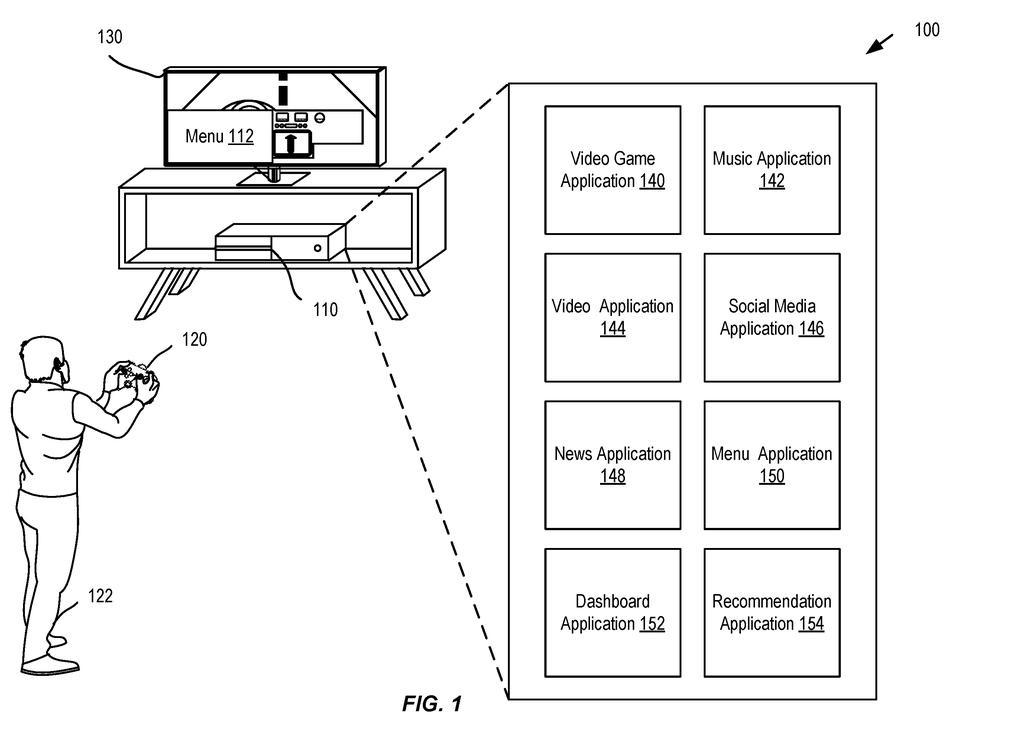
What Sony's explainable game recommendation system does
Ever looked at a "Recommended for You" row and had absolutely no idea why those titles were there? Sony is filing a patent for a system that fixes that specific frustration, at least on its gaming platform.
The idea is that your PlayStation collects information about you as a player, feeds it into an AI model, and gets back not just a game recommendation but also a sentence explaining the logic. So instead of seeing a mystery title appear, you might see something like "Because you finished every side quest in your last RPG, you might enjoy this."
That shift sounds small, but it changes how you relate to the suggestion. You can decide whether the reasoning matches how you actually think about your own gaming habits, rather than just guessing whether the algorithm has you figured out.
… generating, by the gaming system using the machine learning model, the recommendation for the user device along with a reason for the recommendation, wherein the reason for the recommendation explains why the user is receiving the recommendation; …
Translation: The artificial intelligence creates a suggestion and explains why it chose it.
How the system ties user data to a stated reason
The patent describes a gaming system (think a PlayStation console or its connected services) that pulls together user-specific data, meaning information tied to your account and play history, and passes it to a machine learning model.
That model does two jobs at once:
- It generates a recommendation, which could be a game, a piece of downloadable content, or another product tied to the user's device.
- It produces a reason alongside that recommendation, a human-readable explanation of why this particular suggestion was made for this particular user.
Both the recommendation and the reason are then displayed to the user on their device. The claim is intentionally broad: the "user device" is described as integrated with the gaming system, so this could apply to a console, a mobile companion app, or a web storefront.
The core technical idea is that the model is trained to generate the explanation as part of its output, not as an afterthought. That's different from bolting a generic label onto an existing black-box recommendation engine.
Techniques include receiving, by a gaming system, user specific data of a user and providing the user specific data to a machine learning model trained to determine a recommendation for a user device of the user …
Translation: The console feeds personal user information into an algorithm to figure out what game to suggest.
What this means for PlayStation discovery and trust
The frustration of opaque algorithmic recommendations is real, and it costs Sony money when users scroll past suggestions they don't trust. If a player understands why a game is appearing, they're more likely to engage with it or at least feel the platform knows them. That's a meaningful conversion problem, not just a UX nicety.
For PlayStation users, a working version of this could make the storefront feel less like a billboard and more like a friend's honest opinion. It also has an implicit benefit for Sony: when users can see the reasoning, they can correct it, which feeds better data back into the system over time.
Sony's sixth filing in the AI recommendations space we've tracked since May connects to earlier ideas like a mood-reading game patent and a feedback-driven camera patent, as the company keeps exploring how software learns from you.
The problem this addresses is real. Recommendation fatigue on gaming storefronts is a documented friction point, and the gap between "we suggested this" and "here's why" is exactly where user trust erodes. Sony is right to treat explainability as a first-class feature rather than a footnote.
The harder question is whether the patent's approach actually delivers on that promise. Generating a plausible-sounding reason is not the same as generating an accurate one. An AI model can produce confident explanations that bear little relationship to the actual weights driving the output. Whether Sony's implementation would offer genuine transparency or just a more persuasive label is the thing the patent text cannot answer.
Still, filing for this at all signals that someone inside Sony Interactive Entertainment is thinking seriously about the trust layer of recommendation systems, not just the click-through rate. That's a more interesting problem to be working on than shaving another millisecond off load times.
There are more where this came from
We read every patent application Big Tech publishes and send you the ones worth knowing. Plain English, free, every week.
The drawings
7 drawing sheets from US 2026/0303910 A1 · click any drawing to enlarge


Want this weekly breakdown for a company we don't cover? Patentlyze Pro →
Be the first to weigh in