
Sony Patents a More Efficient Way to Compress 3D Scan Data
3D scans of real environments are enormous files, and shipping them cheaply is an unsolved problem. Sony's new patent tackles one specific piece of that puzzle: shrinking the data that describes which way each surface faces.
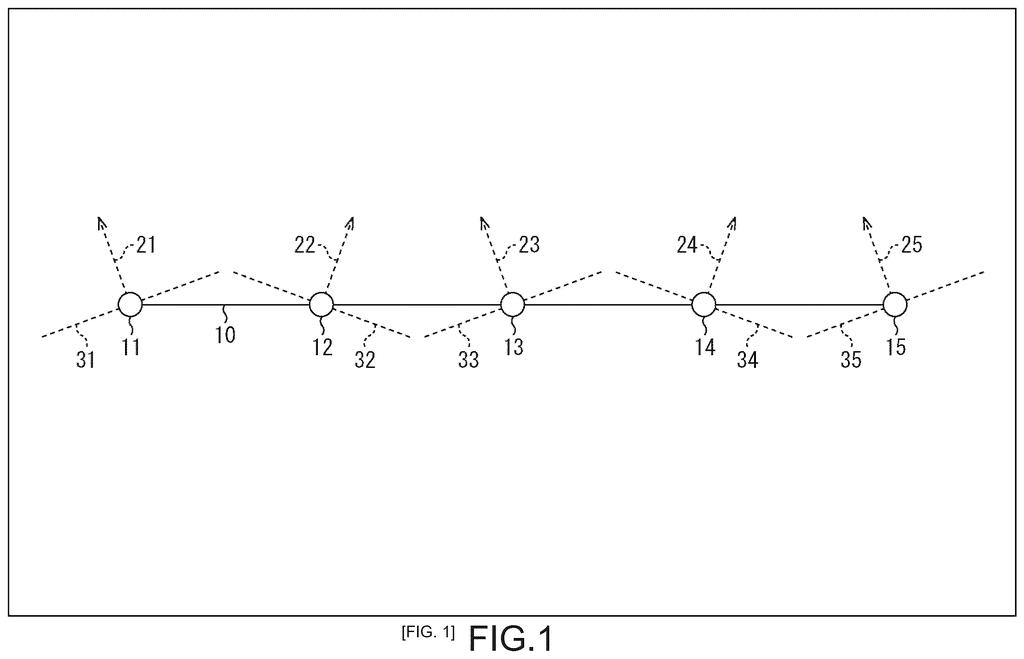
What Sony's 3D surface compression patent actually does
Ever tried to send a huge video file over a slow connection and watched it take forever? A similar bottleneck exists in 3D scanning, the technology behind virtual reality environments, self-driving car maps, and digital twins of real spaces. When you scan a room or a street in 3D, you get millions of tiny points, and each point carries information about which direction its surface faces. That directional data adds up fast.
Sony's patent focuses on compressing that directional data more tightly. Instead of storing the full surface direction for every point, the system predicts what that direction probably is, based on other information it has already encoded. Then it only stores the small difference between the prediction and the real value. Storing a small correction takes far less space than storing the whole thing.
The practical result is smaller files, faster transfers, and lower storage costs for anyone working with detailed 3D data, whether that's a game developer, a mapping service, or a medical imaging system.
a normal vector prediction section configured to predict a yet-to-be-encoded normal vector of an encoding target point on a basis of encoded information different from the yet-to-be-encoded normal vector obtained through an encoding process of point cloud data, and derive a prediction value of the yet-to-be-encoded normal vector, in the encoding process; …
Translation: The system guesses the angle of surface points using already processed data to save space.
How the encoder predicts and discards redundant surface data
A 3D point cloud is a dense collection of dots in space, each representing a tiny piece of a scanned surface. Each dot can carry attributes, and one of the most important is the normal vector, a tiny arrow pointing perpendicular to the surface at that spot. Normal vectors tell rendering software how light should bounce off a surface, so they matter a lot for realistic visuals.
The problem is that storing a full normal vector for every point in a scan with tens of millions of points is expensive. Sony's patent describes a predictive encoding approach. During compression, a dedicated section of the device predicts what a not-yet-encoded normal vector is likely to be, based on information that has already been processed (such as neighboring points or geometry data). This produces a prediction value.
A second section then calculates the prediction residual, the gap between the prediction and the actual value. If the prediction is close, that gap is tiny. A third section encodes only that small residual rather than the full vector.
- Normal vector prediction section: guesses the surface direction from already-encoded data
- Prediction residual generation section: computes how far off the guess was
- Prediction residual encoding section: compresses and stores only that small error value
This is conceptually similar to how video codecs like H.264 compress moving images by storing only what changed between frames, not every full frame.
A normal vector serving as an attribute corresponding to a 3D data processing target geometry is predicted on the basis of information other than the normal vector, a prediction value of the normal vector is derived, a prediction residual that is a difference between the normal vector and the prediction value corresponding to the processing target geometry is generated …
Translation: It calculates the difference between the guessed surface angle and the real one to only save the gap.
What this means for 3D streaming and spatial computing files
For everyday users, this kind of compression work is invisible until it fails. Slow-loading 3D maps in a navigation app, choppy virtual environments in a headset, or ballooning storage bills for architects working with building scans are all symptoms of inefficient 3D data pipelines. A tighter compression scheme at the normal-vector level chips away at each of those problems.
Sony's interest in point cloud compression shows up across its imaging, gaming, and spatial computing divisions, all of which ship products that deal with 3D environments. Better compression standards tend to get folded into industry specifications over time, so foundational patents in this area can have reach well beyond a single product line.
That makes this Sony's 12th filing in sensor patents we cover since June, a group that includes one on checking soil sensors for interference and one on streaming 3D scans efficiently.
Predictive compression of surface direction data means your phone or headset spends less time waiting on geometry to load before it looks right. The fix targets a quiet failure mode: 3D objects that arrive stripped of their shading information look flat and wrong even when their shape is correct.
You would notice this working only when it breaks. Laggy AR overlays, bloated map files, and objects that load as featureless blobs are exactly the friction that accumulates when compression at this level falls short.
Sony's approach is architecturally clean, but the real question is how much it actually compresses in practice, and the filing offers no numbers to settle that. The idea is sound; the proof will be in the products.
There are more where this came from
We read every patent application Big Tech publishes and send you the ones worth knowing. Plain English, free, every week.
The drawings
27 drawing sheets from US 2026/0281432 A1 · click any drawing to enlarge


Want this weekly breakdown for a company we don't cover? Patentlyze Pro →