
Microsoft Patent Targets Accurate Stylus Tilt Tracking When Sensor Conditions Change
When you tilt a stylus to shade a sketch, the pen has to know exactly what angle it's at, and that's harder than it sounds when the sensors feeding it that information keep changing quality. Microsoft has filed a patent for a stylus that automatically switches its angle-calculation method on the fly to stay accurate.
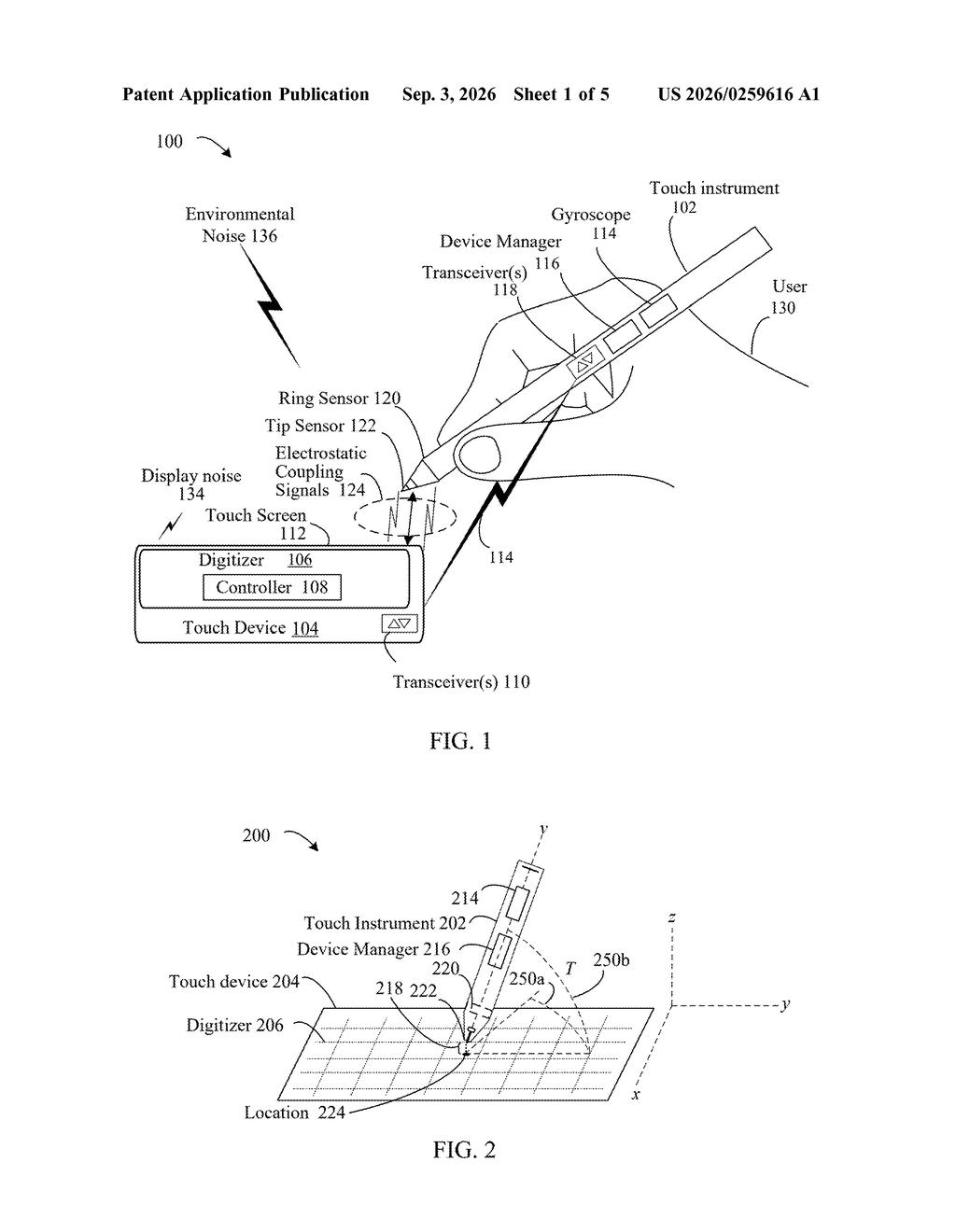
What Microsoft's adaptive stylus angle detection actually does
You're sketching on a tablet, pen tilted at a low angle to get that broad, shaded brush stroke. The line looks wrong, thinner than it should be, or pointing the wrong direction, because the pen couldn't tell the device how it was really angled.
That problem happens because the small sensors inside a stylus don't always perform equally well. A gyroscope (a sensor that measures rotation) works great in some positions but gets unreliable when the pen is held nearly flat. Microsoft's patent describes a stylus that monitors its own sensor quality in real time and switches to a different calculation method when the main one starts to fail.
The result is that the device always uses whatever approach is most accurate at that moment, instead of blindly trusting one formula regardless of conditions. For artists, architects, or anyone doing precise on-screen work, that could mean far fewer moments where the pen simply doesn't behave.
… adapt tilt determination from the first tilt detector to a second tilt detector for determination of the tilt at the second time; and determine the tilt at the second time using the second tilt detector.
Translation: The system switches to a different method for measuring pen angle when conditions change.
How the stylus switches between tilt-calculation methods
The patent describes an orientation detector built into the stylus or the connected device. It monitors not just the pen's angle but also the conditions affecting how reliably that angle can be measured.
At any given moment, the system picks a tilt detector, essentially a math formula, suited to the current conditions. When conditions change (for example, the stylus moves to a position where the gyroscope signal degrades), the system detects that shift and adapts: it swaps in a different detector, blends the outputs of two detectors with weighted averaging, or adjusts the coefficients (the numbers inside the formula) to compensate.
The patent specifically calls out several strategies:
- Switching entirely to a different equation when signal quality drops below a threshold
- Blending two equations with weights that shift gradually as conditions change, so there's no abrupt jump
- Varying which sensor data (gyroscopic vs. Other positional signals) drives the calculation
The core idea is that no single formula is best in all positions or signal environments, so the system picks dynamically rather than locking in one approach. The claim covers both the stylus-side and the touch-device-side implementation, meaning the intelligence could live in either place.
Adaptive tilt detection can vary tilt calculations by using different equations, using the same equation with different weights, blending the results of calculations using multiple equations, etc., to maintain the accuracy of tilt determinations as signal conditions change.
Translation: It keeps stylus tracking accurate by mixing equations and adjusting weights as the environment changes.
What this means for Surface Pen and digital drawing tools
Tilt detection matters for pressure-sensitive drawing, handwriting recognition, and any app that changes brush behavior based on pen angle. When tilt goes wrong, strokes look off or don't respond the way the artist intended, a frustration familiar to anyone who uses a Surface Pen or Apple Pencil for serious work.
The problem this patent attacks is real and has been persistent. Microsoft's run of stylus and touch-input filings suggests the company sees accurate pen input as a meaningful competitive front. Whether this specific method ends up in a shipping product, the framing of the filing points squarely at premium stylus hardware, where accurate tilt is a key selling point over cheaper alternatives.
Microsoft's 385th filing in our Microsoft coverage since May continues a thread that includes a self-correcting coding engine and a challenge to AI reasoning claims.
Artists who shade with a stylus rely on the pen reading their wrist angle accurately, and when that reading slips, the stroke goes wrong in ways that cannot be corrected by skill or repetition. The hardware is lying, and the hand takes the blame.
Angle sensors become unreliable in certain positions, a problem narrow enough that many users never notice it and wide enough that the ones who do find it maddening. Microsoft's approach watches signal quality continuously and switches between calculation methods as conditions shift, which is a measured answer to a failure that is small in frequency but large in consequence.
For anyone spending serious money on a digital pen, this is the difference between a tool that earns confidence over time and one that erodes it.
There are more where this came from
We read every patent application Big Tech publishes and send you the ones worth knowing. Plain English, free, every week.
The drawings
5 drawing sheets from US 2026/0259616 A1 · click any drawing to enlarge


Want this weekly breakdown for a company we don't cover? Patentlyze Pro →