
Sony's New Patent Cuts Measurement Errors That Blur Distance Readings Frame by Frame
Every depth-sensing camera lies a little. Sony has a patent for a simple timing trick that makes those lies cancel each other out, frame by frame.
What Sony's depth-camera noise trick actually does
A security camera stares at an empty hallway all night, and when you check the footage, the depth reading flickers even though nothing moved. That flicker is not a software bug; it is electrical noise baked into the sensor hardware, and you see it every time.
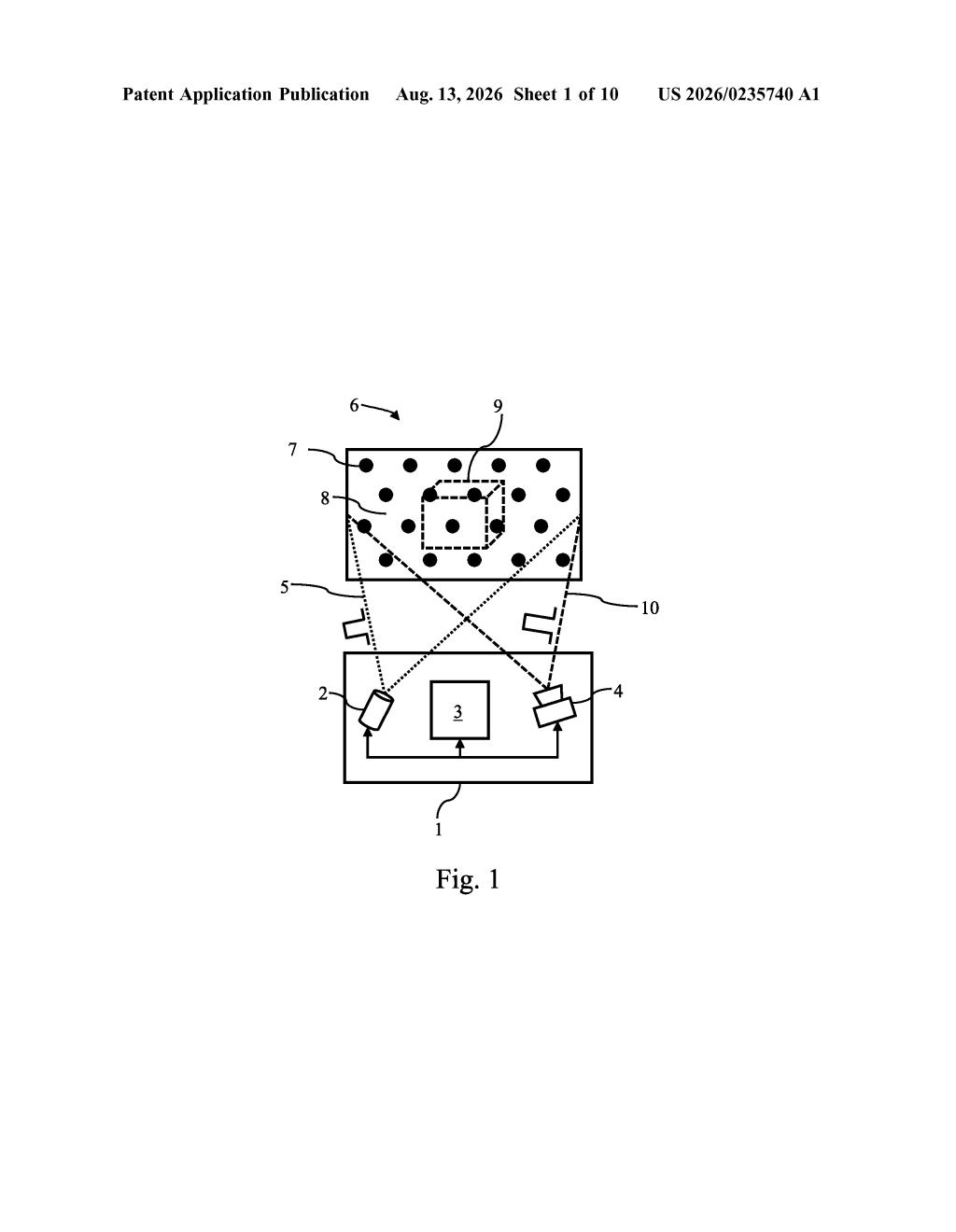
Sony's patent targets exactly this problem in time-of-flight cameras, the sensors that measure distance by timing how long a pulse of light takes to bounce back. The fix is a timing flip: the camera captures two consecutive frames, and between them Sony's control chip shifts the light-pulse phase by 180 degrees, the equivalent of flipping a wave upside down. When you subtract one frame from the other, real distance information adds up while the fixed background noise subtracts itself away.
The result is a cleaner depth reading from the same hardware, with no extra lenses or processing chips required. That matters for any device that needs to judge distance accurately, from face-unlock cameras to warehouse robots.
… each time-of-flight circuitry being configured to generate an avalanche signal representing a light detection event and to sample a first and a second demodulation signal applied to a first and a second input node, respectively, based on the avalanche signal to generate a first and a second output voltage representing distance information …
Translation: The sensor detects individual light particles and converts them into electrical signals to calculate how far away an object is.
How the 180-degree phase flip removes fixed-pattern noise
Time-of-flight sensors work by shooting out a rapidly flickering light signal and measuring how the reflected light arrives back at each pixel. The sensor compares two versions of that reflected signal, offset by 90 degrees, to calculate both the distance and the direction of objects in the scene.
The problem is that the sensor's own electronics introduce a fixed, repeatable error called fixed-pattern noise (think of it as each pixel having its own small, permanent thumb on the scale). This noise does not look random; it sits in the same place every frame, which makes it especially hard to ignore in distance calculations.
Sony's patent describes a control circuit that runs the sensor in pairs of frames. Between the first and second frame, it applies a 180-degree phase shift to either the demodulation signals (the electronic references used to decode distance inside each pixel) or to the outgoing light pulse itself. A 180-degree shift means the wave pattern is inverted.
- Frame 1: sensor captures distance data with the original phase.
- Frame 2: sensor captures the same scene with the phase flipped by 180 degrees.
- Combination step: the two frames are combined so that real distance signals, which flip sign correctly, reinforce each other, while the fixed noise, which does not flip, cancels out.
The individual pixel circuitry uses avalanche photodiodes (extremely light-sensitive detectors that amplify single photons into a measurable electrical pulse), so the scheme works even in low-light conditions where noise is proportionally larger.
A 180-degree phase shift is applied between the first and second frames in either the demodulation signals or the modulated light signal.
Translation: The system flips the timing of the light pulses or the sensor signals between frames to cancel out measurement errors.
What this means for 3D cameras in phones and robotics
Depth cameras are inside almost every modern phone that offers face unlock, and they are spreading fast into robotics, industrial scanners, and AR headsets. Any reduction in per-pixel noise directly translates to sharper distance maps, which means a face-unlock system makes fewer mistakes in dim light, or a robot arm mis-identifies an object's position less often.
The design choice here is elegant in its economy: Sony achieves noise cancellation through timing control alone, adding no extra silicon area to the sensor. The latest Big Tech patents in the depth-sensing and imaging chip space show a broader industry push to squeeze more accuracy out of smaller, lower-power sensors, and Sony's phase-flip approach fits squarely into that trend.
The engineering tradeoff worth naming is that this scheme takes two frames to produce one clean depth reading, which cuts the effective frame rate in half if you need both frames before outputting a result. For a slow-moving face-unlock scenario that cost is trivial; for a robot tracking a fast-moving object at close range, halving the frame rate is a real problem. Sony's patent does not describe a motion-compensation step to address that case, so fast-scene performance is the open question. The tradeoff reads as acceptable for the consumer-camera and industrial-scanner markets Sony most plausibly targets, where subjects move slowly and accuracy beats speed.
There are more where this came from
We read every patent application Big Tech publishes and send you the ones worth knowing. Plain English, free, every week.
The drawings
10 drawing sheets from US 2026/0235740 A1 · click any drawing to enlarge


Want this weekly breakdown for a company we don't cover? Patentlyze Pro →
Be the first to weigh in