
Sony Patents a Camera System That Detects Surface Damage Using Filtered Light Angles
Sony is patenting a way for cameras to detect tiny surface defects, scratches, or material wear by photographing an object under different angles of polarized light and running the results through a physics-based calculation called a Mueller matrix decomposition.
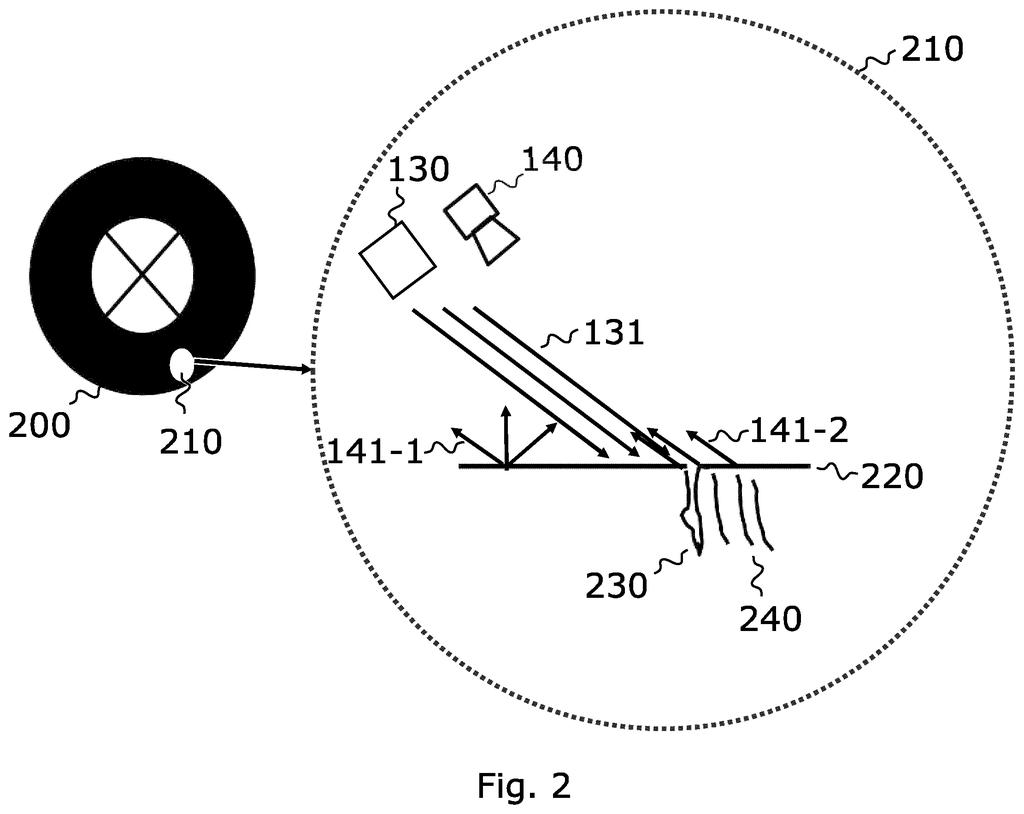
What Sony's polarized-light surface scanner actually does
A quality-control robot stares at a car door panel rolling off an assembly line. To your eye the surface looks perfect, but a scratch or stress fracture might be invisible under ordinary light. That's exactly the problem Sony's patent is trying to solve.
Instead of using one regular photo, Sony's system takes a rapid series of images with light polarized at different angles, the same principle behind polarized sunglasses that cut glare. By comparing how much light bounces back at each angle, the system can detect subtle changes in surface texture that a normal camera would miss entirely.
The result is a per-pixel map of optical properties, essentially a very detailed surface fingerprint. A machine-learning model can then flag areas that look like defects, corrosion, delamination, or other problems. You'd never interact with this directly, but the cars, phones, and medical devices that pass through a factory using this technology would be less likely to ship with hidden damage.
determine, for at least part of the pixel positions in the images of the sequence, a respective Mueller matrix based on the intensities given in the images of the sequence; decompose the respective Mueller matrix to determine one or more optical property of the surface …
Translation: The system calculates complex mathematical matrices for each pixel to identify specific physical traits of the surface.
How the Mueller matrix turns light angles into defect maps
At the heart of the system is a concept called a Mueller matrix, a 4x4 grid of numbers that fully describes how a surface transforms incoming polarized light. Think of it as a complete fingerprint of a material's optical behavior. A scratched metal surface, a patch of rust, or a delaminating coating all rotate and absorb polarized light differently, so their Mueller matrices look different from a healthy surface.
The camera captures a sequence of images, each taken with light at a different polarization state (the direction the light waves are oscillating). The processing unit then calculates a Mueller matrix for every pixel in the frame and decomposes it (breaks it into component parts) to extract individual optical properties such as retardance (how much the surface delays certain light waves), depolarization (how much it scrambles polarization), and diattenuation (how much it favors one polarization over another).
Those extracted properties feed into a condition-detection stage, which can include:
- A conventional rule-based classifier comparing values to known-good benchmarks
- A machine-learning model trained on labeled images of defective and intact surfaces
- A per-pixel anomaly map that highlights suspicious regions for human review
The patent also covers deployment on vehicles and mobile devices, suggesting the inventors see uses beyond fixed factory cameras, potentially a smartphone app or an onboard car sensor that monitors surface condition in the field.
Each image of the sequence comprises a plurality of pixels representing a spatial distribution of intensities of reflected light being reflected from a surface of the solid object. Each image of the sequence represents the intensities for a different light polarization.
Translation: The camera takes multiple photos of an object, using a different light filter for each shot to capture how light bounces off.
What this means for automated quality inspection
Automated visual inspection is already common in manufacturing, but most systems rely on ordinary color or grayscale cameras that can miss subsurface stress or very fine surface changes. Polarization-based imaging has been used in scientific labs for years; what this patent describes is packaging it into a practical, pixel-level system with a learnable back end. For the person buying a consumer device or a car, the payoff is simple: fewer units that pass factory inspection but fail six months later because a hairline crack or coating defect was never caught.
The mobile-device claim is the more speculative piece. If Sony can shrink this to smartphone hardware, future phone cameras might assess surface wear on machinery, artwork, or structural materials in the field. That's a long road from patent to product, and Sony's imaging division has filed plenty of camera patents that never shipped as standalone features. Still, polarized-light inspection sits right at the intersection of sensors and AI-driven analysis where new Big Tech patents are clustering this year, and Sony's sensor manufacturing background gives this one more credibility than a purely software-side filing.
For the end user, this patent matters most as a quality-assurance backstop: products that don't fail in ways a standard factory camera could not detect. You'd never see that in a spec sheet, but it's the engineering that separates a device that lasts three years from one that develops a mysterious screen crack by month eight. The mobile-device application is the strongest detail: if Sony can fold this into its existing sensor stack, it opens a category of inspection tools that currently require expensive lab equipment.
There are more where this came from
We read every patent application Big Tech publishes and send you the ones worth knowing. Plain English, free, every week.
The drawings
9 drawing sheets from US 2026/0237041 A1 · click any drawing to enlarge


Want this weekly breakdown for a company we don't cover? Patentlyze Pro →
Be the first to weigh in