
Sony Files Patent for a Digital Ball That Changes as the Game Unfolds
Sony describes a blank digital baseball that fills in with team logos, colors and player portraits while a real game is played, and ends up different for every fan who watched.
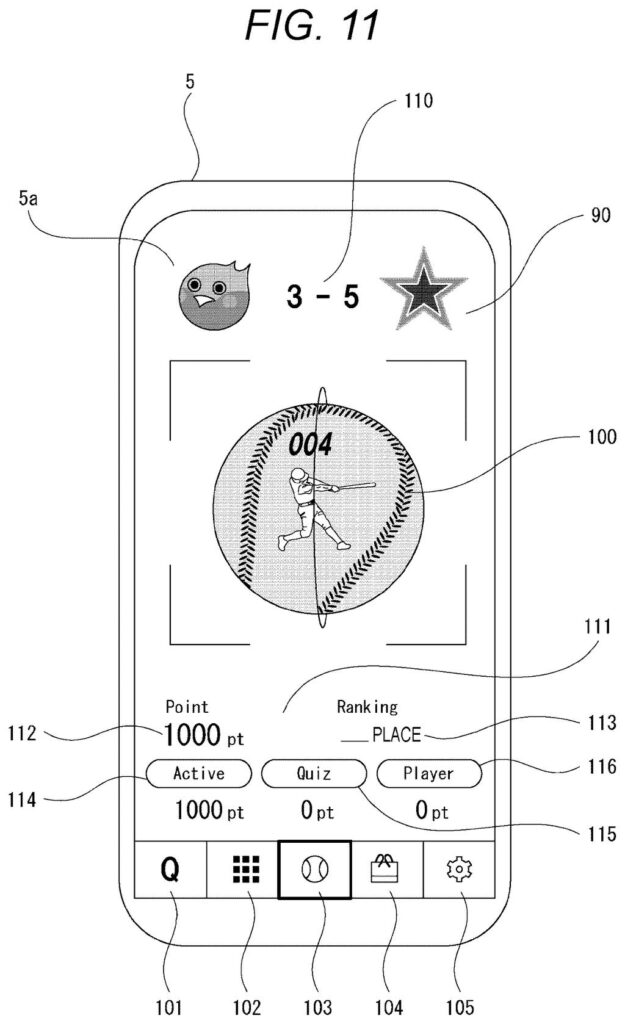
What Sony's game-linked digital ball actually does
A fan opens an app at the start of a baseball game and sees a blank digital ball. By the ninth inning, that ball has a team logo, a gold background and a player's face on it.
That is the idea in this Sony patent application. The app watches the real game through score feeds, stadium cameras and sensors, and it edits a digital collectible as the action unfolds. A home run might turn the background gold. A loss might turn it red.
It also pays attention to you. Answer a quiz about where a home run will land, tap a "WOW" button after a great play, or share where you are watching from, and your ball changes in ways someone else's won't. The finished item can be saved, traded or sold as an NFT (a digital collectible whose ownership is recorded online).
An information processing device comprising: a calculation unit configured to perform generation control processing of a digital item corresponding to a game on a basis of game information that is information regarding the game.
Translation: Sony describes a computer system that creates in-game digital items based on how the gameplay is going.
How the item gets edited, play by play
The core of the filing is a calculation unit (the software brain running on a server) that controls how a digital item is created or edited based on information about a game. In the main example, that item is a baseball that starts blank and is gradually updated.
The game information comes from several sources: official score data (every pitch, count and result) and stadium cameras and sensors that track players and the ball. That tracking data is called EPTS (electronic performance and tracking system) and includes details like pitch spin, ball speed and a player's body motion.
The filing also covers user information:
- Quiz answers, such as picking the stadium section where a hit ball will land
- The WOW button, which fans tap when a play excites them
- Location, such as in the stadium or at home watching TV
The system turns this reaction into a score. It can weigh moments more heavily, for example the fifth and seventh innings or a favorite player's hits. It can compare your score with other users' scores, so top-ranked fans might earn a player's digital signature on their item.
Editing can happen area by area, such as sections of the ball's seams or parts of a jersey. The item can also get motion, like spinning to match a pitcher's real spin. When the game ends, the item is stored, with video highlights or game data attached.
Why Sony's patent points to fan collectibles and NFTs
For a sports fan, this is a souvenir that builds itself while you watch. Instead of buying a generic collectible, you would own one shaped by the specific game and your own choices, which could make each one feel more personal and more worth showing off.
For Sony, it links its sports-tracking technology to fan engagement and digital goods. The filing describes selling or trading items as NFTs, attaching coupons and QR codes, and even using items in other games. The examiner's first review has rejected the claims as filed, which is a routine early step usually followed by amendments, so the final scope is not settled.
Sony's 697th filing in our Sony coverage since May follows patents like catching cheaters by button habits and a smell-spraying car ad.
Claim 1 is extremely short: a device that controls generating a digital item that corresponds to a game, based on information about that game. That wording is very broad. It says nothing about baseball, NFTs, quizzes or tracking cameras, and it would cover many ways a game could shape a digital item.
The narrower ideas sit in the dependent claims: scoring fan reactions, weighting key moments, comparing fans, editing item areas and adding motion. Those are the details that make the baseball example concrete and are less likely to survive intact if the broad claim gets narrowed.
The broad opener is where an examiner is most likely to push back, and where any real protection would be decided. The description is far more interesting than the claim: a ball that turns gold when the home team takes the lead is an easy idea to picture, and it shows what Sony thinks fans might pay for.
Get our take in your Top Stories
Liked this breakdown? Add Patentlyze as a preferred source on Google, and our plain-English take shows up more often in your Top Stories the next time Sony patent news breaks.
There are more where this came from
We read every patent application Big Tech publishes and send you the ones worth knowing. Plain English, free, every week.
The drawings
20 drawing sheets from US 2026/0346146 A1 · click any drawing to enlarge


Show the other 12 sheets


Want this weekly breakdown for a company we don't cover? Patentlyze Pro →
Be the first to weigh in