
Sony Patents a Car That Sprays Hamburger Smell When You Pass a Burger Ad
Sony's patent filing imagines your car releasing a hamburger smell the moment you drive past a burger billboard. A chocolate commercial on the car's screen could get a chocolate scent too.
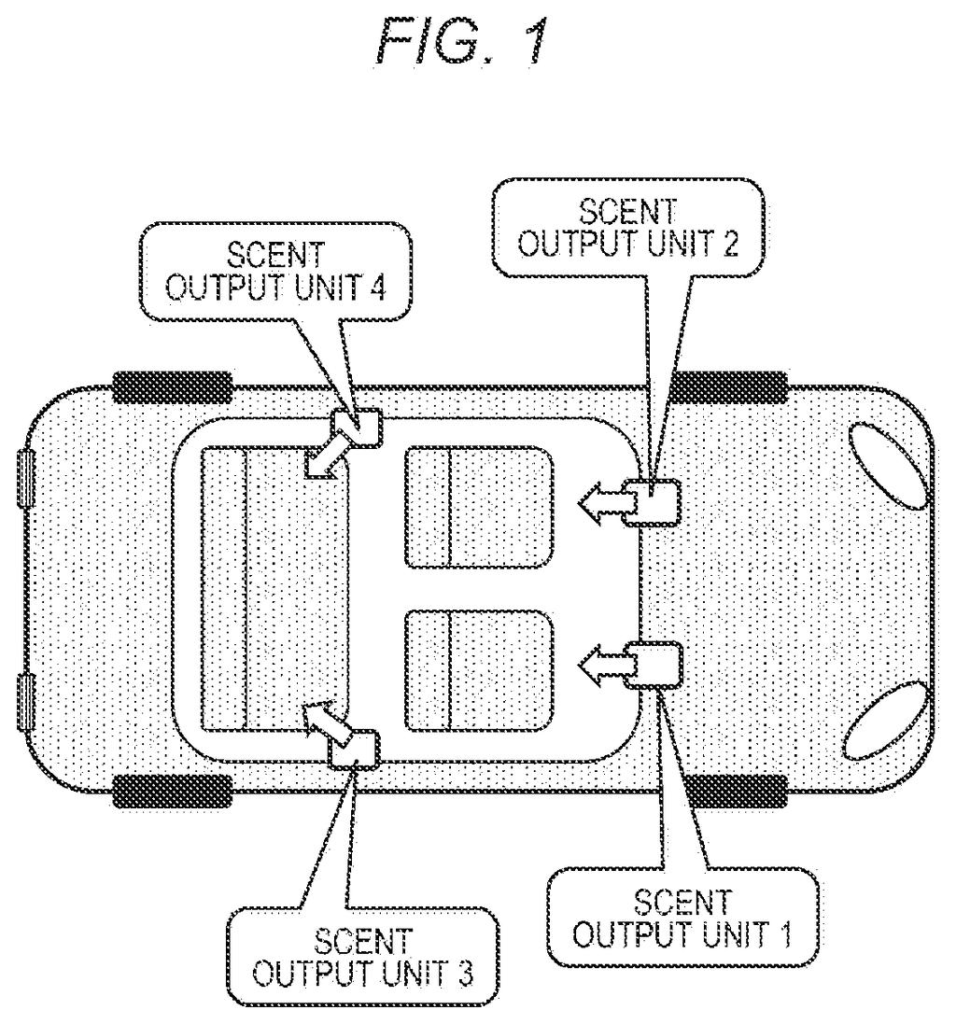
What Sony's ad-matched car scent system does
Ever caught the smell of fresh bread outside a bakery and suddenly decided you were hungry? Sony has filed a patent that puts that idea inside your car.
Cameras on the car watch the road. When one spots a registered billboard, say for a burger restaurant, the car releases a hamburger scent from a built-in scent unit. The same trick could work for a chocolate commercial playing on a TV, a radio or a phone in the car.
There is a twist. A second camera inside the car estimates each rider's gender and age, and the ad's rules decide who gets a whiff. Only the seats that match get the scent, and only for a set time, such as 30 seconds.
… selects a scent to be output on a basis of an advertisement, and outputs the selected scent via the scent output unit.
Translation: It picks a smell that matches an ad and releases it.
How the car decides which ad gets a smell
The patent covers a car-mounted device with two parts: a scent output unit (scent cartridges plus a blower that pushes scented air toward a seat) and a control unit that picks which scent to release based on an advertisement.
In one version, a camera facing the road looks for ads such as signboards, displays and digital signs. The car then checks a scent management server (an online list of registered ads) to see whether the ad is on file. It also compares the ad's position and direction with the car's GPS location. If everything matches, the list says which scent to use.
Each registered entry can carry conditions:
- Valid dates, tied to the advertiser's contract
- Allowed times of day, such as 8:00 to 16:00
- A rider profile, such as gender and age range, read from a camera inside the car
- How long the scent runs, such as 30 seconds
For TV, radio or phone ads, the car matches the channel or website and the airtime instead of using the road camera. The filing also says the scent could get stronger as the car nears the sign, as if it were floating off the picture.
… selects a scent to be output on the basis of the advertisement detected from an image captured by a vehicle exterior camera that captures the outside of the vehicle …
Translation: An exterior camera spots billboards outside the car to figure out which smell to spray.
What a smell-enabled ad could mean for your commute
If this ever reached a car, ads would stop being something you only see and hear. A burger billboard on your commute or a chocolate commercial on a back-seat screen could come with a matching smell. The filing says taxi companies and other carriers could even collect an ad fee from the advertiser.
For you, the practical question is control. The system relies on a camera pointed at the people in the car, and the filing does not mention a way to switch it off. It also describes gentler uses, like a signature scent when the engine starts or your favorite scent when you get into a taxi.
Sony's 695th filing in our Sony coverage since May follows patents like the wind-blowing VR headset and the battery-matching drone.
The hardware side of this is closer than you might expect. The filing points to an existing Sony scent unit that blows dry air through cartridges, and many modern cars already carry cameras inside and out plus GPS. Adding a scent module to each seat is a small step.
The hard part is the paperwork. Every billboard or TV commercial has to be registered on a server with its location, its scent, its rules and its contract dates. Advertisers, sign owners and carmakers would all have to sign up before a single whiff happens.
The shortest route to a product is probably the TV and phone version, since a commercial's channel and airtime are easy to match and no roadside signs are involved. Riders may also push back on a camera guessing their age and gender to decide what they smell.
Get our take in your Top Stories
Liked this breakdown? Add Patentlyze as a preferred source on Google, and our plain-English take shows up more often in your Top Stories the next time Sony patent news breaks.
There are more where this came from
We read every patent application Big Tech publishes and send you the ones worth knowing. Plain English, free, every week.
The drawings
14 drawing sheets from US 2026/0346685 A1 · click any drawing to enlarge


Show the other 6 sheets


Want this weekly breakdown for a company we don't cover? Patentlyze Pro →
Be the first to weigh in