
Sony Files Patent to Hide Headset Glitches Behind Your Blinks
When a VR headset loses track of where you are, the fix usually shows up as a visible jump. Sony's filing hides that jump by waiting for you to blink.
What Sony's blink-timed tracking switch does
You're mid-game in a VR headset, reaching for a ledge, when the room lights flicker and the headset loses its view of the world. It falls back on its built-in motion sensors, and suddenly the picture lurches as the two systems disagree about where you are.
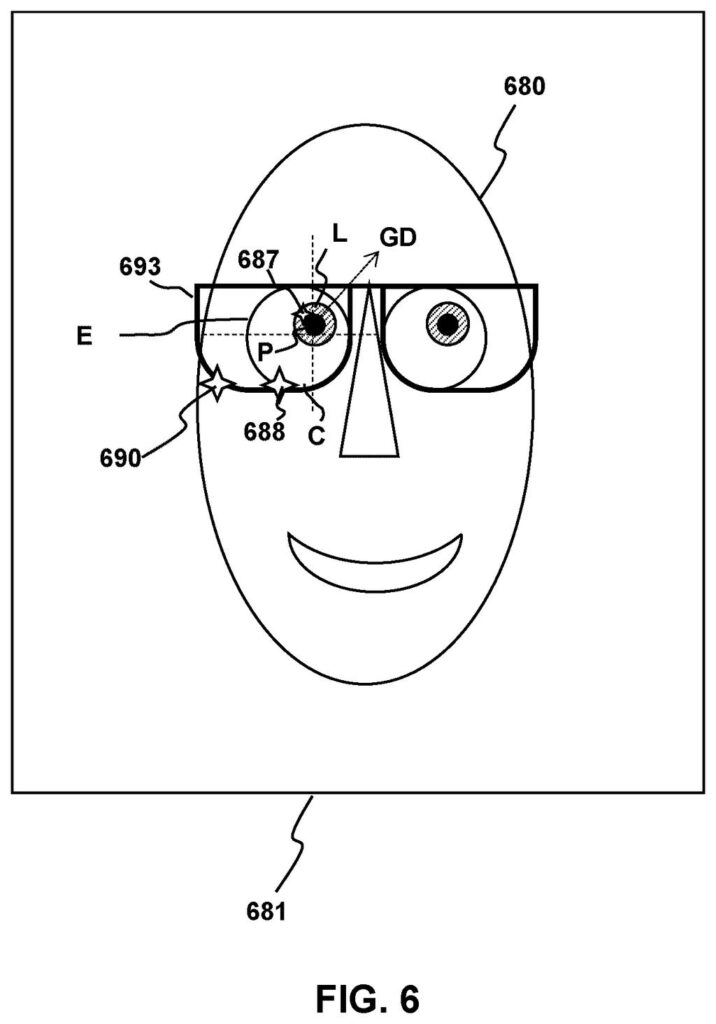
Sony's filing tackles that lurch with a timing trick. The headset keeps score of how much it trusts its camera-based tracking. When that trust drops, it decides to switch to the motion sensors, but it waits to actually do it. A second sensor watches your eyes, and the swap happens only while you blink or your eyes make a fast flick from one spot to another.
Your brain largely ignores what you see during those moments, so the jump slips by unnoticed. The whole swap fits inside a fraction of a second.
… pausing the change from the first tracking mode to the second tracking mode until a user engagement change is detected by a sensor.
Translation: The system waits to switch tracking modes until the headset senses you blink.
How Sony's system waits for a blink to switch
The filing describes a headset or controller that tracks its position in two ways. One is optical tracking, where cameras read the room (often with SLAM, a method that builds a map of the space while tracking where you are inside it). The other is inertial tracking, which uses motion sensors such as accelerometers and gyroscopes. Cameras struggle in dim light, sudden brightness changes or when blocked, and motion sensors drift over time.
The system scores how much it trusts the camera data, using signals like how many visible landmarks it is following and how large its mapping error is (called reprojection error). A trained machine learning model can produce that score instead. When the score shifts significantly, the system starts a switch but holds it until an eye sensor reports a blink or a saccade (a rapid eye movement). The claims cover switching in either direction.
The description gives timing: a saccade lasts roughly 20 to 200 milliseconds and a blink about 100 to 150, which leaves 12 to 18 frames at 120 frames per second. Saccades are spotted by filtering eye-movement speed, and the system can predict how long the pause will last.
When camera tracking is trusted again, its readings help adjust a sliding window of motion-sensor data: slower motion gets a wider window, faster motion a narrower one, which cuts drift.
… the change is paused until a saccade or blink is detected. by eye tracking device. After a saccade or blink is detected the tracking mode switches from the first tracking mode to the second tracking mode.
Translation: Eye tracking sensors hold off on the transition until you move your eyes or blink.
What this means for Sony's VR and game headsets
If you wear a VR headset, the benefit is a steadier picture at the moments tracking is at its worst: a dark corner of the room, a hand covering a camera, a sudden bright lamp. The filing says earlier methods can show a rubber-band effect that feels jarring and disorienting, and can even cause nausea. It also says the idea can work with any system that has a camera, including phones, tablets and game consoles.
This is a patent application, and the examiner's first review rejected the claims as filed, which is routine at this stage and usually followed by amendments. It is also a continuation of an earlier Sony Interactive Entertainment application filed in December 2024, so the idea has been in the pipeline for a while.
Sony's new application is the 40th we've tracked in our AR glasses race watchlist since July, adding to earlier work like training eye-tracking on synthetic faces and body tracking across frames.
The price of this design is a short wait. When the camera view goes bad, the headset keeps using shaky data until your eyes give it a window, and that is a moment of worse tracking you cannot hide. Blinks come every few seconds in everyday life, so the delay is usually brief, though the filing gives no worst-case number.
The second cost is hardware. The trick needs a fast, accurate eye tracker watching your eyes, which adds parts, power draw and one more camera pointed at your face. The filing says a phone or laptop camera could do the job, and everything still hinges on how quickly the system spots the start of a blink.
The trade reads as worth it for any headset that already tracks eyes, since the filing's own numbers leave 12 to 18 frames of room inside a blink at 120 frames per second. For headsets without eye tracking, the bill is higher and the case is weaker.
Get our take in your Top Stories
Liked this breakdown? Add Patentlyze as a preferred source on Google, and our plain-English take shows up more often in your Top Stories the next time Sony patent news breaks.
There are more where this came from
We read every patent application Big Tech publishes and send you the ones worth knowing. Plain English, free, every week.
The drawings
12 drawing sheets from US 2026/0329374 A1 · click any drawing to enlarge


Show the other 4 sheets


Want this weekly breakdown for a company we don't cover? Patentlyze Pro →
Be the first to weigh in