
Sony Patents a Controller That Recalibrates Its Own Analog Sticks Automatically
Analog stick drift, the slow creep that makes your character walk in circles even when you're not touching the controller, has annoyed console players for years. Sony may be building a fix directly into the controller's firmware.
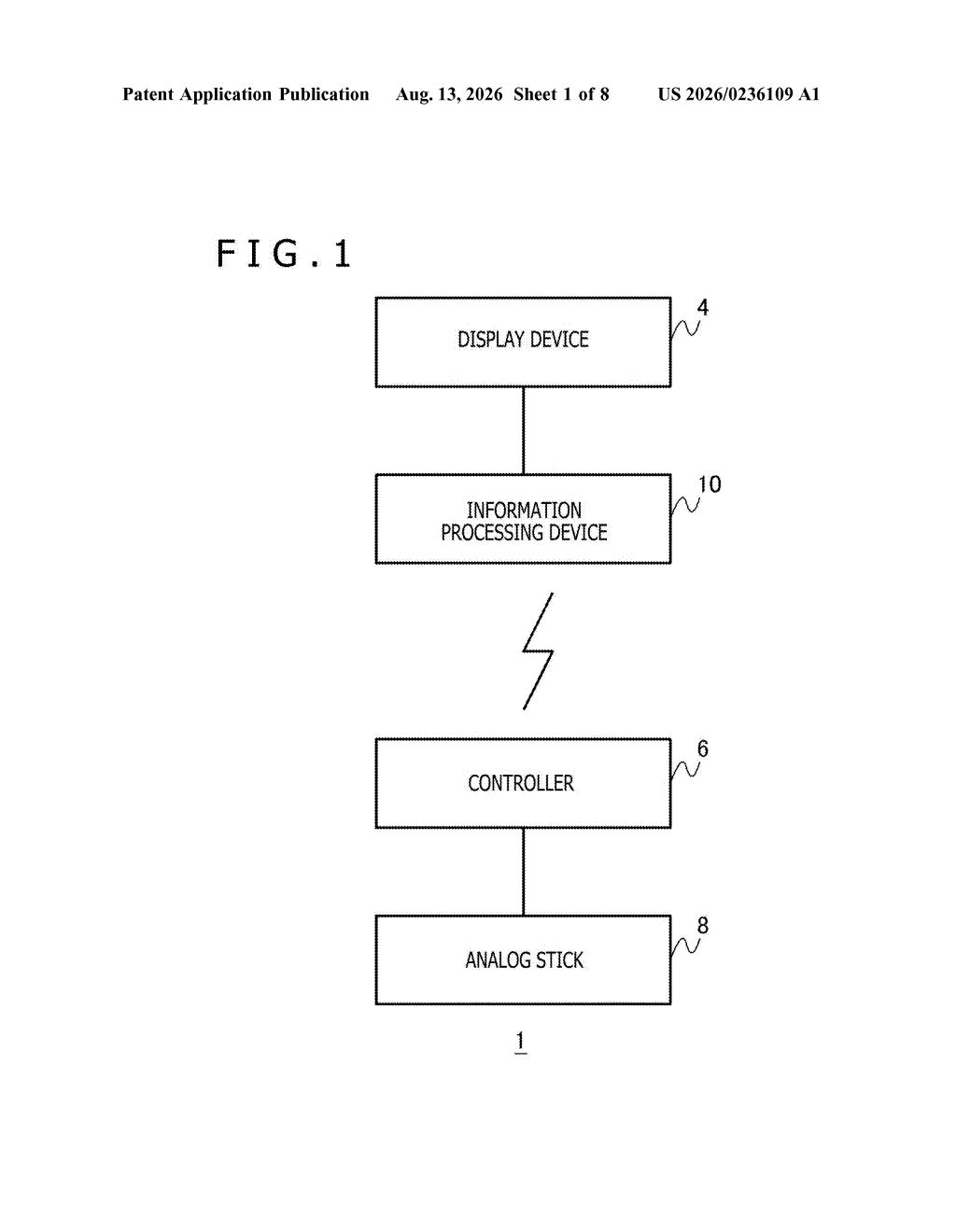
How Sony's auto-calibration targets stick drift early
Imagine you're sitting down to play and your character keeps drifting left on its own. You're not touching the stick, but the controller is sending a tiny signal anyway, as if the stick is off-center. That's drift, and it's one of the most common complaints about modern controllers.
Sony's patent describes a controller that tracks what signal the analog stick sends when you're not touching it. If that resting signal drifts away from the factory-set center value over time, the controller updates its internal reference point to match, essentially recalibrating itself without you having to do anything.
The system is careful about it too. It doesn't just grab one reading and trust it. It waits for multiple readings to cluster around the same value before updating, picking the most common result. That way a stray bump or a momentary slip doesn't accidentally throw your calibration off.
The controller 6 determines, in a case in which a plurality of the output values from the analog stick are values within a range in which the analog stick is assumed to be at the center point, an output value having a highest frequency among the plurality of output values.
Translation: The controller identifies the most common signal sent by the stick while it is resting to define the true center position.
How the controller tracks center-point output over time
An analog stick works by sending a numeric output value that tells the console how far the stick has been pushed and in which direction. When the stick sits untouched at its resting position (called the center point), it should send a specific baseline value, and the controller uses that baseline to know what "no input" looks like.
Over time, wear on the internal components causes that resting value to drift. The controller still thinks the stick is centered, but the stick is now sending a slightly different number, which the console reads as a small continuous push in some direction. That's the root cause of drift.
Sony's patent addresses this at the firmware level. The controller stores the expected center-point output value in memory. While the stick sits idle, it collects a series of output readings. If enough of those readings land within a predefined "this is probably center" range, the system calculates which value appeared most often (the mode, in statistical terms) and uses that as the new baseline.
- The controller only updates if multiple readings agree, filtering out noise or accidental touches.
- The new baseline is written back to storage, replacing the old reference value.
- The update happens on the device itself, with no external calibration tool required.
What this means for PlayStation controller longevity
Drift has been a persistent and expensive headache for console players. Replacement controllers cost anywhere from $60 to $90, and class-action lawsuits have targeted both Sony and Nintendo over the issue in the past. A controller that catches its own calibration slipping before it becomes noticeable to the player would extend the usable life of the hardware significantly, and it could reduce warranty and support costs for Sony at scale.
The fix described here is purely software and firmware, which means it could theoretically be pushed to existing DualSense controllers through a firmware update rather than requiring new hardware. That's a short path from patent to product: no new components, no retooled manufacturing line, just a smarter calibration loop running in the background. Gaming peripherals are one recurring thread across this week's Big Tech patents, and Sony's drift-correction filing is one of the more practical submissions in that category.
The ship path here is about as short as it gets for a hardware patent: the invention is entirely firmware logic, the sensors it relies on already exist in every DualSense unit, and the problem it targets is well-documented and publicly embarrassing for Sony. The real question is whether the statistical approach of waiting for a modal resting value across multiple samples is robust enough to handle sticks that are actively degrading rather than settling at a new center. If it is, this patch improves millions of controllers already sitting in players' homes.
There are more where this came from
We read every patent application Big Tech publishes and send you the ones worth knowing. Plain English, free, every week.
The drawings
8 drawing sheets from US 2026/0236109 A1 · click any drawing to enlarge


Want this weekly breakdown for a company we don't cover? Patentlyze Pro →
Be the first to weigh in