
Sony Patents a System That Sorts You Into Fan, Superfan or Hater
Sony has described software that watches what you view, buy and post (and can even read your pulse), then decides whether you're a casual user, a fan, a superfan or a hater. What a company shows you next could depend on that label.
What Sony's fan-or-hater sorting system does
Every time you rewatch a trailer, pre-order a game or post about an upcoming concert, you leave a small clue about how much you care. Sony's patent application describes a system that gathers those clues and sorts you into one of four types: average, detracting (a hater), enthusiast (a fan) or super-enthusiast (a superfan).
The clues can come from what you watch or play, what you buy, what you post on social media, and even your heart rate from a smartwatch. The system pays attention to spikes, like a racing pulse during a big moment at a concert, and skips your everyday routine.
Once you have a label, a company could change what it shows you. A superfan might get an invite to a VIP event or an early look at something new. Someone labeled a hater might get a call from customer support instead of another ad.
receiving user data comprising at least two of media consumption data, biometric data, commerce behavior data, or social data; processing the user data to generate a plurality of data signals comprising at least two of media signals, biometric signals, commerce signals, or social signals …
Translation: The system collects and analyzes your personal habits, physical responses, and spending history.
How Sony turns heart rate and purchases into a label
The claims cover a method for deciding a person's type, meaning how strongly they feel about a particular subject. The subject can be an entity (a band or an actor), an object, an event, a time, a location, or a piece of content like a movie.
The system takes in at least two of four kinds of data:
- Media consumption: your viewing and interaction history.
- Biometric: for example heart rate from a wearable, plus optional face or voice recognition data.
- Commerce behavior: such as your recent purchases.
- Social: your activity on a social media site.
Each stream is turned into a numerical signal. The claims add a filter: the system picks out data points showing variations or patterns that rise above baseline levels, such as a pulse spike during a concert instead of a resting heart rate.
A classifier (a program that puts things into categories) then reads the signals. It can be a neural network (software trained on labeled examples) or a set of fixed rules. In one version, it gives a probability for each user type and picks one using a threshold. The label is then output, and the filing says it can change as your behavior changes.
… processing the one or more data signals using a classifier to generate a classification of the type of user, where the type of user is associated with a particular level of sentiment of the user towards one or more particular subjects …
Translation: An algorithm categorizes you based on how strongly you love or hate specific topics.
Why your superfan status could shape what you see
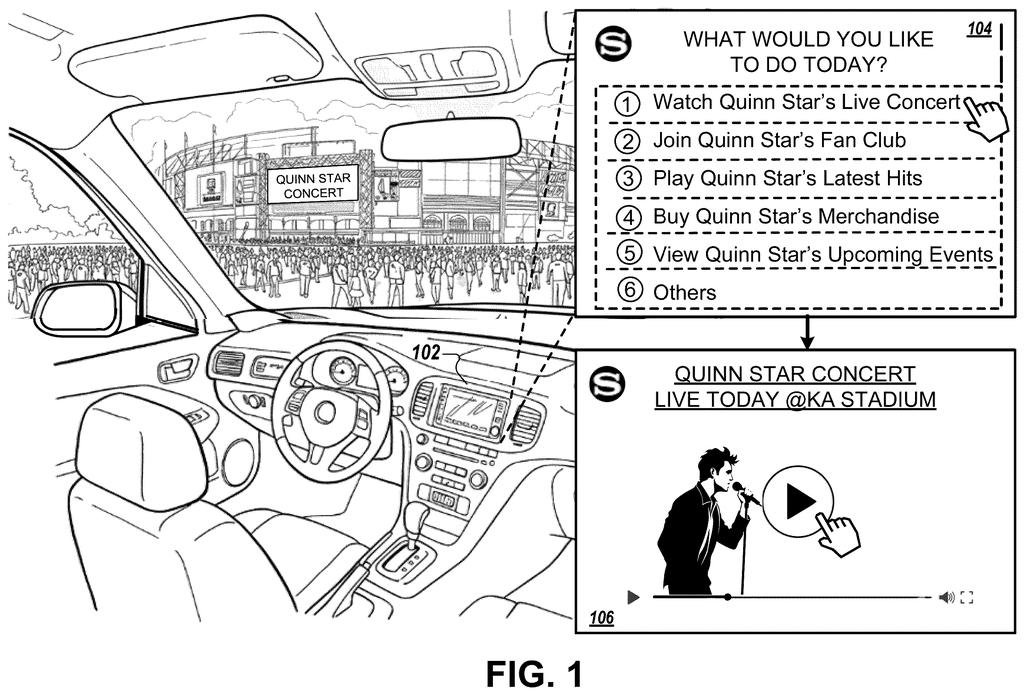
If a system like this ships, you would notice it in what your screens offer you. The filing's own example is a car's display offering a live stream of a sold-out concert to a fan parked nearby. A superfan could get VIP invites and early access, while a hater could get a customer support call. The examiner's first review rejected the claims as filed, which is routine at this stage.
The filing names PlayStation consoles and handhelds among the devices that could run it, and it lists smartwatches, cars and smart TVs as other places the data and offers could come from. It also shows how much a company could infer about your feelings toward a brand from signals you already produce.
Sony's tenth AI recommendation filing we've tracked since May follows patents like one letting AI script testing bots and one matching players by skill.
Companies really do struggle to tell a devoted fan from a casual browser. Hours watched and dollars spent miss a lot, and the filing's own example shows why: someone who rewatches trailers but buys nothing could be a superfan or just curious.
The proposed fix is large for that problem. Pulling in your pulse, your posts and your purchases to settle a marketing question asks a lot of the person being labeled, and the payoff for you is mostly nicer offers. For Sony the payoff is clearer: knowing who your biggest fans and angriest critics are lets you send perks to one group and support to the other.
The four-bucket label is simple, and the claims rely on common machine learning tools. Treat it as a routine business idea with an unusually personal set of inputs.
Get our take in your Top Stories
Liked this breakdown? Add Patentlyze as a preferred source on Google, and our plain-English take shows up more often in your Top Stories the next time Sony patent news breaks.
There are more where this came from
We read every patent application Big Tech publishes and send you the ones worth knowing. Plain English, free, every week.
The drawings
10 drawing sheets from US 2026/0350131 A1 · click any drawing to enlarge


Show the other 2 sheets


Want this weekly breakdown for a company we don't cover? Patentlyze Pro →
Be the first to weigh in