
Samsung Files Patent for a Post-Quantum Signature Verification Test System
As quantum computing threatens traditional cryptography, Samsung is patenting a way to rigorously test whether its memory devices can correctly verify post-quantum digital signatures — before those devices ship.
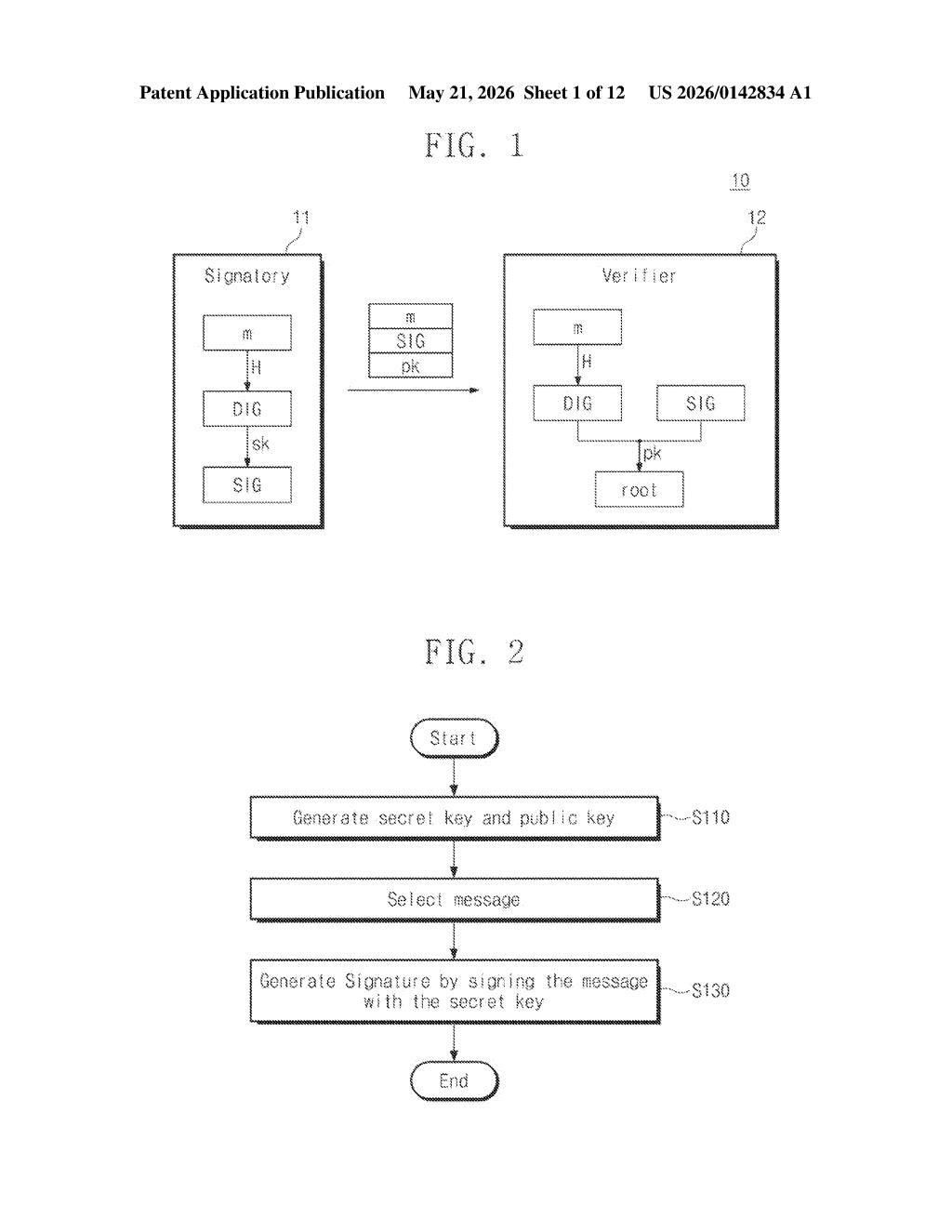
What Samsung's signature verification test actually does
Imagine you're sending a sealed letter, and the recipient needs to verify that the seal is genuine and hasn't been tampered with. Digital signatures work the same way — they prove a piece of data is authentic. But the math behind most signatures today could eventually be cracked by powerful quantum computers, so the industry is moving to newer, more complex schemes.
Samsung's patent describes a testing method for one of those newer schemes. Instead of just hoping a memory chip correctly validates a post-quantum signature, this approach generates a known-good set of inputs — a seed, a signature, a message, and a matching public key — and feeds them to the device to see if it gets the right answer.
Think of it like a standardized exam with an answer key already in hand. The test system builds the expected correct output from scratch using deterministic math, then checks whether the memory device under test agrees. If it does, the verification logic works. If it doesn't, you've caught a bug before a real product ships.
How the hash chain and Merkle tree test flow works
The patent covers a test harness for signature verification systems that use two layered cryptographic structures: a hash chain (a sequence of repeated hash computations that encodes a one-time signing key) and a Merkle tree (a binary tree where each node is a hash of its children, used to commit to many keys at once with a single public root value).
The test method works in a defined sequence:
- Generate a seed and a structured signature that encodes metadata — specifically, how tall the hash chain is and how tall the Merkle tree is.
- Derive all the intermediate values needed for both structures from that seed using a deterministic function (meaning the same seed always produces the same values — no randomness, so the test is reproducible).
- Hash a test message, and use that hash output to determine how many times the hash chain operations run — this is the core of hash-based signature schemes like XMSS or WOTS+.
- Compute the Merkle tree path from the leaf node up to the root, then construct a public key whose root value matches exactly.
The system then hands the signature, message, and public key to the memory device under test. The memory device runs its own verification logic — and the test passes if it arrives at the same root value. Because the test generator built everything from a known seed, it always has a ground-truth answer to compare against.
What this means for secure memory and post-quantum hardware
Hash-based signature schemes are among the leading candidates for post-quantum cryptography — the NIST standardization process has already finalized several. As these schemes land in hardware (secure enclaves, NVMe storage controllers, embedded memory), manufacturers need reliable ways to validate that the silicon implements them correctly. A memory device that mis-verifies a signature is a serious security hole.
For Samsung, which makes both NAND flash and DRAM for enterprise and consumer markets, having a reproducible, seed-driven test methodology means verification bugs can be caught in simulation, on test chips, and in production validation — all with the same deterministic inputs. That's the kind of boring-but-critical infrastructure work that keeps secure boot and firmware signing trustworthy in a post-quantum world.
This is infrastructure-level security work — not flashy, but exactly the kind of thing that matters when post-quantum cryptography moves from standards documents into actual shipping hardware. Samsung is clearly building out the verification toolchain for hash-based signature schemes, which suggests they're taking post-quantum readiness in memory products seriously. It won't make headlines at a product launch, but it's the foundation those products will depend on.
There are more where this came from
We read every patent application Big Tech publishes and send you the ones worth knowing. Plain English, free, every week.
Want this weekly breakdown for a company we don't cover? Patentlyze Pro →