
Samsung Patents a Tilted-Hair Brush Design for Robot Vacuums
Samsung's latest patent isn't about sensors or AI — it's about the humble spinning brush on the bottom of your robot vacuum, and a surprisingly clever tweak to how its bristles are attached.
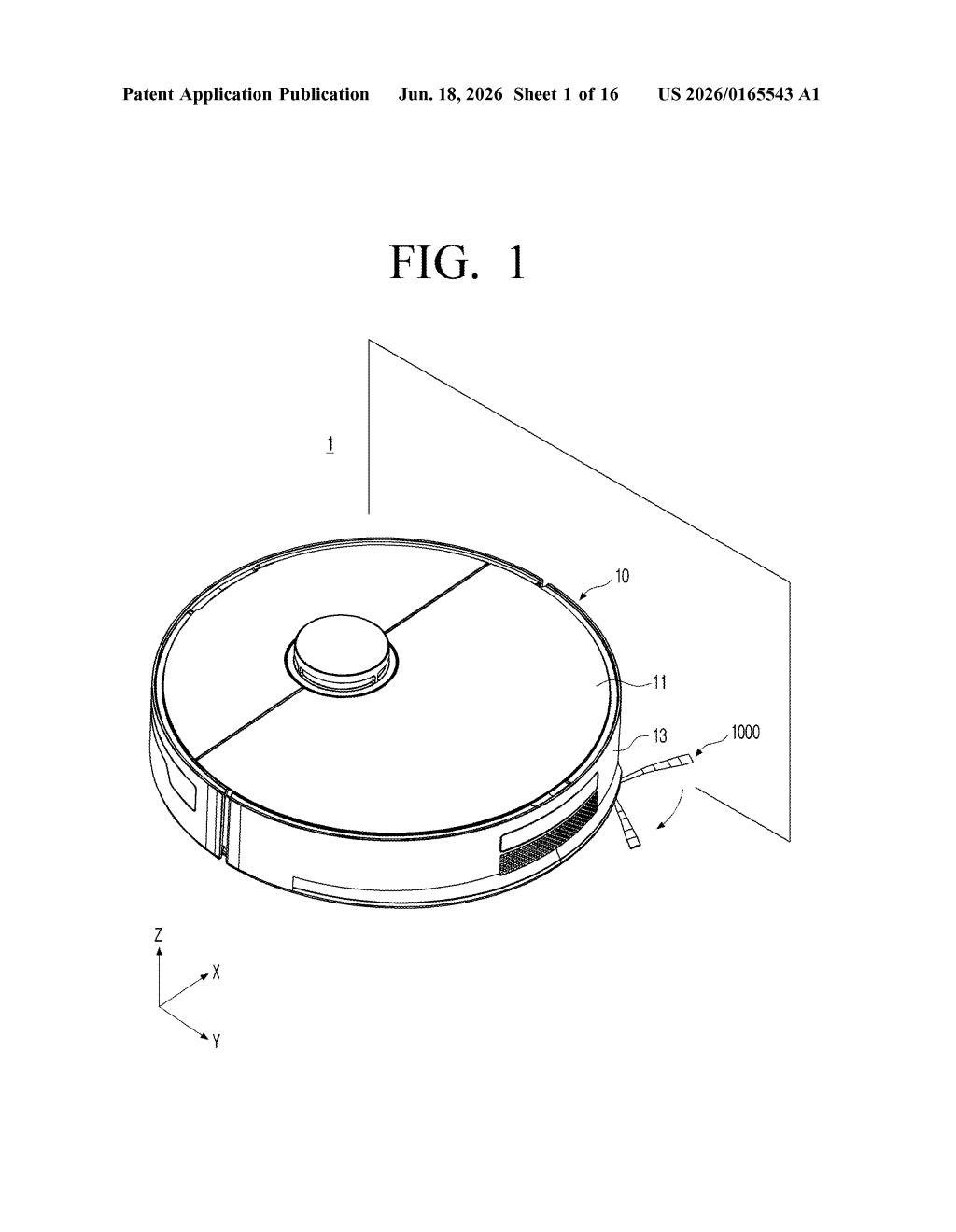
What Samsung's angled brush hairs actually do
Picture the little spinning side brushes on a robot vacuum — the ones that flick crumbs and dust toward the suction inlet. Right now, most of those brushes have bristles all attached at the same height, so they sweep across the floor in a fairly flat arc.
Samsung's patent describes attaching bristles at different heights depending on which direction they face as the brush spins. The bristles at the front of the rotation sit higher on the mounting point than the ones at the back. That difference in starting height changes the angle at which each bristle meets the floor.
The idea is that this staggered arrangement helps the brush pick up debris more effectively — front bristles can scoop forward while rear bristles press down, creating a more deliberate sweeping motion rather than just a random flick. It's a mechanical fix, not a software one, and that's exactly what makes it interesting.
How the staggered mounting heights change the sweep
The patent describes a brush device made up of several brushes arranged radially — like spokes — around a central rotating connector. Each brush holds multiple bristles (called brush hairs in the filing).
The key detail: within each brush, the bristles that face forward in the direction of rotation are connected to the mounting point at a higher position than the bristles that trail behind. In other words, the attachment points are not level — they're staggered vertically.
This staggered mounting changes how the bristles contact the floor as the brush spins:
- Forward-facing bristles, mounted higher, splay outward and downward at a different angle than if they were mounted flush.
- Rear-facing bristles, mounted lower, press against the floor with a different degree of flex.
- Together, the two sets create an asymmetric sweeping action tuned to the direction of rotation.
The mechanism is entirely mechanical — no motors, sensors, or software involved. It's a geometry change to the brush itself, which means it could be manufactured cheaply and applied to almost any rotating brush format.
What this means for robot vacuum cleaning performance
Robot vacuums have gotten a lot of attention for their navigation software and mopping systems, but the physical brush hardware has changed relatively little. A brush that sweeps more deliberately — rather than just spinning and hoping for the best — could mean fewer passes needed to clean a given area, and less debris left behind near walls and corners where side brushes do most of their work.
For Samsung's Jet Bot line and any future robot vacuum products, this kind of mechanical improvement could translate into a cleaner floor without adding cost or complexity. It's also the kind of detail that rarely gets marketed but quietly determines how well a product actually performs day to day.
This is a small patent about a small mechanical problem, and it's worth respecting for exactly that reason. Samsung isn't filing this to block competitors with a broad software claim — they're iterating on a physical component that most companies treat as an afterthought. If the geometry actually improves pickup performance in testing, this could show up in mid-range and budget robot vacuums where every design efficiency counts.
There are more where this came from
We read every patent application Big Tech publishes and send you the ones worth knowing. Plain English, free, every week.
Want this weekly breakdown for a company we don't cover? Patentlyze Pro →