
Waymo Patents a LiDAR System That Adapts to Fog in Real Time
Fog is one of the hardest problems for self-driving cars — and Waymo's new patent describes a LiDAR system that doesn't just struggle through it, but actively detects fog and reconfigures itself on the fly.
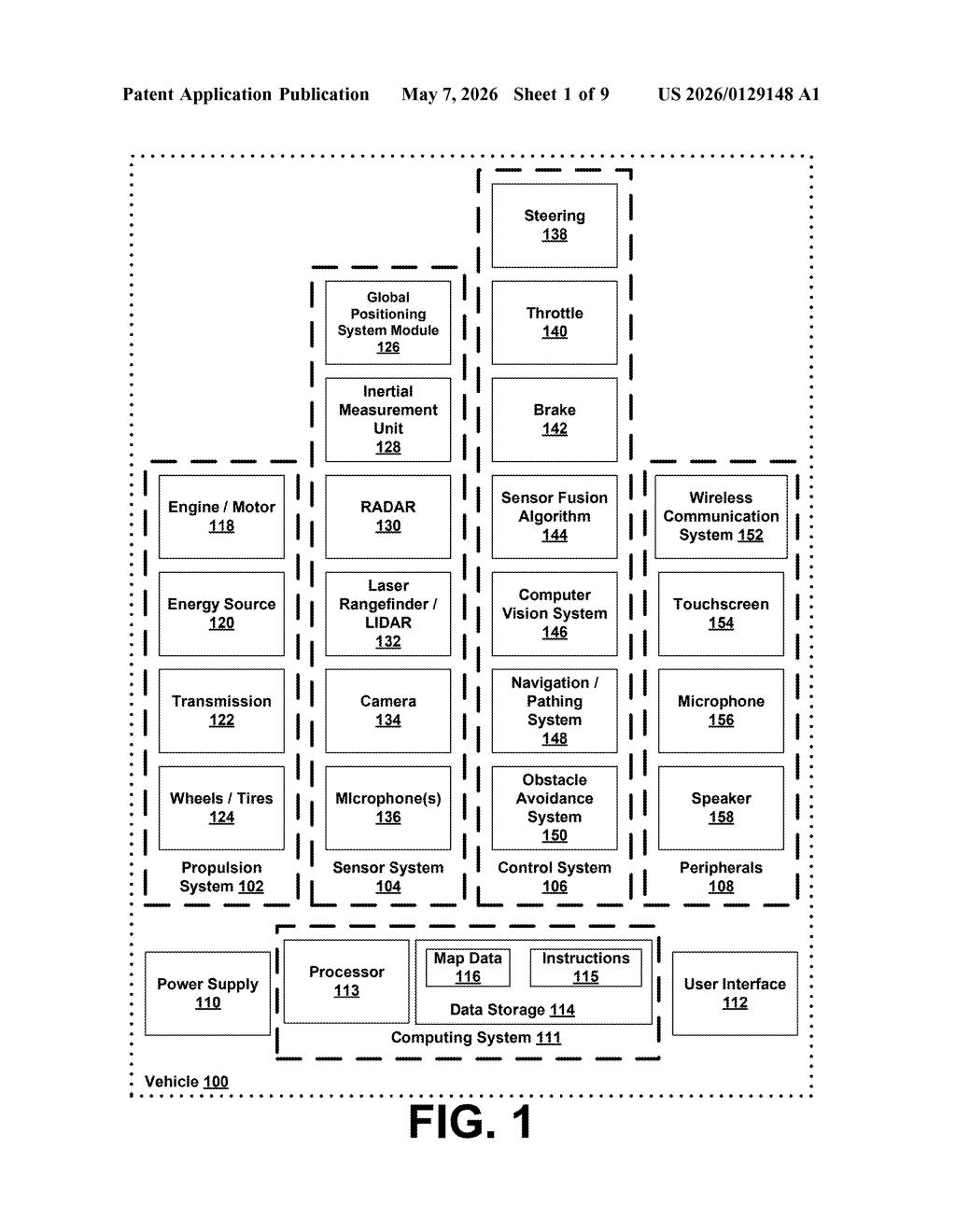
What Waymo's fog-sensing LiDAR actually does
Imagine you're driving on a highway when a fog bank rolls in. Suddenly your headlights are bouncing light right back at you, making it harder — not easier — to see. Autonomous vehicles face the exact same problem, except their 'eyes' are laser-based sensors called LiDAR.
Waymo's patent describes a smarter approach: instead of running the same sensor settings rain or shine, the system uses the LiDAR itself to detect fog — by noticing when laser pulses are bouncing back off tiny water droplets in the air rather than off solid objects. Once fog is confirmed, it automatically switches to a different set of operating parameters tuned for those conditions.
Think of it like your phone's camera switching to night mode when it gets dark, except it's a self-driving car adjusting its 'vision' when the weather turns murky. The goal is to keep the vehicle's understanding of its surroundings as accurate as possible even when conditions are far from ideal.
How Waymo's LiDAR detects and responds to backscatter
The core of this patent is a LiDAR system (Light Detection and Ranging — the spinning or solid-state laser sensor that maps 3D surroundings) that operates in two distinct modes depending on the weather it detects.
Under normal conditions, the LiDAR runs with one set of parameters optimized for clear weather — things like pulse timing, scan frequency, range thresholds, and field-of-view volume. When the system picks up backscattered light (laser pulses bouncing off fog droplets suspended in the air rather than returning from solid objects at a distance), it flags this as a foggy weather condition.
Once fog is detected, the system transitions to an alternate parameter set tuned for fog. This could mean:
- Narrowing or reshaping the field of view volume to reduce the noise floor from backscatter
- Adjusting pulse intensity or gating to ignore returns from very close range
- Changing scan patterns to prioritize nearby obstacle detection over long-range mapping
The broader patent framework also covers adjusting sensor behavior based on the vehicle's operating environment more generally — not just weather, but potentially road type, speed, or surrounding traffic density — though the primary claim is focused squarely on the fog-detection-and-response loop.
What adaptive LiDAR means for AV safety in bad weather
Most AV sensor systems are tuned once and deployed. Weather degradation is typically handled at the software level — the perception stack tries to filter out noise after the fact. Waymo's approach moves the adaptation upstream, into the sensor operation itself, which means cleaner raw data before the AI even starts interpreting the scene. That's a meaningful difference for safety margins.
Fog has historically been cited as a genuine edge-case weakness for LiDAR-based systems. If Waymo can demonstrate that its vehicles actively reconfigure their sensing hardware in real time when conditions change, that's a concrete answer to one of the most common criticisms of autonomous vehicles — that they're fair-weather-only technology. For anyone watching the commercial robotaxi race, this is the kind of incremental but important capability that separates operational fleets from test programs.
This is genuinely useful work, not a paper patent. Fog-induced backscatter is a well-documented LiDAR failure mode, and building the detection and adaptation loop directly into the sensor system — rather than relying purely on software post-processing — is the right architectural instinct. It won't grab headlines, but it's exactly the kind of quiet engineering that determines whether robotaxis can run 365 days a year or just on sunny Tuesdays.
There are more where this came from
We read every patent application Big Tech publishes and send you the ones worth knowing. Plain English, free, every week.
Want this weekly breakdown for a company we don't cover? Patentlyze Pro →