
Waymo Files Patent for Robotaxis That Notice When the Wrong Rider Climbs In
If you climb into the wrong driverless car, who tells you? Waymo's patent application describes a car that figures it out by checking which phones are actually inside.
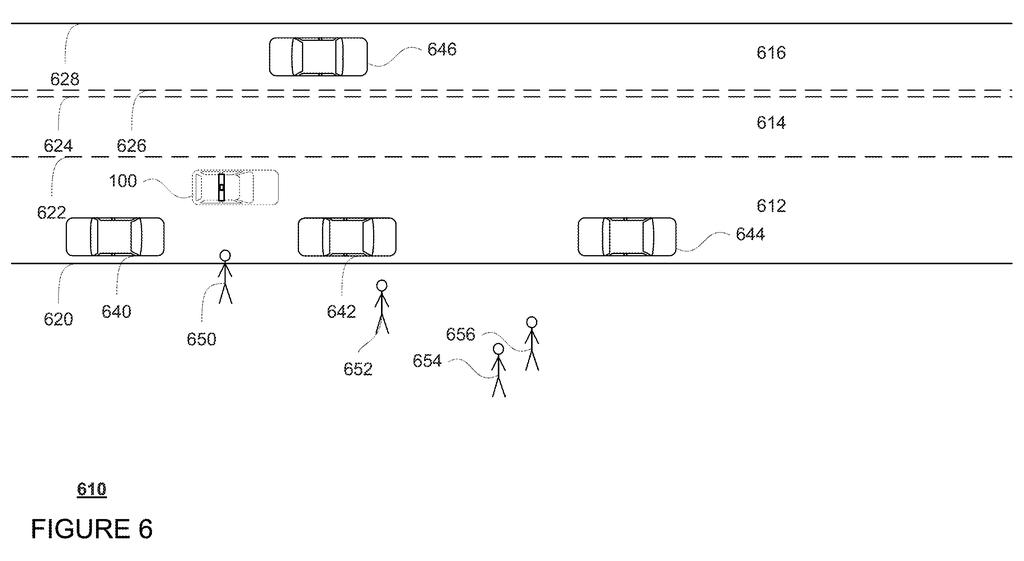
What Waymo's wrong-passenger check actually does
Imagine you're leaving a crowded train station at night, and several identical robotaxis are lined up at the curb. You hop into one that looks like yours. It isn't. Someone else ordered it, and with no human driver, nobody is there to say, "Hey, I think you're in the wrong car."
Waymo's patent application describes how the car can sort this out on its own. After you get in, the car listens for a signal from a phone inside, asks Waymo's servers who that phone belongs to, and only then works out where you're headed. If the phone it expected isn't actually aboard, the car can ask the dispatch system for the right destination and change course.
The goal is to fix the mistake without dumping anyone on the street, and to tell you why the route changed.
… querying, by one or more processors, for a signal from a first client computing device in the vehicle that is associated with the passenger, the signal including information identifying the first client computing device; …
Translation: The car checks for a signal from the rider's phone once they step inside.
How a Waymo car identifies the phone onboard
The claims cover a sequence that starts after a rider sits down. The car's computer queries for a signal from a phone in the cabin (the filing calls it a "client computing device"). That signal carries an identifier for the phone. Dependent claims name Bluetooth as one type of signal.
From there, the steps are:
- The car sends the phone's identifier to Waymo's servers.
- The servers answer with authentication information (confirmation of whose phone it is).
- Once the phone is authenticated, the car identifies a destination for that passenger and drives there in autonomous mode. It can also show the destination on a screen and ask the rider to confirm it.
The description explains why this matters. The assigned rider's phone shares GPS locations, and the car compares the phone's speed and heading with its own. If the match is too weak (the filing's example: 50% confidence against a 75% minimum), the car concludes the assigned rider isn't aboard.
The car can then ask the server to have nearby active phones broadcast a Bluetooth signal, find which one is inside, and let the server match that phone's motion to the car's. The server can reassign the car to the new rider, who is told about the change and why. The original rider gets another car, possibly with a discount. Riders without a working phone could use a badge or PIN.
While doing so, a location of the vehicle is compared to location information received from the client computing devices. A notification is sent to a dispatching server based on the comparison and a second destination location is received in response.
Translation: The system compares the car's GPS with the phone's location to reroute if someone else got in.
Why wrong-car mix-ups matter for robotaxis
If you ride in robotaxis, the practical payoff is fewer awkward surprises. Picking up the wrong person at a busy airport or train station would otherwise mean a stranger heading toward your address, and you waiting at the curb. The filing says the approach avoids delaying the correct rider and may spare the wrong one some embarrassment. It also argues that explaining the reroute could help riders feel safer.
The filing is a continuation, meaning it builds on a chain of earlier applications that goes back to 2017, and two of those earlier applications became granted patents. For a driverless service, a failure like this can't be solved by a driver's quick chat, so the fix has to live in software and in the phones riders already carry. Any robotaxi service sending look-alike cars to crowded pickup zones faces the same problem.
Google's 68th filing we've tracked since May joins earlier applications on letting blocked cars pass and reading front wheels to predict turns in our Waymo robotaxi sensing watchlist.
Hopping into the wrong ride is a small mistake with an awkward ending. With a human driver, a quick chat fixes it. With no driver, a car could carry a stranger across town to somebody else's address while the real rider waits at the curb.
The size of the fix fits the size of the problem. The car relies on a phone that nearly every rider already carries, checks it against Waymo's servers, and changes course only when something doesn't add up. Riders don't have to buy or do anything extra.
The weak spot is the phone itself. A dead battery or a rider without the app sends you back to a badge or PIN code, which the filing mentions. For a problem that mostly shows up at crowded pickup spots like airports and train stations, a phone-based check is a sensible, proportionate answer.
Get our take in your Top Stories
Liked this breakdown? Add Patentlyze as a preferred source on Google, and our plain-English take shows up more often in your Top Stories the next time Google patent news breaks.
There are more where this came from
We read every patent application Big Tech publishes and send you the ones worth knowing. Plain English, free, every week.
The drawings
15 drawing sheets from US 2026/0320508 A1 · click any drawing to enlarge


Show the other 7 sheets


Want this weekly breakdown for a company we don't cover? Patentlyze Pro →
Be the first to weigh in