
A New Waymo Patent Checks Other Drivers' Turn Signals Against How They're Actually Moving
A blinking orange light can lie to a camera, and a self-driving car that believes every flicker will make bad calls. Waymo's filing has the car check the blinker against how the other car is actually moving.
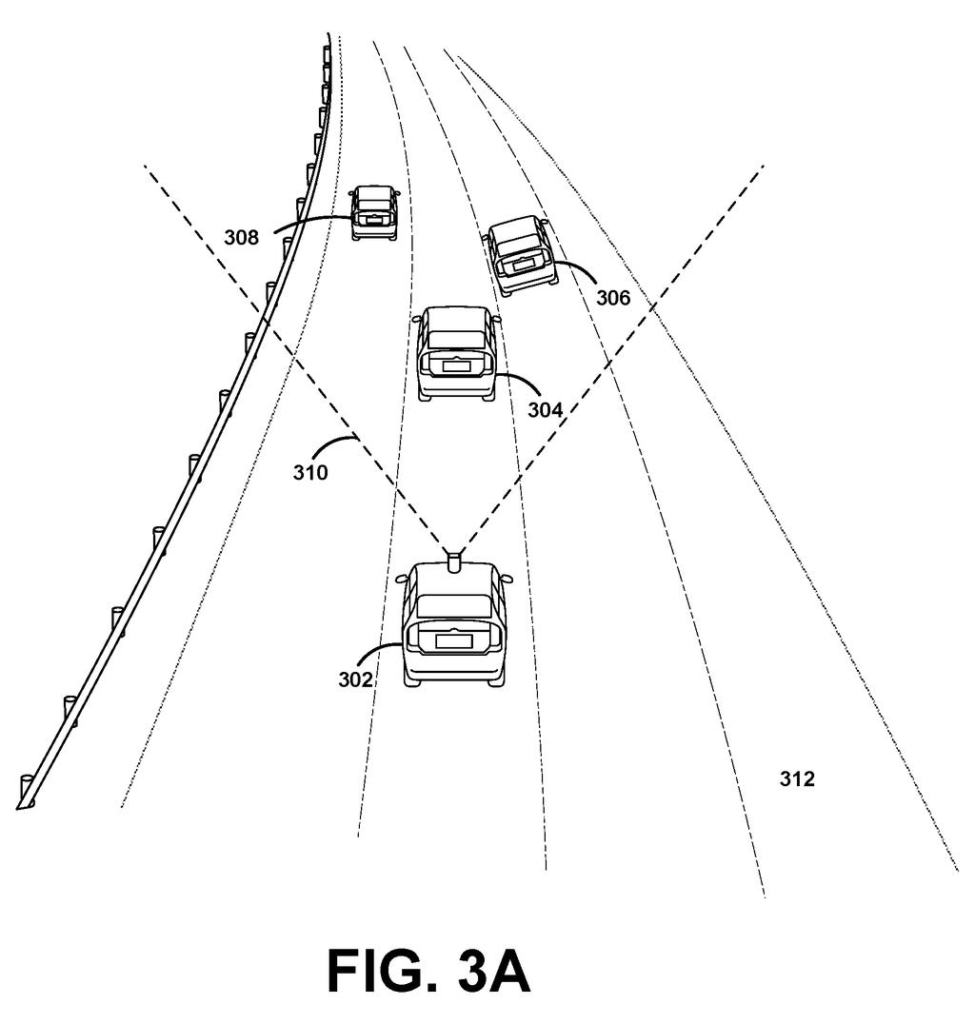
What Waymo's blinker-checking patent does
Today, a self-driving car's camera has a hard job at something every human driver does without thinking: deciding whether the blinking light on the car ahead is really a turn signal. Sun glare, shadows under a bridge, and brake lights can all look like blinking to a camera. Waymo's patent adds a second opinion.
The car looks for a light of the right color that flashes at about the pace of a real turn signal. Then it checks that against radar or lidar (the car's radio-wave and laser sensors), which can tell whether the other car is actually shifting sideways on the road. If the two agree, the car trusts the blinker and adjusts its path or speed.
So a flicker alone doesn't settle it. The car wants the light and the movement to tell the same story.
… determining a likelihood that the second vehicle has an active indicator signal based on the at least one group of pixels and the movement of the second vehicle …
Translation: The car calculates the chance another vehicle is signaling by combining what the camera sees and how the car is moving.
How the car tells a blinker from sun glare
The core claim pairs a camera with a non-camera sensor, such as radar (radio waves that measure how far away something is and how fast it moves) or lidar (the same idea using lasers). The camera picks out a group of pixels that might be a turn signal on a nearby car. The radar or lidar reports how that car is moving, including its sideways speed, acceleration or position on the road. The computer combines both into a likelihood that the signal is active, picks a driving plan, and navigates accordingly.
The filing also describes how the camera side works:
- Short-exposure shots, taken alongside normal ones, come out almost black, so only bright things like lights show up.
- The car draws a bounding box around each vehicle and searches its left and right halves separately.
- A weighted template (a scoring grid that rewards bright, rectangular patches) finds the brightest red or amber blob.
- A color check rejects sun glare, which includes blue light that real turn signals lack.
- The blob must flicker between about 0.75 and 2.5 times per second.
If only one side blinks, it reads as a turn signal. If both sides blink, it reads as emergency flashers. Brake taps rarely flash more than once, and the car's confidence climbs with each repeated blink. The patent also describes checking the result against map data, such as whether the signal fits the lane boundary tied to the other car.
… captures the image with a short exposure to emphasize objects having brightness above a threshold …
Translation: The camera uses a very brief snapshot to make bright lights stand out clearly.
Why a second opinion matters for robotaxis
If you share a road with a robotaxi, you want it to read other drivers the way you do: a blinker on the car beside you means it may drift into your lane. Misreading that signal in either direction is costly. Believing a false one can mean a needless hard brake. Missing a real one can mean a late reaction. Checking the light against actual movement is aimed at cutting down both mistakes.
The filing is also a continuation in a family that traces back to a 2013 application, so it describes a long-running line of work, not a fresh idea. Even so, the claims published here lean on combining sensors, which fits how self-driving systems have to work: no single sensor gets the final say.
Google's 64th filing we've tracked since May on Waymo's robotaxi senses, following a car prediction system and a GPS fix at pickup, adds another piece to the picture.
Every cross-check costs something. Requiring movement data to back up the blinker means the car can't rely on the light alone, and human drivers often flick a signal on before their car moves an inch sideways. In that gap the car sees a blink with no drift, and it has to decide how much to trust the light.
That cost looks small next to the alternatives. A camera that believes every flicker will react to sun glare and bridge shadows, and a camera that ignores flickers will miss real lane changes. Radar or lidar gives the car a tiebreaker when the image is ambiguous.
The short-exposure trick adds its own bill: extra dark frames captured and processed alongside normal driving images. Since those frames show only the brightest lights, the trade reads as worth paying.
Get our take in your Top Stories
Liked this breakdown? Add Patentlyze as a preferred source on Google, and our plain-English take shows up more often in your Top Stories the next time Google patent news breaks.
There are more where this came from
We read every patent application Big Tech publishes and send you the ones worth knowing. Plain English, free, every week.
The drawings
8 drawing sheets from US 2026/0311495 A1 · click any drawing to enlarge


Want this weekly breakdown for a company we don't cover? Patentlyze Pro →
Be the first to weigh in