
Waymo Patents a Way for Its Cars to Fix Your Phone's GPS at Pickup
Getting into a Waymo sometimes means you and the car are both convinced you're in different places. A new Waymo patent would let the car itself correct your phone's GPS, then drive straight to where you actually are.
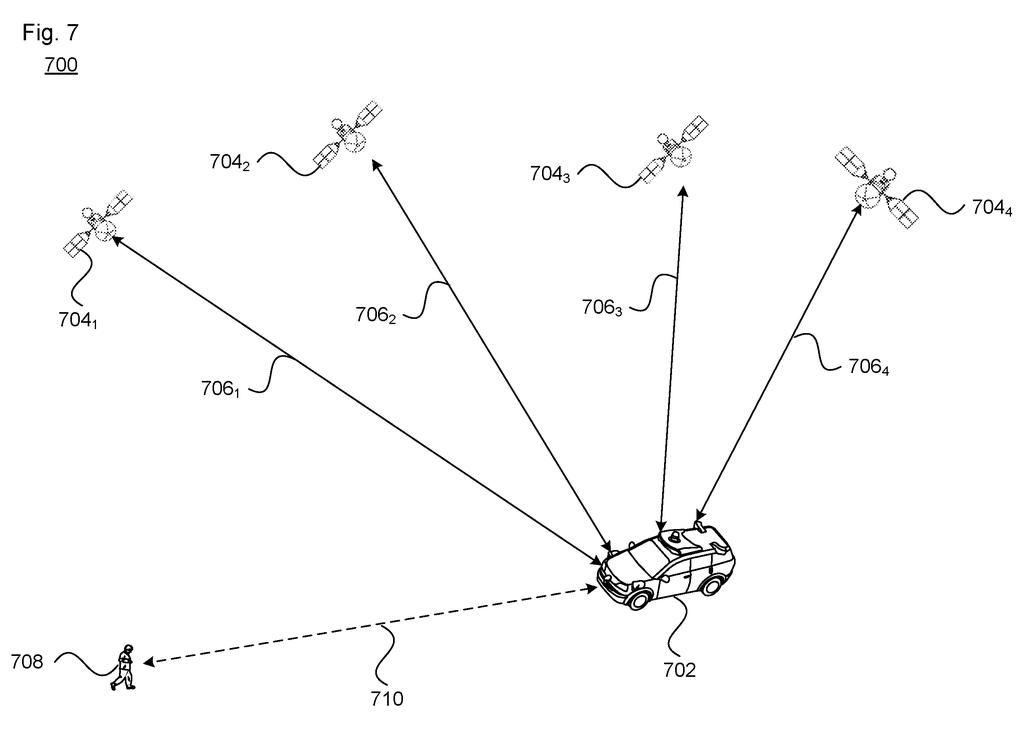
How Waymo's cars pinpoint your exact position
Every time a Waymo rider taps 'I'm here' and the car still circles the block, the same maddening problem is at work: your phone's GPS is off by enough to send the car to the wrong spot. City canyons, tall buildings, and basic GPS limits can put your reported location a half-block or more from where you're standing.
Waymo's patent describes a fix where the car takes over the location job. When you're close enough, the vehicle pings your phone, measures the exact distance between you two, and uses its own survey-grade positioning to figure out precisely where you're standing. That corrected position is what the car actually drives to.
You don't change anything on your end. The car handles the math in the background, and the pickup just... works. For a service that runs without a driver to course-correct, getting this right matters more than it might seem.
… issuing, by one or more processors to the mobile device, a request to transmit a second signal, wherein the second signal is a type of signal different from the first signal; obtaining, by the one or more processors using the second signal transmitted by the mobile device, a distance between the vehicle and the mobile device at a point in time; …
Translation: The car asks your phone to send a different kind of signal to measure the exact distance between you two.
How the vehicle calculates your phone's location
The system works in two layers. First, the vehicle detects a signal from your phone, then sends back a request for a different type of signal. By measuring that second signal, the car can calculate the precise distance between itself and your device at a specific moment in time.
With that distance known, the car combines it with its own hyper-accurate location data (Waymo's vehicles carry lidar, radar, and high-precision GPS with error correction that consumer phones simply don't have) to compute where your phone actually is. That position becomes the pickup target.
The patent also describes a deeper fix for bad GPS readings. Waymo's vehicles can calculate pseudorange errors for each GPS satellite your phone can see. A pseudorange is the raw distance estimate a GPS receiver gets from a satellite before corrections are applied; errors creep in from atmospheric interference and timing offsets. Because Waymo's car knows its own true position, it can figure out exactly how wrong each satellite reading is and send those corrections to your phone so it can recalculate its own position more accurately.
All of this kicks in only when you're within a certain range of the vehicle, so it's triggered on demand rather than running constantly.
… using hyper-accurate vehicle positioning, one or more vehicles can compute pseudorange errors for each “visible” satellite in a global positioning service.
Translation: The autonomous car uses its precise location to figure out how wrong your phone's GPS satellites are.
What this means for robotaxi pickups in dense cities
GPS accuracy inside cities is a known weak spot for ride-hail and robotaxi services alike. Human drivers can call you, look for a waving person, or use common sense. A driverless car has none of those options, so a wrong location can mean a failed pickup with no recovery path.
the pattern in Waymo's sensor-fusion filings suggests the company is building more of that human-judgment fallback into the vehicle's software layer. For riders, a working version of this system would mean fewer 'walk toward the car' phone calls, fewer missed pickups in downtown areas, and a service that handles the messy real world a little more gracefully.
Google's 62nd filing we've tracked since May in our robotaxi sensing work, this application follows one grading its own decisions and one predicting road users' paths.
Waymo is using its cars' high-precision sensors to correct the location errors on a passenger's phone, which is a lot of expensive hardware pointed at a problem that amounts to being off by half a city block. The cost is real: the car has to be close, the signal exchange has to complete quickly, and the whole thing has to work across every phone model Waymo doesn't manufacture or control.
That's a fragile chain, but the reason to accept it is straightforward. When no driver is behind the wheel to spot a confused passenger and pull forward, a bad pickup location means a stranded person and a car looping the block.
Fixing a software shortcoming with vehicle hardware is an awkward trade, but for a driverless fleet it reads as the necessary one.
There are more where this came from
We read every patent application Big Tech publishes and send you the ones worth knowing. Plain English, free, every week.
The drawings
21 drawing sheets from US 2026/0296497 A1 · click any drawing to enlarge


Want this weekly breakdown for a company we don't cover? Patentlyze Pro →
Be the first to weigh in