
Samsung Patents a Home Screen That Reshuffles Widgets to Make Room When You Need It
Imagine tapping a weather widget and having it instantly grow bigger — while everything else on your home screen politely scoots aside to make room. That's exactly what Samsung is patenting.
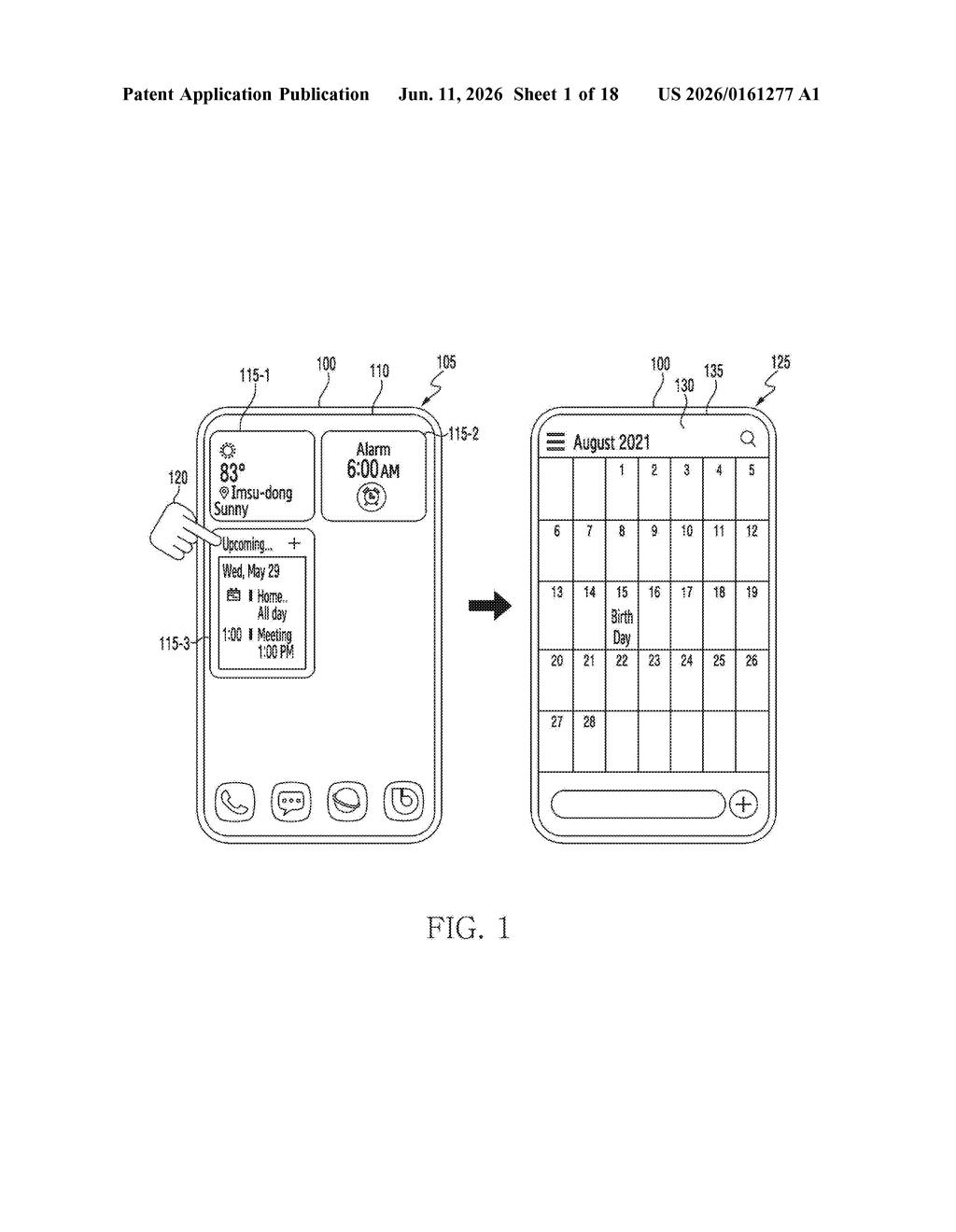
What Samsung's auto-expanding widget layout actually does
Picture your phone's home screen covered in little tiles — weather, calendar, music, news. Right now, if you want one of those tiles to show more detail, you usually have to go in and manually rearrange everything yourself. Samsung's new patent describes a system that does that reshuffling for you, automatically.
Here's how it works in practice: you tap a widget (say, your calendar) and it grows to show a fuller view. If there's already an empty gap on your screen big enough to fit the enlarged widget, it slides right in. If there isn't enough empty space, the other widgets shrink down slightly to free up room, and the selected widget expands into that newly created space.
The whole idea is that your home screen becomes more dynamic — it adapts to what you're focused on in the moment, rather than locking everything into a rigid grid you set up once and forget.
How the device decides where to move or shrink other widgets
The patent describes an adaptive widget layout engine built into a Samsung device's display manager. When a user selects a widget (either by tapping it or through an automated trigger like a calendar reminder firing), the system calculates a new, larger target size for that widget.
It then checks the screen for a "first blank area" — any unused space already available on the display. If the expanded widget fits within or near that empty zone, it places the widget in what the patent calls a "second area," which incorporates that blank space.
- If empty space is sufficient: the widget expands into it with no disruption to others.
- If empty space isn't sufficient: the remaining widgets are proportionally shrunk, creating a new blank zone — the "third area" — and the selected widget expands to fill that.
The system essentially runs a two-step check: use free space first, compress neighbors second. The compression of other widgets appears to be a fallback rather than the default behavior, which would minimize how much the overall layout is disrupted during an expansion event.
What this means for Android home screen customization
For Android users, home screen layout has always been a manual chore. Samsung's One UI already offers more widget flexibility than stock Android, but resizing still requires long-pressing and dragging. This patent points toward a layout system that reacts in real time — something closer to how a smart dashboard might behave on a tablet or foldable device where screen real estate constantly changes.
The foldable angle is worth noting: devices like the Galaxy Z Fold series already deal with widgets needing to reflow when the screen unfolds. A system that handles expansion and compression automatically would be a natural fit there — and could reduce one of the biggest friction points in making foldables feel genuinely useful rather than just physically novel.
This is a modest but genuinely practical patent — the kind of small UX friction that irritates people every day without them being able to name why. Samsung's foldable lineup gives it an obvious and immediate place to land this feature, which makes it more than just a theoretical filing.
There are more where this came from
We read every patent application Big Tech publishes and send you the ones worth knowing. Plain English, free, every week.
Want this weekly breakdown for a company we don't cover? Patentlyze Pro →