
Samsung Patents a Method to Stop Computers Wasting Effort Teaching Themselves New Tasks
Every time an AI model learns something new, it runs millions of tiny math updates — many of them on neurons that aren't even firing. Samsung's new patent proposes skipping those useless updates and saving the work for later.
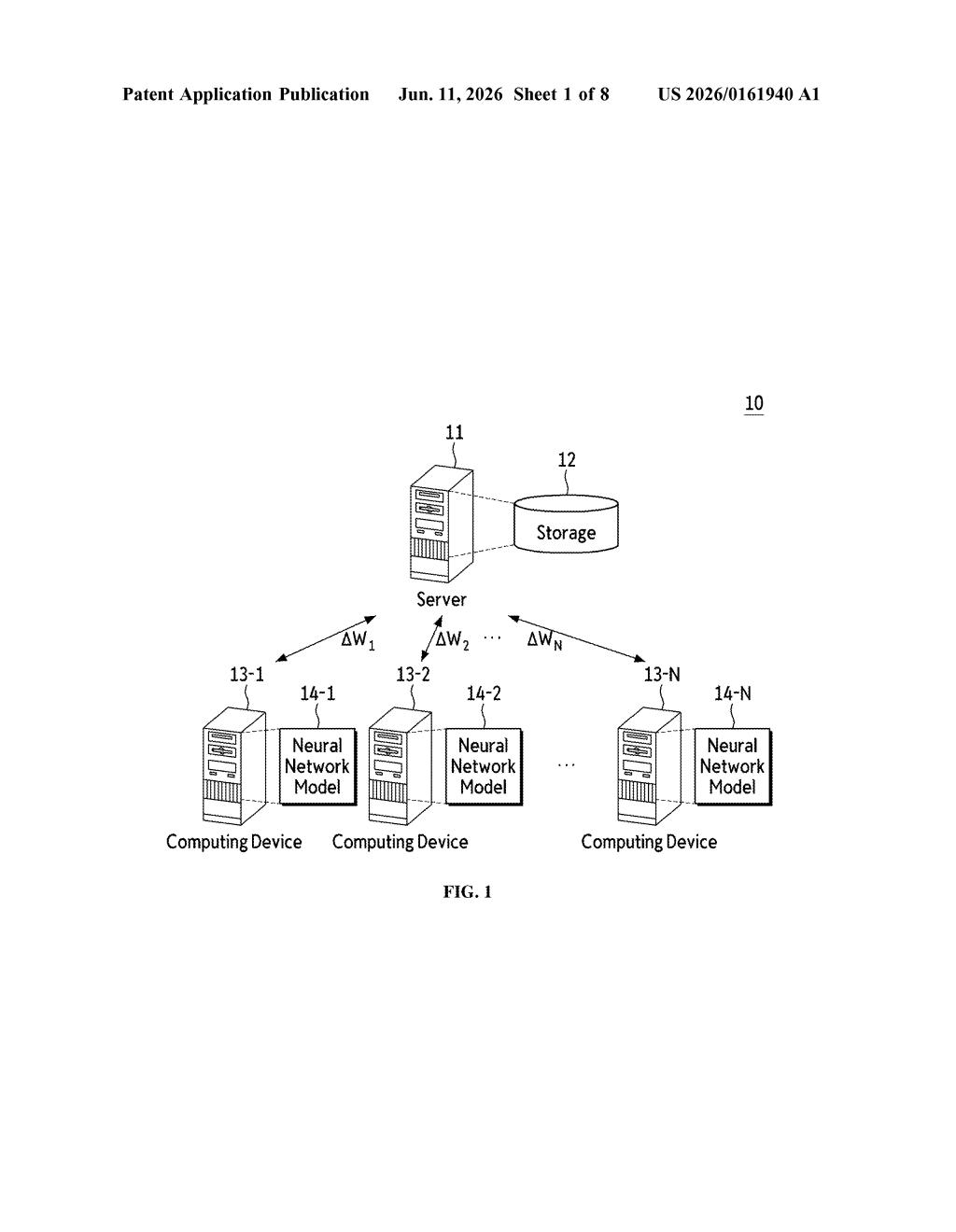
How Samsung's training shortcut skips idle neurons
Imagine a classroom where the teacher grades only the students who raised their hands. The students who stayed quiet don't get ignored — their answers are saved up and graded in a batch the next time they participate. That's roughly what Samsung's patent does for AI training.
When an AI model is learning, it has millions of small adjustable knobs called weights. Normally, every single knob gets nudged after each round of data — even the ones attached to neurons that weren't contributing anything useful to that particular calculation. Samsung's method checks whether a neuron is actually active before bothering to update its knob. If it's dormant, the update gets set aside and accumulated for later.
The practical effect is fewer redundant math operations per training step. That's useful any time you're trying to train or fine-tune an AI model on a device with limited compute power — think a phone, a wearable, or an in-car chip — rather than a data-center GPU farm.
How the activation-state check gates each weight update
The patent describes a gradient compression technique tied to a neural network's activation function — the mathematical rule each neuron uses to decide whether to "fire" and pass information forward.
During training, the system computes a gradient (essentially a score saying "here's how much this weight needs to change") for every neuron after each data sample is processed. Normally all those gradients are applied immediately. Samsung's method adds a decision step:
- If the neuron's activation function produced a non-zero output — meaning the neuron was active — apply the gradient update right away.
- If the neuron was inactive (output was zero, which happens frequently with common activation functions like ReLU), hold the gradient in an accumulation buffer instead of discarding or immediately applying it.
The accumulated gradients are applied the next time that neuron becomes active. This means no gradient information is thrown away — it's deferred, not deleted. The compression comes from the fact that transmitting or processing a batch of deferred gradients later is cheaper than processing them one-by-one in real time, especially in distributed or on-device training scenarios where bandwidth and compute are tight.
What this means for training AI on phones and edge chips
On-device AI training — updating a model directly on a phone or edge device without sending data to the cloud — is an active area for Samsung, whose Galaxy devices run increasingly capable local AI features. Any technique that reduces the per-step compute cost of training makes it more realistic to fine-tune models on modest hardware.
The broader industry angle is federated learning, where many devices each train a small piece of a shared model and send gradient updates back to a server. Compressing those gradient payloads reduces network traffic and speeds up the whole process. Samsung's approach is notable because it uses information the model already computes — the activation state — rather than adding a separate compression layer on top.
This is solid, unglamorous engineering work. Gradient compression is a well-studied problem, and Samsung's activation-pattern twist is a sensible incremental improvement rather than a new direction. It matters primarily as evidence that Samsung is investing in the infrastructure needed for on-device and federated AI training — which is where the real product differentiation will eventually show up.
There are more where this came from
We read every patent application Big Tech publishes and send you the ones worth knowing. Plain English, free, every week.
Want this weekly breakdown for a company we don't cover? Patentlyze Pro →