
Samsung Patents a System That Routes Your Voice Commands to the Right AI Based on What's on Screen
Imagine shouting a command at your Samsung TV while a Netflix show is playing — and the TV automatically figures out whether to ask its own AI or Netflix's AI to handle it. That's the core idea behind this patent.
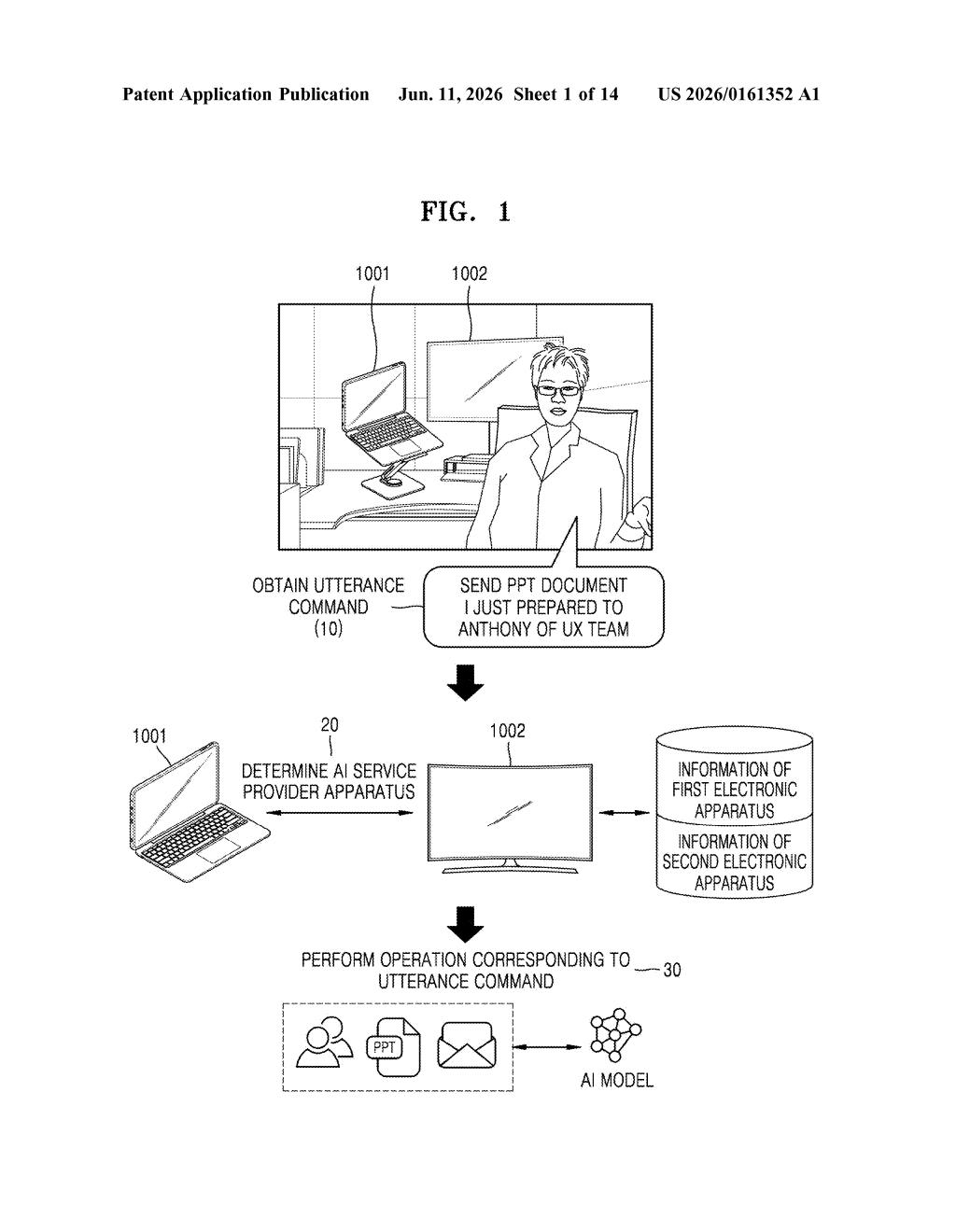
How Samsung's screen-aware voice routing actually works
Picture this: you're watching a YouTube video on your Samsung phone while your Samsung TV is on in the background. You say, "play the next episode." Which device responds? And which AI service actually does the work? Right now, that kind of handoff is clunky at best.
Samsung's patent describes a system where your device looks at what's currently on screen — and crucially, where that content came from — before deciding which AI assistant should handle your voice command. If you're watching something from a streaming service, the system might route your request through that service's own AI. If it's Samsung's own content, Samsung's assistant takes over.
The practical upshot: you say one thing, and the right AI responds — without you having to think about which app or service is in charge. It's the kind of invisible coordination that makes a home full of gadgets feel like one system instead of a pile of competing remote controls.
How the device reads screen source info to pick an AI
The patent describes an AI service provider routing system built into Samsung electronics. When a user gives a voice command, the device doesn't just send it to a default assistant. Instead, it checks two things simultaneously:
- The utterance command itself — what the user actually said
- Source information of content on screen — metadata about where the displayed content originated (e.g., a third-party streaming app, a Samsung service, a connected external device)
Based on those two inputs together, the system picks either the local device's AI or an external electronic apparatus (a connected TV, phone, or third-party AI service endpoint) as the designated handler for that command.
The claim is device-agnostic: "at least one of the electronic apparatus or an external electronic apparatus" can serve as the AI provider, which means the routing logic works across Samsung's entire ecosystem — phones, TVs, tablets, and anything else connected to them.
This is essentially a context-aware AI dispatcher. Rather than hardcoding which assistant gets every command, it makes a per-request decision driven by real-time screen context. The closest analogy is how your browser automatically sends you to a website's own login page rather than a generic one — except here it's happening for voice commands, invisibly and in real time.
What this means for Samsung's multi-device AI strategy
Samsung sells an enormous range of connected devices — TVs, phones, tablets, smart appliances — and each one increasingly ships with some form of AI assistant or is connected to third-party AI services. The friction today is that each device's AI only knows its own world. This patent is a bet that the next competitive front isn't which AI is most powerful, but which ecosystem is most seamlessly coordinated.
For you as a user, this could mean fewer moments of "wrong assistant, wrong device" when you're jumping between content sources. For Samsung, it's infrastructure that makes their hardware more valuable as a hub — and potentially more sticky, since a well-orchestrated multi-device AI experience is hard to replicate on a single competitor's device.
This is a quietly important piece of infrastructure for Samsung's multi-device ambitions. It's not flashy AI — there's no new model or capability here — but the ability to route voice commands intelligently based on screen context is exactly the kind of unsexy plumbing that determines whether a smart-home ecosystem feels coherent or chaotic. Samsung has the device breadth to actually deploy this; that's what makes it worth watching.
There are more where this came from
We read every patent application Big Tech publishes and send you the ones worth knowing. Plain English, free, every week.
Want this weekly breakdown for a company we don't cover? Patentlyze Pro →