
AMD Patents Technology to Stop AI Systems Running on Multiple Graphics Cards From Overloading Their Power Supply
Running a big AI model across multiple GPUs can spike power draw so hard it trips a circuit breaker — or forces the whole system to throttle down. AMD's new patent describes a way for GPUs to coordinate their heavy lifting so they never all peak at the same moment.
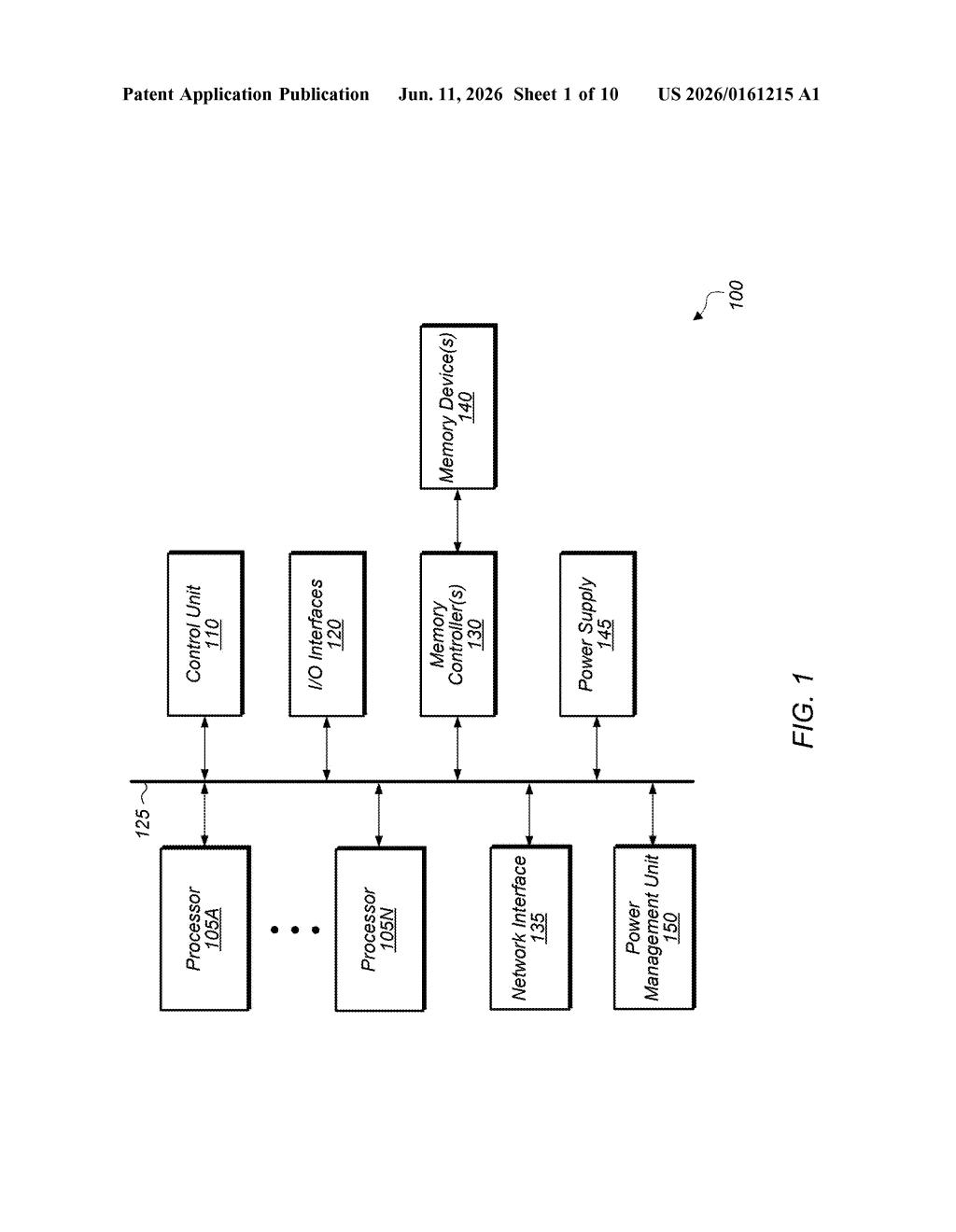
How AMD's GPUs take turns to avoid overloading the power supply
Imagine six people all running their kitchen microwaves at full power at the exact same second — the circuit breaker trips. Multi-GPU AI servers have a similar problem: when every GPU hits peak load simultaneously, the combined power draw can blow past what the power supply is rated for.
AMD's patent describes a fix where the GPUs essentially take turns. Instead of all crunching numbers at the same instant, some GPUs deliberately shift when they start their heaviest work so the peaks don't pile on top of each other. They communicate over the connections that already link them together to coordinate this scheduling.
The practical result is that the same power supply can support a bigger, more capable AI workload — or the same workload can run without the system constantly hitting its power ceiling and being forced to slow down. It's efficiency through timing, not through better hardware.
How the GPUs detect overload and stagger their workloads
The patent covers a multi-GPU system where each GPU monitors power conditions and can reschedule its compute tasks to avoid overlapping with the heaviest work happening on neighboring GPUs. The GPUs are connected via inter-GPU links (think NVLink-style interconnects, but in AMD's ecosystem) that let them share state information.
When a GPU detects a first condition — essentially a signal that collective power draw is approaching or exceeding the limit — it shifts the timing of its own computation tasks. The goal is to create a staggered pattern rather than a synchronized spike. This is similar to how power grids use demand response to ask heavy consumers to shift their usage to off-peak hours, except here it's happening automatically in milliseconds.
Key elements of the system include:
- Per-GPU task scheduling that can be dynamically adjusted at runtime
- A shared power supply scenario where one source feeds multiple GPUs
- Communication links between GPUs to broadcast workload and power state
- Condition detection logic that triggers the rescheduling behavior
The claim is broad — it covers any set of "processing units" that share a power source and can communicate, which gives AMD flexibility to apply this to CPUs, accelerators, or hybrid setups, not just GPU clusters.
What this means for AI servers and data center power limits
Power limits are one of the hardest constraints in modern AI infrastructure. Data centers have fixed power budgets per rack, and pushing more compute into that budget without tripping limits is a constant engineering challenge. A coordination scheme that reduces peak power draw — without reducing total work done — is genuinely useful, because it means you could fit more GPUs or run faster models within the same power envelope.
For you as an end user, this is invisible plumbing — but it's the kind of plumbing that determines whether your AI query takes 200ms or 800ms, and whether the cloud provider has to cap your model size. If AMD can ship this in its Instinct accelerator line, it could be a quiet but real competitive point against Nvidia in the data center market, where power efficiency is increasingly the metric that wins contracts.
This is unglamorous but genuinely useful work. Power budget management in multi-GPU systems is a real bottleneck, not a hypothetical one, and doing it through software-level scheduling rather than expensive hardware changes is the right instinct. The claim is written broadly enough that AMD could apply it almost anywhere, which suggests this is more of a defensive portfolio move than a narrow product feature — but the underlying idea is sound.
There are more where this came from
We read every patent application Big Tech publishes and send you the ones worth knowing. Plain English, free, every week.
Want this weekly breakdown for a company we don't cover? Patentlyze Pro →