
Dedicated AI Compression Chips Emerge From New AMD Patent
Video compression is already a heavy lift for chips, and AI-based codecs make it even heavier. AMD is filing a patent for dedicated hardware that handles one of the trickiest parts of that job in parallel, rather than one piece at a time.
What AMD's AI video compression chip actually does
Imagine you're trying to pack a suitcase, but instead of folding things neatly yourself, you have a machine that knows exactly how to compress every item based on probability tables it has already memorized. That's essentially what a video codec does when it compresses footage: it uses statistical models to shrink data down to the smallest possible size.
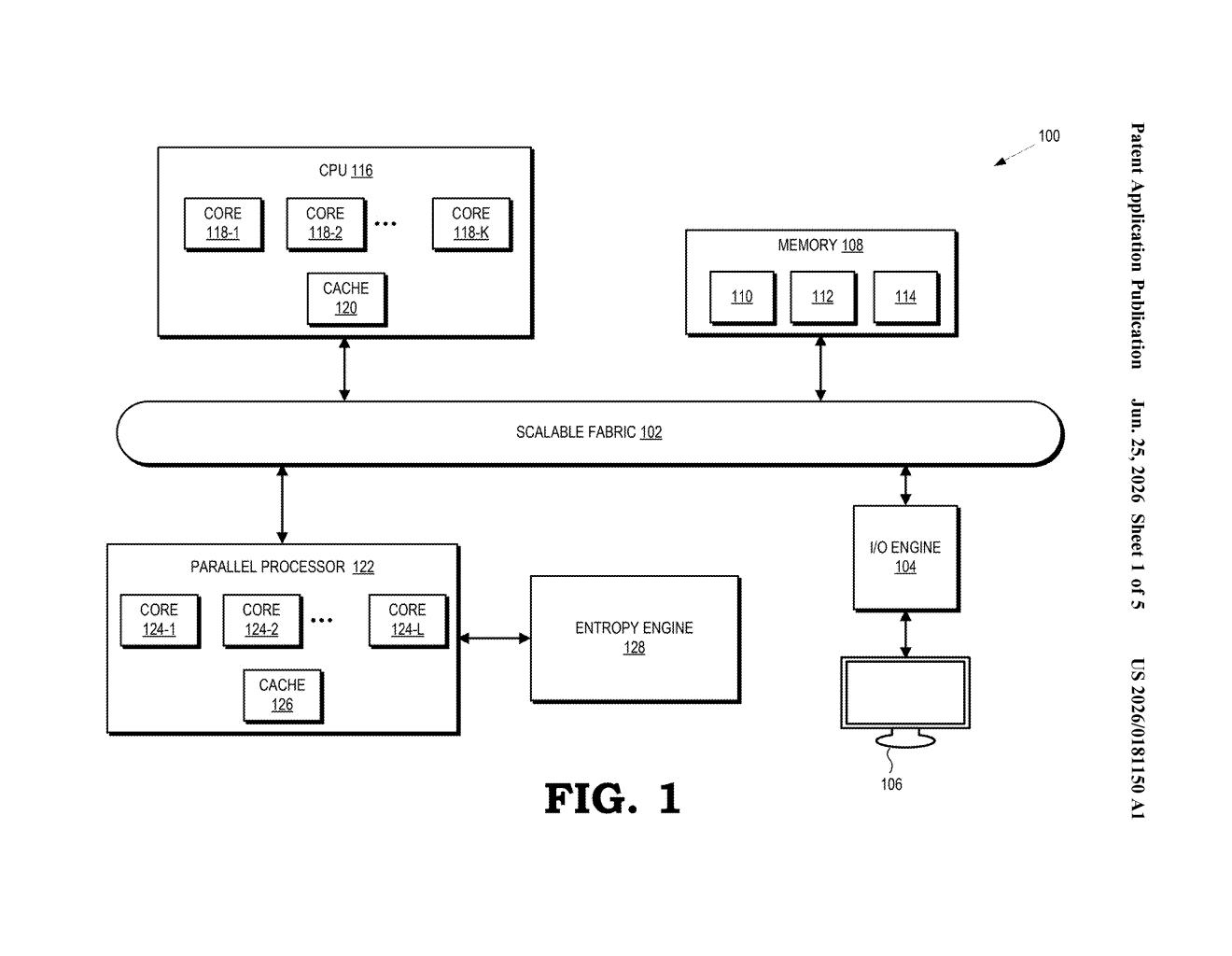
AMD's patent describes dedicated chip circuitry built specifically to run those statistical models, called entropy models, on video data. Instead of processing one chunk of data at a time, the hardware can handle multiple streams at once, in parallel, which is a lot faster.
The design also includes two types of memory working together: one stores the compressed statistical tables the chip needs to do its job, and another stores a kind of lookup index so the chip can find the right table quickly without wasting time searching. The goal is to make AI-powered video compression fast enough to be practical in real hardware, not just in software running on a general-purpose processor.
How AMD's entropy engines juggle multiple data streams
Entropy coding is the final stage of most video compression pipelines. It takes data that has already been partially compressed and squeezes it further by replacing common patterns with short codes and rare patterns with longer ones, based on a statistical model of what's likely to appear. Entropy models are those statistical guides, essentially probability tables that tell the encoder or decoder what to expect next.
AI-based codecs, unlike traditional ones like H.264 or AV1, generate their entropy models on the fly using neural networks, which makes them more accurate but also much more computationally expensive. AMD's patent describes hardware that stores these models in a compressed form inside a dedicated first memory, with a second memory acting as an index (mapping requests to the exact location of the relevant data in the first memory). This avoids redundant lookups and reduces how much data needs to move around the chip.
The core of the invention is a set of entropy engines, each with multiple ports that can encode or decode data simultaneously. Key capabilities include:
- Parallel encoding or decoding of multiple bit or symbol streams at once
- Compressed storage of distribution functions to reduce memory footprint
- A fast-lookup mapping layer that points requests to the right statistical table without a full search
- Support for selecting different entropy models from a stored set on demand
The result is a pipeline that can keep up with the throughput demands of AI codecs without bottlenecking on the statistical modeling step.
What this means for AI video on AMD hardware
AI video codecs like those used in video conferencing, game streaming, and media production promise better quality at lower file sizes than traditional codecs. The catch is that they are computationally expensive, and entropy coding is one of the steps that has historically been hard to accelerate in silicon. If AMD can bake this into future GPU or dedicated media-processing hardware, it could make AI codecs practical for real-time use cases like live streaming or on-device video editing.
For you as a consumer, that could translate to better-looking video calls and game streams that use less bandwidth, or faster export times when editing video on an AMD-powered machine. For AMD, it's a way to differentiate its hardware in a market where Nvidia and Intel are also racing to support next-generation codec workloads.
This is unglamorous but genuinely important chip plumbing. Entropy coding acceleration is a real bottleneck for AI codecs, and the parallel multi-stream approach AMD is patenting is the right engineering direction. It won't make headlines at a product launch, but it's the kind of work that determines whether AI video codecs stay a research curiosity or become something that ships in actual products.
There are more where this came from
We read every patent application Big Tech publishes and send you the ones worth knowing. Plain English, free, every week.
Want this weekly breakdown for a company we don't cover? Patentlyze Pro →